1 / 2
Perennials
Heuchera micantha
native heuchera
Saxifragaceae
British Columbia south through Washington, Oregon to California; east to Idaho; moist rocky outcrops, cliff faces, stream banks, and shaded forest edges
At a Glance
TypePerennial
HabitMounding
FoliageSemi-evergreen
Height12-30 inches (30-75 cm) in flower; foliage 6–10 inches (15–25 cm)
Width12-18 inches (30-45 cm)
Growing Zones
USDA Hardiness Zones
4 - 9Zone 4
Zone 5
Zone 6
Zone 7
Zone 8
Zone 9
These zones indicate the coldest temperatures this plant can typically survive.
Frost Tolerancehardy
Key Features
Attracts Pollinators
Deer Resistant
Drought Tolerant
Container Friendly
Native to North America
Maintenancelow
Overview
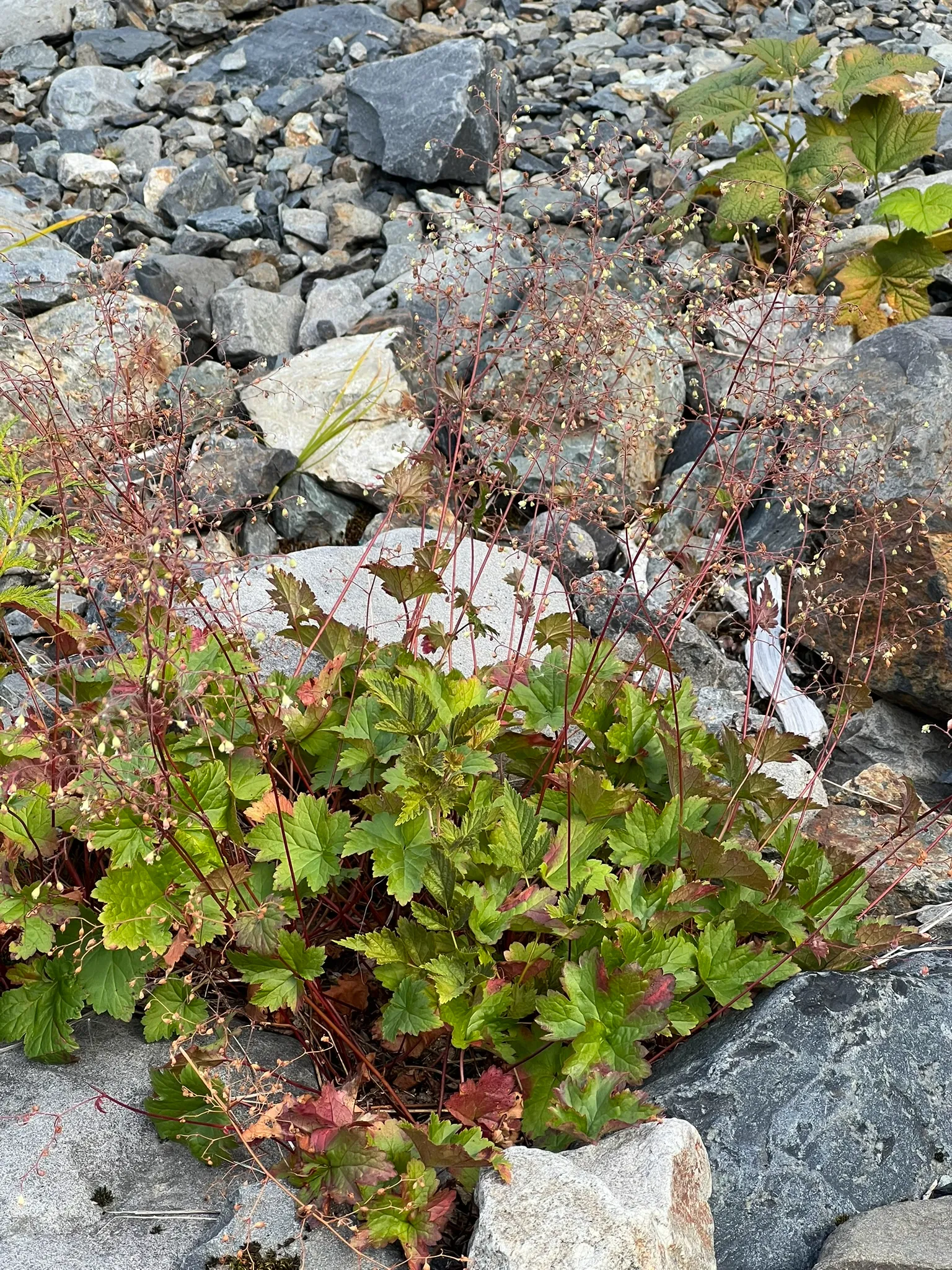
A clump-forming herbaceous perennial in the family Saxifragaceae, native to moist rocky outcrops, cliff faces, stream banks, and shaded forest edges from British Columbia south through Washington and Oregon to California, and east to Idaho. Note: the scientific name on this record (Heuchera micantha) appears to be a typographical error — the correct spelling of this PNW native species is Heuchera micrantha, meaning 'small-flowered.' Plants form basal rosettes of rounded, palmately lobed leaves 2–4 inches (5–10 cm) wide with 5–9 shallow lobes, cordate (heart-shaped) bases, and prominent veining; the leaf surface is variably hairy with a soft texture. Foliage is typically medium green with light silvery mottling, though leaf color can vary. From May through July, slender, wiry, hairy stems 12–30 inches (30–75 cm) tall bear loose, airy panicles of numerous tiny, five-petaled white to pinkish flowers 0.08–0.12 inch (2–3 mm) across — the very small individual flower size is the source of the specific epithet micrantha ('small-flowered'). The species is a parent of many widely grown ornamental Heuchera cultivars ('Palace Purple', 'Bressingham Hybrids'). Non-toxic.
Native Range
Native to moist rocky outcrops, cliff faces, stream banks, and shaded forest edges from British Columbia south through Washington and Oregon to California, and east to Idaho.Suggested Uses
Planted as a native woodland groundcover or border edging in shade gardens and rocky woodland plantings at 12–18 inch (30–45 cm) spacing. The airy flower panicles and mounded foliage rosettes provide good textural contrast in shaded borders. Parent species of many popular ornamental Heuchera cultivars — the native species is appropriate for educational plantings demonstrating the origins of modern horticultural selections. Combines with Polystichum munitum, Dryopteris expansa, Oxalis oregana, and Trillium ovatum in PNW shade gardens.How to Identify
Appearance
Size & Dimensions
Height1' - 2'6"
Width/Spread1' - 1'6"
Colors
Flower Colors
white
pink
Foliage Colors
green
silver
Fall Foliage Colors
green
Bloom Information
Bloom Period
~6 weeksJ
F
M
A
M
J
J
A
S
O
N
D
SpringSummer
Detailed Descriptions
Flower Description
white to pinkish; very tiny five-petaled flowers 0.08–0.12 inch (2–3 mm) — micrantha means 'small-flowered'; loose airy panicles on wiry hairy stems 12–30 inches; May–July; cloud-like haze effectFoliage Description
medium green with light silvery mottling; rounded palmately lobed basal leaves 2–4 inches wide, 5–9 shallow lobes, cordate base, prominent veining, variably hairyGrowing Conditions
Sun Requirements
Partial Shade
Full Shade
Requires 1-4 hours of direct sunlight daily
• Full Sun: 6+ hours of direct sunlight
• Partial Shade: 3-6 hours of direct sunlight
• Full Shade: Less than 3 hours of direct sunlight
Soil Requirements
pH Range5.5 - 7.0(Neutral)
357912
Soil Types
loamrockysand
Drainage
well drained
Water & Climate
Water Needs
Low
Frost Tolerance
hardy
Time to Maturity
2-3 years
Drought Tolerance
Drought tolerant when established
Care & Maintenance
Care Guide
Plant in partial to full shade in well-drained to moist, humus-rich, acidic to neutral soil with a pH of 5.5–7.0. Performs best in the cool, moist conditions of PNW shaded gardens and rocky woodland borders. Tolerates a range of soil moisture from well-drained to periodically moist. Avoid waterlogged soils and hot afternoon sun. Divide congested clumps every 3–4 years in early spring. Mulch lightly to maintain soil moisture and root health. No fertilizer needed.Pruning
Remove flower stems after bloom if desired. Remove dead or tatty basal leaves in late winter. Divide every 3–4 years in early spring — replant the crown divisions at the same level, discarding the woody center of old clumps.Pruning Schedule
J
F
M
A
M
J
J
A
S
O
N
D
early spring
Maintenance Level
lowContainer Growing
✓ Suitable for container growing
Minimum container size: 2 gallons