1 / 3
Perennials
Gladiolus Hybrids
hardy gladiolus
Iridaceae
Hybrid of garden origin; parent species from South Africa and sub-Saharan Africa
At a Glance
TypeBulb
HabitUpright
FoliageDeciduous
Height2-5 feet (60-150 cm)
Width6-12 inches (15-30 cm)
Growing Zones
USDA Hardiness Zones
8 - 10Zone 8
Zone 9
Zone 10
These zones indicate the coldest temperatures this plant can typically survive.
Frost Tolerancetender
Key Features
Attracts Pollinators
Attracts Hummingbirds
Maintenancemoderate
Overview
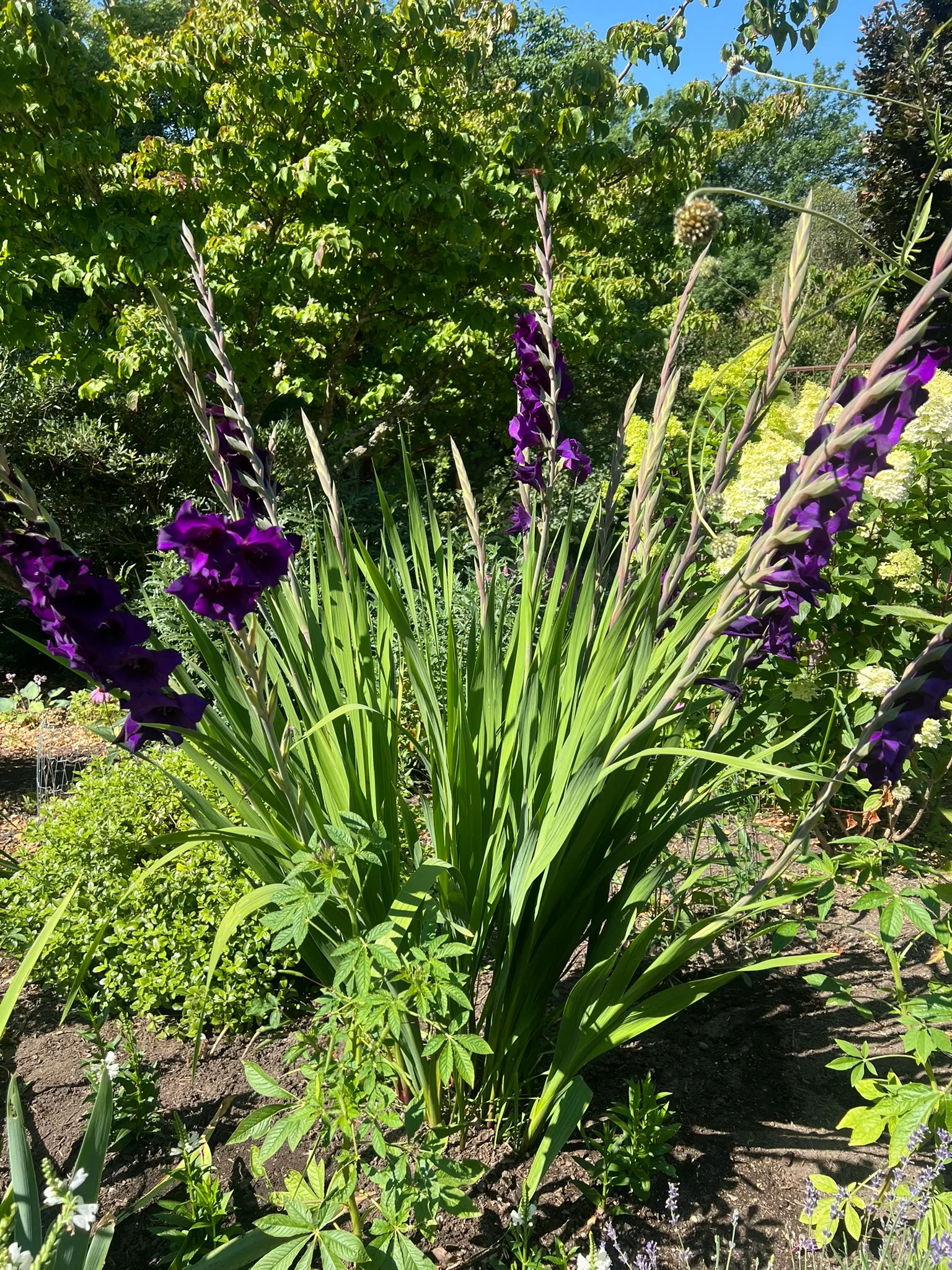
A large group of cormous perennials in the family Iridaceae, derived from complex interspecific hybridization involving numerous South African species. Garden hybrid gladiolus produce fans of upright, sword-shaped leaves 12–24 inches (30–60 cm) long from corms planted in spring. Flower spikes rise 2–5 feet (60–150 cm), bearing 12–20 ruffled, funnel-shaped flowers 3–5 inches (8–13 cm) across in one-sided rows opening from the base upward. The color range is extraordinary — white, cream, yellow, orange, red, pink, rose, lavender, purple, and near-black, as well as bicolors, picotees, and blends. All parts are toxic to cats, dogs, and horses. Corms are tender in zones 7 and colder and must be lifted after the first frost, dried, and stored over winter. In zones 8–10, corms can remain in the ground year-round. Staggered plantings every 2–3 weeks from spring through early summer extend the cutting season.
Native Range
Garden hybrid gladiolus are of complex hybrid origin. The primary parent species are native to South Africa, with contributions from G. dalenii (widespread in sub-Saharan Africa) and dozens of other African species. The Mediterranean species G. communis subsp. byzantinus contributes hardiness to some hybrid lines.Suggested Uses
Grown in cutting gardens and kitchen gardens with successive plantings for a continuous harvest from July through September. In mixed borders, plant corms in groups of 10–15 at 6 inch (15 cm) spacing for the best visual impact. Not effective as isolated single plants in borders. The extraordinary color range and long vase life make them premier cut flowers.How to Identify
Appearance
Size & Dimensions
Height2' - 5'
Width/Spread6" - 1'
Colors
Flower Colors
white
yellow
orange
red
pink
lavender
purple
cream
Foliage Colors
green
Fall Foliage Colors
no change
Bloom Information
Bloom Period
~12 weeksJ
F
M
A
M
J
J
A
S
O
N
D
Summer
Detailed Descriptions
Flower Description
white, cream, yellow, orange, red, pink, lavender, purple; bicolorsFoliage Description
medium green, sword-shapedGrowing Conditions
Sun Requirements
Full Sun
Requires 6-8 hours of direct sunlight daily
• Full Sun: 6+ hours of direct sunlight
• Partial Shade: 3-6 hours of direct sunlight
• Full Shade: Less than 3 hours of direct sunlight
Soil Requirements
pH Range6.0 - 6.5(Neutral)
357912
Soil Types
loamsand
Drainage
well drained
Water & Climate
Water Needs
Medium
Frost Tolerance
tender
Care & Maintenance
Care Guide
Plant corms 4–6 inches (10–15 cm) deep and 6 inches (15 cm) apart after last frost in full sun in fertile, well-drained soil with a pH of 6.0–6.5. Stake tall cultivars when spikes emerge. Water consistently during growth and bloom — inconsistent moisture causes corms to split. Fertilize with a balanced fertilizer when leaves are 6 inches (15 cm) tall and again when spikes show color. In zones 7 and colder, lift corms 6–8 weeks after bloom, allow to dry for 2–3 weeks, clean, and store at 35–50°F (2–10°C) in mesh bags or paper bags through winter. Discard any soft or diseased corms.Pruning
Cut flower spikes for use when the bottom 2–3 florets are open; leave as much foliage as possible on the plant to allow the corm to ripen. After bloom, cut the spike at ground level but leave all leaves intact until they yellow and die back naturally — the leaves replenish the corm for next year. Do not fold or knot the leaves.Pruning Schedule
J
F
M
A
M
J
J
A
S
O
N
D
summerfall
Maintenance Level
moderate⚠️ Toxicity Warning
Toxic to petsPlanting Guide
Planting Methods & Timing
Planting Method
transplant
Plant Spacing
6 inches