1 / 9
Perennials
Eryngium Hybrids
sea holly
Apiaceae
Hybrid of garden origin; parent species from Europe and Mediterranean
At a Glance
TypePerennial
HabitUpright
FoliageEvergreen
Height18-36 inches (45-90 cm)
Width18-24 inches (45-60 cm)
Growing Zones
USDA Hardiness Zones
4 - 9Zone 4
Zone 5
Zone 6
Zone 7
Zone 8
Zone 9
These zones indicate the coldest temperatures this plant can typically survive.
Frost Tolerancehardy
Key Features
Attracts Pollinators
Attracts Butterflies
Deer Resistant
Drought Tolerant
Maintenancevery low
Overview
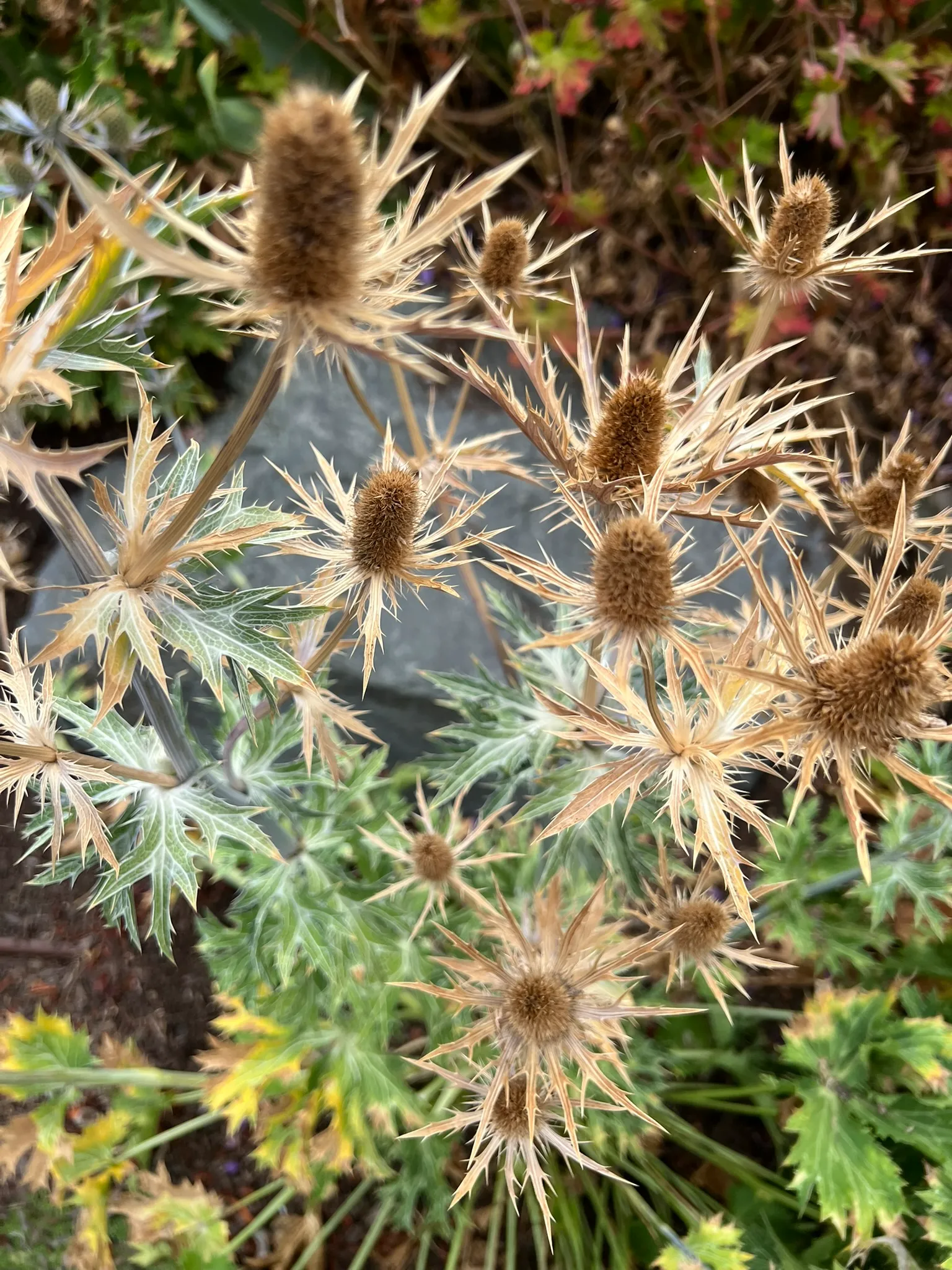
A group of clump-forming perennials in the family Apiaceae, derived from interspecific crosses primarily involving Eryngium alpinum, E. bourgatii, E. planum, and E. variifolium. Hybrid sea hollies form basal rosettes of spine-margined leaves, varying from heart-shaped to deeply cut and pinnate depending on parentage. From midsummer, branching stems rise 18–36 inches (45–90 cm) bearing multiple flower heads, each consisting of a thimble-shaped to cone-shaped disc 0.5–1.5 inches (1.3–4 cm) across of tightly packed, tiny steel-blue to violet-blue florets, surrounded by a ring of rigid, spiny bracts in matching metallic blue. The intensity and extent of the blue coloration — covering stems, bracts, and flower heads simultaneously — is the defining ornamental feature of the group and is more pronounced in lean, dry soils than in rich, moist ones. Plants are long-lived, drought-tolerant, deer-resistant, and require virtually no care once established. Excellent cut and dried flowers.
Native Range
Hybrid sea hollies are of garden origin. Parent species are native to Europe and the Mediterranean region: E. alpinum from subalpine meadows of the Alps and Balkans; E. bourgatii from the Pyrenees and Spain; E. planum from central and eastern Europe; and E. variifolium from the Atlas Mountains of Morocco. Most species grow in poor, dry, rocky or sandy soils in full sun.Suggested Uses
Planted in gravel gardens, dry perennial borders, and prairie-style plantings at 18–24 inch (45–60 cm) spacing. The steel-blue color contrasts powerfully with warm-colored perennials (heleniums, rudbeckias, kniphofias). Excellent in combination with ornamental grasses. Cut flowers last 10–14 days in water; dried stems retain color well for 6–12 months.How to Identify
Appearance
Size & Dimensions
Height1'6" - 3'
Width/Spread1'6" - 2'
Colors
Flower Colors
blue
violet
silver
Foliage Colors
green
blue
Fall Foliage Colors
no change
Bloom Information
Bloom Period
~8 weeksJ
F
M
A
M
J
J
A
S
O
N
D
Summer
Detailed Descriptions
Flower Description
steel blue to violet-blueFoliage Description
green with spiny margins; stems and upper bracts metallic steel-blueGrowing Conditions
Sun Requirements
Full Sun
Requires 6-8 hours of direct sunlight daily
• Full Sun: 6+ hours of direct sunlight
• Partial Shade: 3-6 hours of direct sunlight
• Full Shade: Less than 3 hours of direct sunlight
Soil Requirements
pH Range6.0 - 8.0(Neutral)
357912
Soil Types
sandloamchalkrocky
Drainage
well drained
Water & Climate
Water Needs
Very Low
Frost Tolerance
hardy
Time to Maturity
2-3 years
Drought Tolerance
Drought tolerant when established
Care & Maintenance
Care Guide
Plant in full sun in poor to moderately fertile, sharply drained soil; heavy, rich, or consistently moist soils reduce blue coloration intensity and increase crown rot risk. Once established, plants are highly drought-tolerant and require little supplemental water. Do not fertilize — lean soil produces the best blue coloration. Avoid transplanting established clumps as the deep taproot resents disturbance; choose the final planting site carefully. Propagate by root cuttings taken in late winter, or by division of young crowns in early spring.Pruning
Leave flower heads and stems standing through fall and winter — they dry attractively on the plant and provide structure. Cut all stems to ground level in early spring before new basal growth begins. Avoid disturbing the crown or root system. Plants rarely need division; established clumps are long-lived and improve with age.Pruning Schedule
J
F
M
A
M
J
J
A
S
O
N
D
early spring