1 / 6
Vegetables
Brassica oleracea 'Diablo'
Diablo Brussels Sprouts
BrassicaceaeEurope
At a Glance
Typevegetable
Habitupright
Foliagedeciduous
Height24-36 inches
Width18-24 inches
Growing Zones
USDA Hardiness Zones
3a - 9bZone 3a
Zone 3b
Zone 4a
Zone 4b
Zone 5a
Zone 5b
Zone 6a
Zone 6b
Zone 7a
Zone 7b
Zone 8a
Zone 8b
Zone 9a
Zone 9b
These zones indicate the coldest temperatures this plant can typically survive.
Frost Tolerancehardy
Key Features
Container Friendly
Maintenancemoderate
Overview
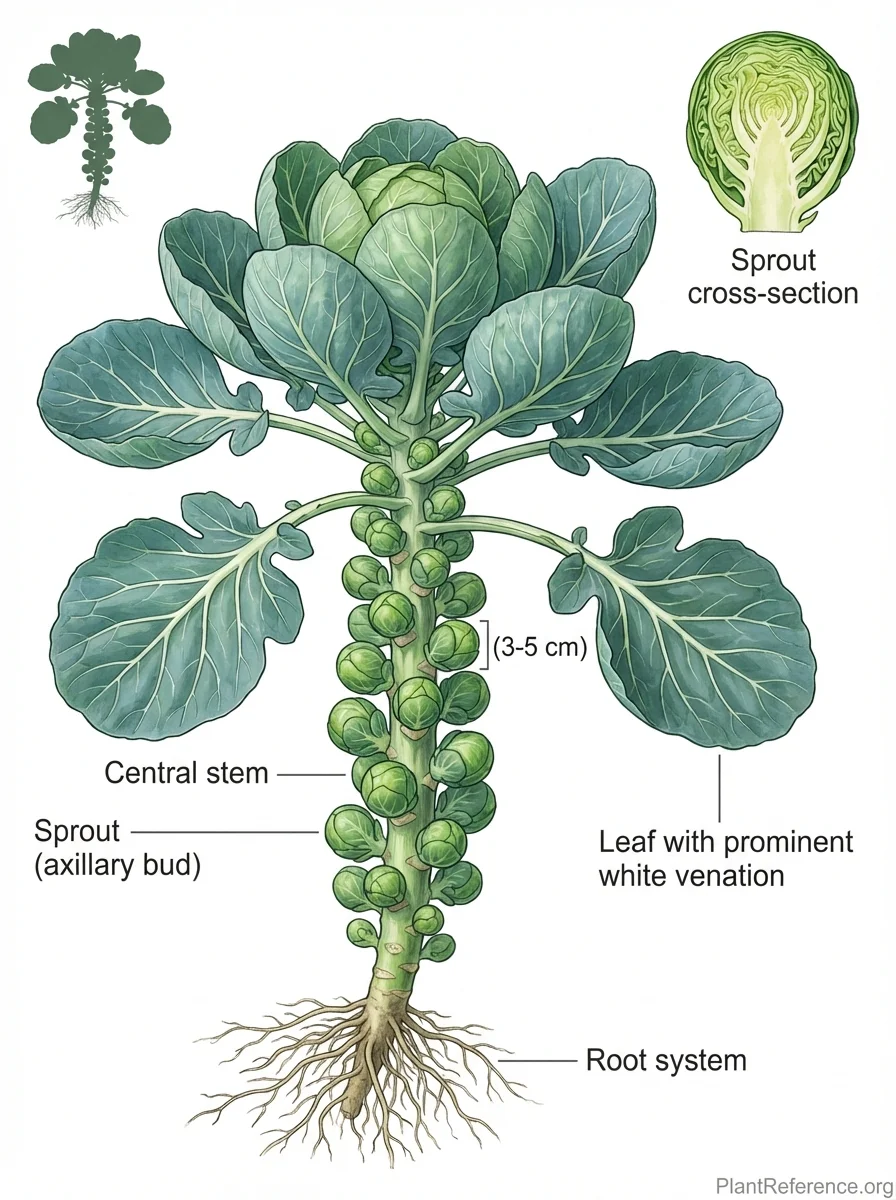
Brassica oleracea 'Diablo' is a premium Brussels sprouts cultivar renowned for its exceptional cold tolerance and consistent production of firm, compact sprouts. This robust plant develops a sturdy central stem that can reach 2-3 feet in height, with large blue-green leaves that form a distinctive rosette pattern. The plant produces numerous small, cabbage-like buds along the length of its thick stem, with each sprout measuring 1-2 inches in diameter when mature. The 'Diablo' cultivar is particularly valued for its uniform sprout development and extended harvest period, typically producing 50-100 individual sprouts per plant. The sprouts have a dense, tight structure with overlapping outer leaves that range from deep green to purple-tinged, especially when exposed to cool temperatures.
Native Range
Brassica oleracea is native to the coastal regions of western and southern Europe, including the Mediterranean basin, Atlantic coasts of France, Spain, and the British Isles. Wild forms of this species can still be found growing on limestone cliffs and rocky shores along these coastlines.Suggested Uses
Brassica oleracea 'Diablo' works well in vegetable gardens, raised beds, and large containers. Excellent for fall and winter harvests, providing fresh vegetables when few other crops are productive. Ideal for cold-climate gardening and season extension programs. The attractive blue-green foliage makes it suitable for ornamental edible landscapes and kitchen gardens.How to Identify
Appearance
Size & Dimensions
Height2' - 3'
Width/Spread1'6" - 2'
Colors
Foliage Colors
blue
green
purple
Fall Foliage Colors
purple
Bloom Information
Detailed Descriptions
Foliage Description
blue-green with purple tinges in cool weatherGrowing Conditions
Sun Requirements
Full Sun
• Full Sun: 6+ hours of direct sunlight
• Partial Shade: 3-6 hours of direct sunlight
• Full Shade: Less than 3 hours of direct sunlight
Soil Requirements
pH Range6.0 - 7.5(Neutral)
357912
Drainage
moist
Water & Climate
Water Needs
moderate, consistent moisture
Frost Tolerance
hardy
Time to Maturity
16-17 weeks
Care & Maintenance
Care Guide
Brassica oleracea 'Diablo' requires consistent moisture throughout the growing season, with approximately 1-1.5 inches of water per week. Apply a balanced fertilizer at planting and side-dress with nitrogen-rich fertilizer 3-4 weeks after transplanting. Maintain soil moisture with mulch around the base to prevent stress and encourage uniform sprout development. Monitor for common brassica pests including cabbage worms, aphids, and flea beetles, using row covers early in the season if necessary. The plants benefit from cool weather and actually improve in flavor after exposure to light frosts, which enhance their natural sweetness.Pruning
Brassica oleracea 'Diablo' requires minimal pruning during the growing season. Remove any yellowing or damaged lower leaves as they appear, but leave the upper leaves intact as they continue to feed the developing sprouts. As sprouts mature from bottom to top, harvest the lower ones first by twisting them off or cutting with a sharp knife. After harvesting sprouts, the remaining leaf crown can be left to develop into a loose head similar to collard greens, extending the harvest period.Maintenance Level
moderateContainer Growing
✓ Suitable for container growing
⚠️ Toxicity Warning
Brassica oleracea 'Diablo' is non-toxic and safe for human consumption when properly prepared. All parts of the plant are edible, though the sprouts and young leaves are most commonly consumed. Generally safe around pets in small quantities, though large amounts may cause digestive upset in dogs and cats.Planting Guide
Planting Methods & Timing
Planting Method
transplant
Indoor Start
6 weeks before last frost
Direct Sow Timing
mid to late summer for fall harvest
Days to Maturity
110–120 days
Plant Spacing
24 inches
Companion Planting
Good Companions
carrots
onions
beets
spinach
lettuce
herbs
Avoid Planting With
tomatoes
peppers
strawberries
pole beans