1 / 6
Vegetables
Brassica oleracea 'Di Cicco'
Di Cicco Broccoli
BrassicaceaeEurope
At a Glance
Typevegetable
Habitupright
Foliagedeciduous
Height18-24 inches
Width18-24 inches
Growing Zones
USDA Hardiness Zones
3a - 9bZone 3a
Zone 3b
Zone 4a
Zone 4b
Zone 5a
Zone 5b
Zone 6a
Zone 6b
Zone 7a
Zone 7b
Zone 8a
Zone 8b
Zone 9a
Zone 9b
These zones indicate the coldest temperatures this plant can typically survive.
Frost Tolerancehardy
Key Features
Attracts Pollinators
Attracts Butterflies
Container Friendly
Maintenancemoderate
Overview
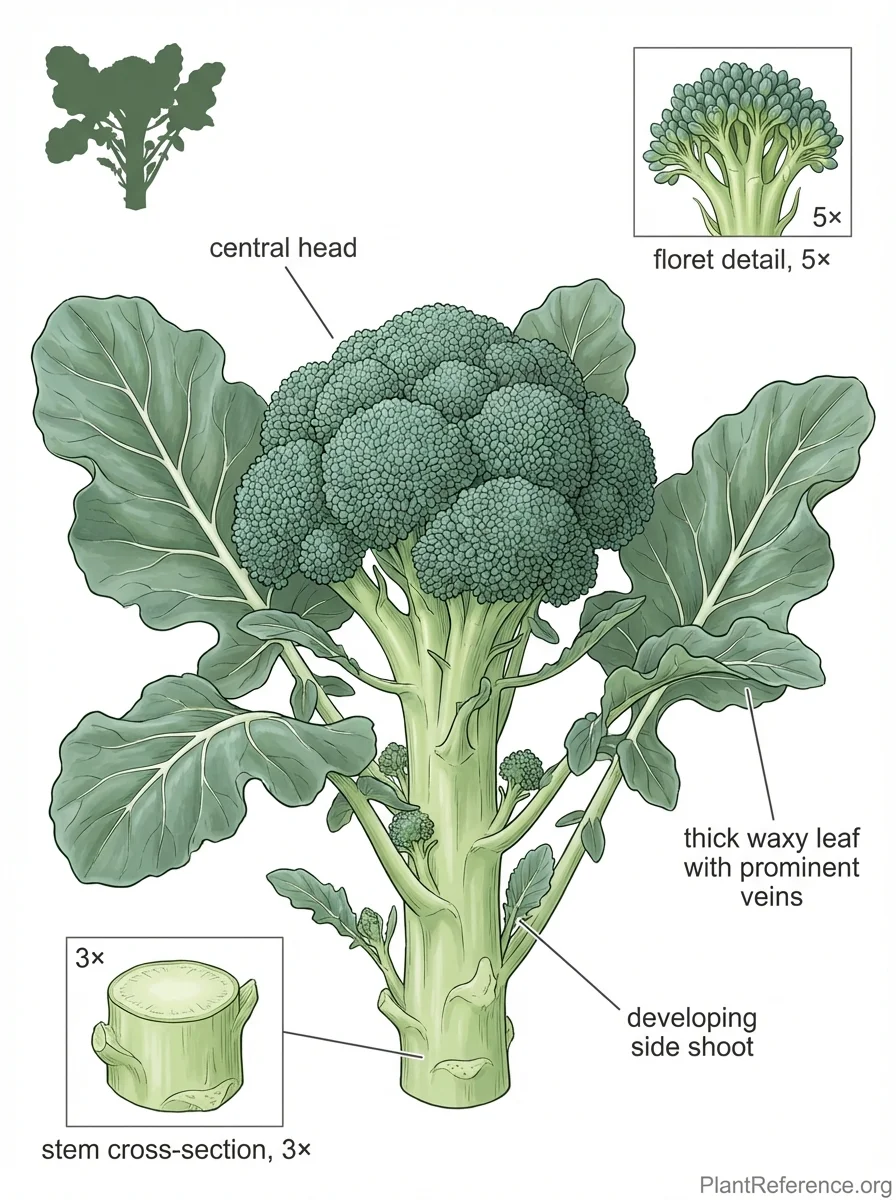
Brassica oleracea 'Di Cicco' is a compact, early-maturing broccoli cultivar that produces dense, blue-green heads with fine, tightly packed florets. This heritage variety, developed in the 1890s by Italian immigrants to America, typically forms medium-sized central heads measuring 4-6 inches across, followed by numerous smaller side shoots that extend the harvest period. The plant features sturdy, upright stems with thick, waxy blue-green leaves that have prominent white veins and slightly serrated edges. Brassica oleracea 'Di Cicco' is particularly valued for its reliability in cool weather conditions and its ability to produce multiple harvests from a single plant, making it an excellent choice for home gardeners seeking a productive and flavorful broccoli variety.
Native Range
Brassica oleracea is native to the Mediterranean region and Atlantic coasts of western and southwestern Europe, including the British Isles, where wild forms can still be found growing on rocky cliffs and coastal areas. The cultivar 'Di Cicco' was developed in Italy and brought to the United States by Italian immigrants in the late 19th century.Suggested Uses
Brassica oleracea 'Di Cicco' works well in vegetable gardens, raised beds, and large containers. Its compact size makes it suitable for small-space gardening, while its prolific side shoot production provides extended harvests for fresh eating, steaming, or freezing. The attractive blue-green foliage can serve as an ornamental element in edible landscapes or kitchen gardens.How to Identify
Appearance
Size & Dimensions
Height1'6" - 2'
Width/Spread1'6" - 2'
Colors
Flower Colors
yellow
Foliage Colors
blue
green
Bloom Information
Bloom Period
J
F
M
A
M
J
J
A
S
O
N
D
SpringSummer
Detailed Descriptions
Flower Description
yellowFoliage Description
blue-green with white veinsGrowing Conditions
Sun Requirements
Full Sun
• Full Sun: 6+ hours of direct sunlight
• Partial Shade: 3-6 hours of direct sunlight
• Full Shade: Less than 3 hours of direct sunlight
Soil Requirements
pH Range6.0 - 7.0(Neutral)
357912
Drainage
well drained
Water & Climate
Water Needs
moderate to high
Frost Tolerance
hardy
Time to Maturity
48-65 days
Care & Maintenance
Care Guide
Brassica oleracea 'Di Cicco' requires consistent moisture throughout the growing season, with soil that remains evenly moist but well-draining to prevent root rot. Apply a balanced fertilizer at planting and side-dress with nitrogen-rich fertilizer when heads begin to form. Mulch around plants to retain moisture and suppress weeds, keeping mulch away from the base of the stem. Monitor regularly for common brassica pests such as cabbage worms, aphids, and flea beetles, using row covers during early growth stages for protection. Harvest the main head while florets are tight and before any yellow flowers appear, cutting at an angle to promote side shoot development.Pruning
Brassica oleracea 'Di Cicco' requires minimal pruning beyond harvesting. Cut the main head when florets are tight and fully formed, leaving 4-6 inches of stem and several leaves to encourage side shoot production. Remove any yellowing or damaged lower leaves throughout the growing season to improve air circulation and prevent disease. After harvesting side shoots, the entire plant can be removed and composted, or left to bolt and produce flowers for beneficial insects if desired.Maintenance Level
moderateContainer Growing
✓ Suitable for container growing
Minimum container size: 5 gallons
⚠️ Toxicity Warning
Brassica oleracea 'Di Cicco' is safe for human consumption when properly prepared. All parts of the plant are edible, though the florets and tender leaves are most commonly consumed. Raw consumption in large quantities may affect thyroid function in sensitive individuals due to naturally occurring compounds called goitrogens.Planting Guide
Planting Methods & Timing
Planting Method
transplant
Indoor Start
6 weeks before last frost
Direct Sow Timing
early spring, 2-3 weeks before last frost
Days to Maturity
48–65 days
Plant Spacing
18 inches
Companion Planting
Good Companions
lettuce
spinach
onions
carrots
beets
nasturtiums
marigolds
Avoid Planting With
tomatoes
peppers
strawberries
beans