1 / 4
Perennials
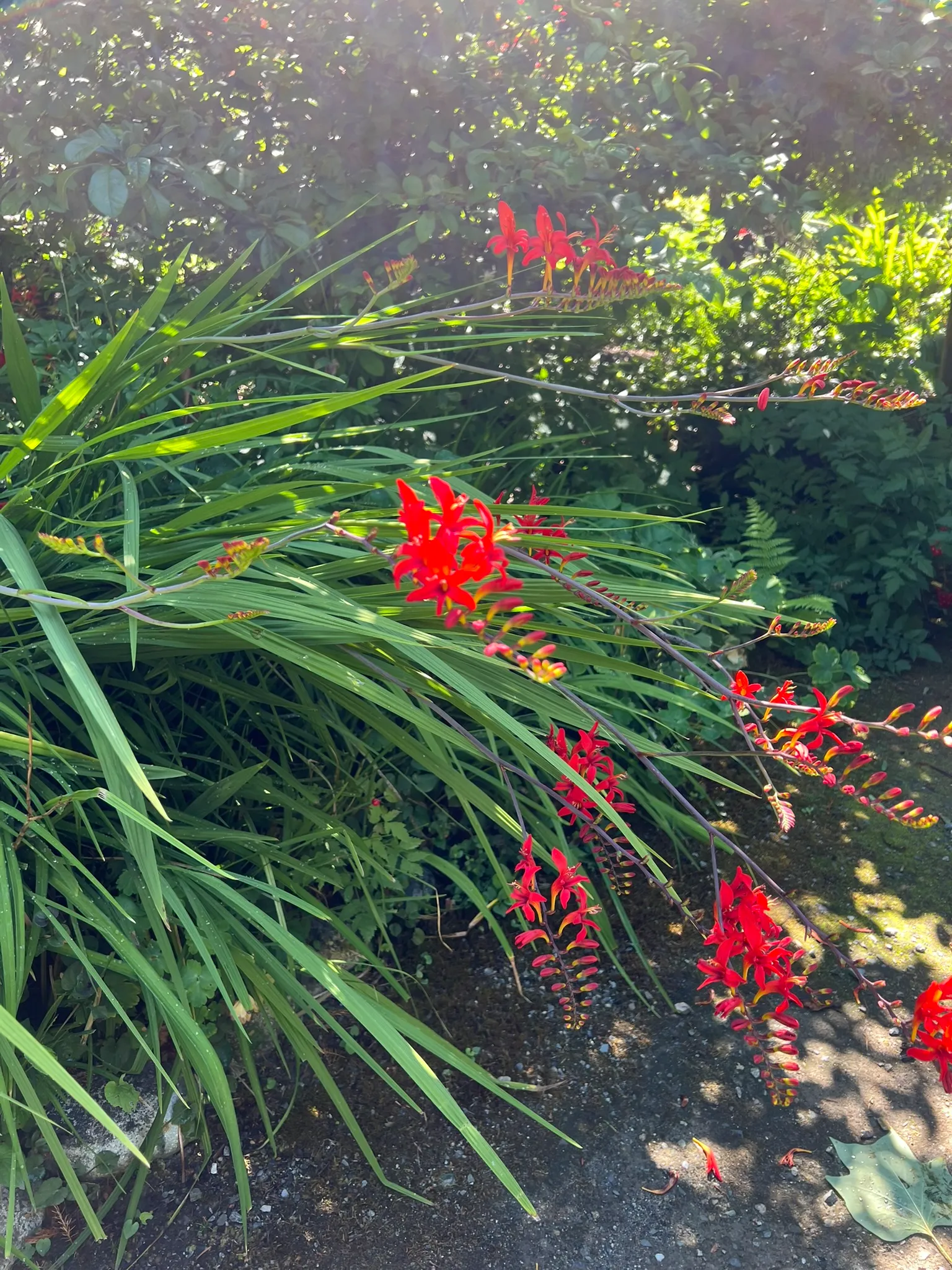
Crocosmia x crocosmiiflora 'Lucifer'
red crocosmia
Iridaceae
Hybrid of garden origin; parent species from South Africa
At a Glance
TypeBulb
HabitUpright
FoliageDeciduous
Height3-4 feet (90-120 cm)
Width1-2 feet (30-60 cm)
Growing Zones
USDA Hardiness Zones
5 - 9Zone 5
Zone 6
Zone 7
Zone 8
Zone 9
These zones indicate the coldest temperatures this plant can typically survive.
Frost Tolerancehardy
Key Features
Attracts Pollinators
Attracts Hummingbirds
Deer Resistant
Container Friendly
Maintenancelow
Overview
A vigorous cormous perennial cultivar selected for its intensely red flowers, larger stature, and improved hardiness compared to many hybrid crocosmias. Plants form dense clumps from chains of interconnected corms, producing upright, sword-shaped, pleated leaves 24–36 inches (60–90 cm) long in a fan-like arrangement. In midsummer, strong, branching flower stems rise 3–4 feet (90–120 cm), each bearing 2–3 arching lateral branches with rows of tubular flowers 1.5–2 inches (4–5 cm) long in vivid flame red, arranged in a zigzag pattern. Individual flowers open from the base of each spike upward over 2–3 weeks. 'Lucifer' is among the most cold-tolerant montbretia cultivars, reliable to zone 5 with winter mulching. Corms multiply rapidly; established clumps become congested within 3–4 years and require division to maintain flowering vigor. Naturalizes readily in mild climates and can spread beyond intended planting areas.
Native Range
Crocosmia x crocosmiiflora is a hybrid of garden origin, derived from a cross between C. aurea and C. pottsii, both native to South Africa. 'Lucifer' was raised by Alan Bloom of Bressingham Gardens, England, and introduced in 1966.Suggested Uses
Commonly planted in mixed perennial borders at 6–8 inch (15–20 cm) spacing for bold mid-border color from July through August. The vivid red flowers pair effectively with yellow and orange late-season perennials. Arching stems are excellent in cut flower arrangements, lasting 7–10 days in water. Can naturalize in informal meadow settings in zones 7–9; monitor spread in mild climates.How to Identify
Appearance
Size & Dimensions
Height3' - 4'
Width/Spread1' - 2'
Colors
Flower Colors
red
Foliage Colors
green
Fall Foliage Colors
no change
Bloom Information
Bloom Period
~6 weeksJ
F
M
A
M
J
J
A
S
O
N
D
Summer
Detailed Descriptions
Flower Description
vivid flame redFoliage Description
medium green, pleatedGrowing Conditions
Sun Requirements
Full Sun
Partial Shade
Requires 5-8 hours of direct sunlight daily
• Full Sun: 6+ hours of direct sunlight
• Partial Shade: 3-6 hours of direct sunlight
• Full Shade: Less than 3 hours of direct sunlight
Soil Requirements
pH Range6.0 - 7.0(Neutral)
357912
Soil Types
loamsand
Drainage
well drained
Water & Climate
Water Needs
Medium
Frost Tolerance
hardy
Time to Maturity
1-2 years
Care & Maintenance
Care Guide
Plant corms 3–5 inches (8–13 cm) deep and 6–8 inches (15–20 cm) apart in full sun in moist, well-drained soil. In zones 5–6, mulch 3–4 inches (8–10 cm) deep over the planting area after the first hard frost to improve winter survival. In zone 4 and colder, lift corms after frost, dry for 2–3 days, and store at 40–50°F (4–10°C) in barely moist peat or vermiculite. Water during dry spells in the first growing season; established clumps tolerate brief dry periods. Divide congested clumps every 3–4 years in early spring before growth begins by lifting the entire mass and separating corm chains. Replant immediately at original depth.Pruning
Leave foliage intact through fall to allow photosynthesis to recharge the corms; do not cut back green leaves. Remove spent flower stems at the base after seed capsules have been enjoyed for fall interest, or leave them for birds. Cut all foliage to ground level in late fall after it dies back naturally, or in early spring. Divide every 3–4 years.Pruning Schedule
J
F
M
A
M
J
J
A
S
O
N
D
fallearly spring
Maintenance Level
lowContainer Growing
✓ Suitable for container growing
Minimum container size: 5 gallons