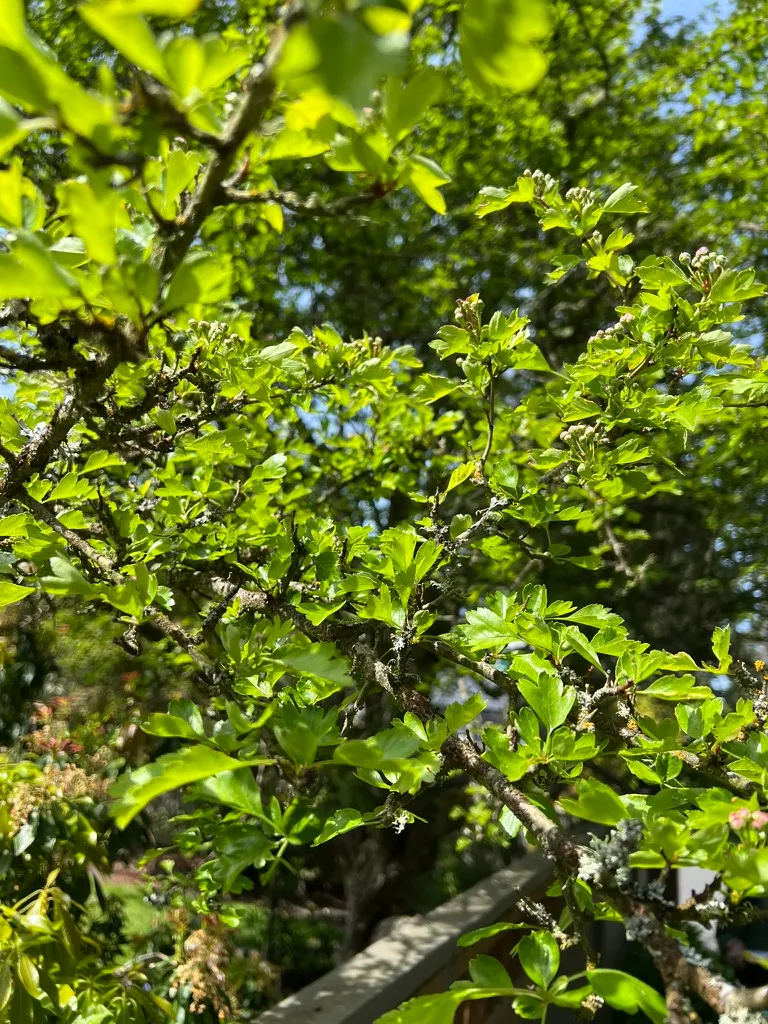
1 / 4
Broadleaf Deciduous Trees
Crataegus laevigata 'Paul's Scarlet'
Paul's Scarlet hawthorn
Rosaceae
Species native to Europe; cultivar of garden selection
At a Glance
TypeTree
HabitSpreading
FoliageDeciduous
Height15-20 feet (4.5-6 m)
Width15-20 feet (4.5-6 m)
Maturity10 years
Growing Zones
USDA Hardiness Zones
4 - 8Zone 4
Zone 5
Zone 6
Zone 7
Zone 8
These zones indicate the coldest temperatures this plant can typically survive.
Frost Tolerancehardy
Key Features
Attracts Pollinators
Deer Resistant
Drought Tolerant
Fragrant (moderate)
Maintenancelow
Overview
Crataegus laevigata 'Paul's Scarlet' (Paul's Scarlet hawthorn) is a small deciduous tree reaching 15–20 feet (4.5–6 m) tall and 15–20 feet (4.5–6 m) wide in a densely branched, rounded to broad-spreading form with thorny stems. It is grown principally for its spectacular spring flower display: in May, every branch is smothered in clusters of fully double flowers 0.5–0.75 inch (13–19 mm) across in vivid scarlet-red — a deeper, richer red than most flowering hawthorns. The name 'Paul's Scarlet' is precisely accurate — the color is true scarlet, not pink or rose. Flowers carry the characteristic hawthorn fragrance, sweet with a faint, complex undertone. Because the flowers are fully double, the reproductive structures are modified into petals and the tree produces minimal fruit — a tradeoff that concentrates the plant's energy into the floral display. The lobed leaves are less deeply cut than those of the common hawthorn (C. monogyna) — 3-lobed with shallower sinuses. The tree is a selection from Crataegus laevigata (English or midland hawthorn), native to Europe. In the PNW, fire blight and hawthorn leaf spot are occasional concerns — good air circulation reduces risk. The thorns (0.5–1 inch / 13–25 mm) are real and require awareness in planting near foot traffic. DB notes: url_1 and url_5 in this record link to Crataegus rhipidophylla — those links do not apply to this plant.
Native Range
Crataegus laevigata is native to Europe from Britain east to Russia. 'Paul's Scarlet' is a cultivar of garden selection, known in cultivation since the 19th century.Suggested Uses
Grown as a small ornamental tree for spectacular scarlet spring flowering — one of the most vivid flowering hawthorns available. Suitable for small gardens, residential streetscapes, and urban plantings where its modest size (15–20 feet), pollution tolerance, and adaptability to poor soils are valuable. The double flowers sacrifice berry production (and thus winter wildlife value) in exchange for a denser, more visually striking floral display. Combined well with white or pale pink spring-flowering companions where the scarlet provides maximum contrast. The thorny branching provides nesting habitat for birds even without berries.How to Identify
Appearance
Size & Dimensions
Height15' - 20'
Width/Spread15' - 20'
Reaches mature size in approximately 10 years
Colors
Flower Colors
red
Foliage Colors
green
Fall Foliage Colors
yellow
Bloom Information
Bloom Period
~3 weeksJ
F
M
A
M
J
J
A
S
O
N
D
Spring
Detailed Descriptions
Flower Description
vivid scarlet-red (fully double)Foliage Description
glossy medium green in summer; yellow-green in fallGrowing Conditions
Sun Requirements
Full Sun
Partial Shade
Requires 4-8 hours of direct sunlight daily
• Full Sun: 6+ hours of direct sunlight
• Partial Shade: 3-6 hours of direct sunlight
• Full Shade: Less than 3 hours of direct sunlight
Soil Requirements
pH Range6.0 - 7.5(Neutral)
357912
Soil Types
loamclaychalksand
Drainage
well drained
Water & Climate
Water Needs
Low
Frost Tolerance
hardy
Time to Maturity
8-12 years
Drought Tolerance
Drought tolerant when established
Care & Maintenance
Care Guide
Plant in full sun in well-drained, average to moderately fertile soil. Tolerates clay, chalk, and poor soil — highly adaptable once established. Excellent pollution and urban tolerance. Drought-tolerant when established. Fire blight (Erwinia amylovora) can affect hawthorns in wet spring conditions — watch for blackened, shepherd's-crook-bent shoot tips and remove affected wood 12 inches (30 cm) below visible symptoms with sterilized tools. Hawthorn leaf spot may cause premature defoliation in wet years. The thorny branches make this unsuitable near high foot-traffic areas or children's play spaces. Handle branches with gloves.Pruning
Prune in late winter (February through March) or after flowering (late May through June) — avoid pruning in wet autumn or winter conditions that favor fire blight entry. Remove crossing, rubbing, or dead branches to maintain an open canopy. The natural rounded form requires minimal corrective shaping. If fire blight is present, prune 12 inches (30 cm) below visible symptoms and disinfect tools between each cut. Can be maintained as a small standard tree by gradually removing lower branches over several years.Pruning Schedule
J
F
M
A
M
J
J
A
S
O
N
D
early springlate spring