1 / 3
Perennials
Corydalis spp.
fumewort
PapaveraceaeAsia, Europe, North America
At a Glance
TypePerennial
HabitMounding
FoliageDeciduous
Height6–36 inches (15–90 cm)
Width8–24 inches (20–60 cm)
Maturity1 years
Growing Zones
USDA Hardiness Zones
4 - 9Zone 4
Zone 5
Zone 6
Zone 7
Zone 8
Zone 9
These zones indicate the coldest temperatures this plant can typically survive.
Frost Tolerancehardy
Key Features
Attracts Pollinators
Attracts Butterflies
Deer Resistant
Container Friendly
Native to North America
Maintenancelow
Overview
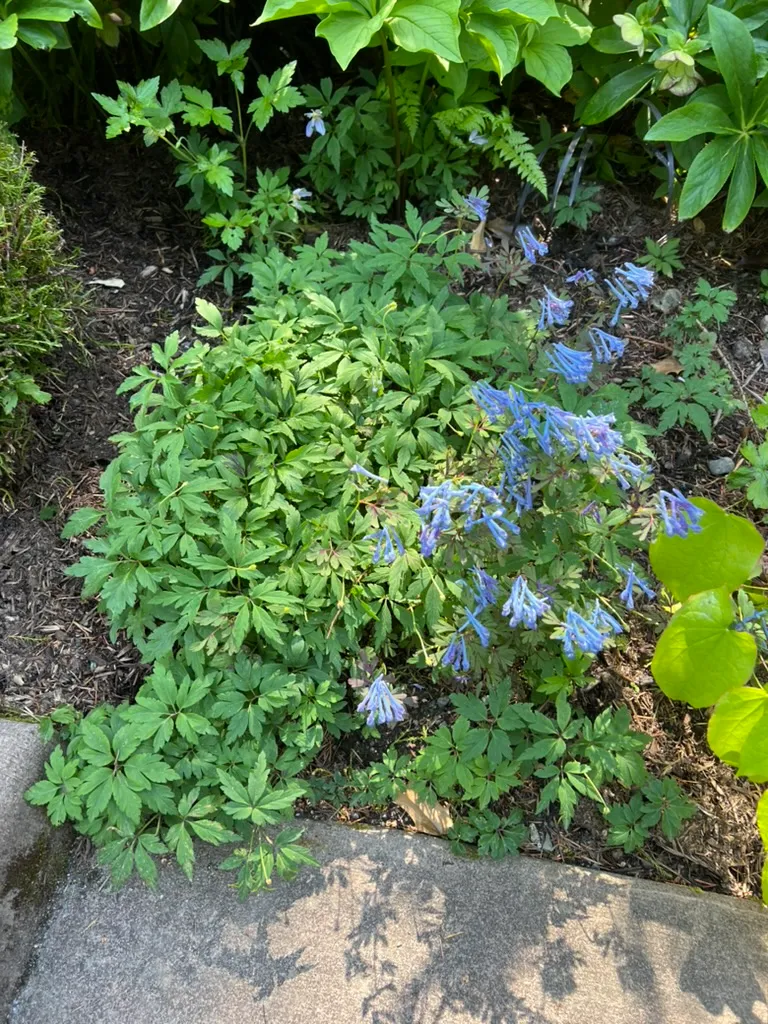
Corydalis is a large genus of approximately 500 species of annual and perennial herbaceous plants in the family Papaveraceae, distributed across temperate regions of the Northern Hemisphere with greatest diversity in China and the Himalayas. Plants range from small spring ephemerals a few inches tall to robust perennials exceeding 3 feet (90 cm), united by finely divided, fern-like compound foliage and distinctive tubular spurred flowers with four petals — the uppermost bearing a nectar-containing spur attractive to long-tongued bees. Species vary greatly in flower color, from yellow and white to blue, purple, and pink. Several species are important ornamental garden plants in Pacific Northwest conditions, including the golden-yellow Corydalis lutea, long-blooming and self-seeding in rocky walls and shaded borders, and the electric blue Corydalis flexuosa, a spring-blooming perennial suited to woodland gardens. Many Corydalis species are summer-dormant. The genus is notably the only dicot group known to possess a single cotyledon. Toxicity varies by species; some contain alkaloids and should be handled with care.
Native Range
The genus Corydalis is native to temperate regions of the Northern Hemisphere, with approximately half of the roughly 500 species originating in China and the eastern Himalayas. Additional species occur across central Asia, Europe, Japan, and eastern North America. Several North American species are native to the Pacific Northwest, including Corydalis scouleri and Corydalis aquae-gelidae, both inhabitants of cool, moist forest streambanks. European ornamental species such as Corydalis lutea are widely naturalized in Pacific Northwest gardens and urban environments.Suggested Uses
Corydalis species are versatile shade garden plants suited to woodland borders, rock gardens, shaded wall crevices, and naturalistic underplanting beneath deciduous trees and shrubs. Yellow-flowered Corydalis lutea is particularly valued for its ability to colonize difficult dry-shade conditions and stone walls. Blue-flowered Corydalis flexuosa pairs well with hostas, ferns, and spring bulbs in sheltered woodland settings. Spring-ephemeral species are ideal companions for other early bulbs and woodland wildflowers that emerge before tree canopy closes.How to Identify
Appearance
Size & Dimensions
Height6" - 3'
Width/Spread8" - 2'
Reaches mature size in approximately 1 years
Colors
Flower Colors
yellow
blue
pink
purple
white
Foliage Colors
green
blue green
Fall Foliage Colors
no change
Bloom Information
Bloom Period
~6 weeksJ
F
M
A
M
J
J
A
S
O
N
D
Spring
Detailed Descriptions
Flower Description
Yellow, blue, pink, purple, or white depending on speciesFoliage Description
Blue-green to medium greenGrowing Conditions
Sun Requirements
Partial Shade
Full Shade
Requires 1-4 hours of direct sunlight daily
• Full Sun: 6+ hours of direct sunlight
• Partial Shade: 3-6 hours of direct sunlight
• Full Shade: Less than 3 hours of direct sunlight
Soil Requirements
pH Range5.5 - 7.5(Neutral)
357912
Soil Types
loamsandrocky
Drainage
well drained
Water & Climate
Water Needs
Medium
Frost Tolerance
hardy
Time to Maturity
1–2 years
Care & Maintenance
Care Guide
Cultural requirements vary significantly by species. Most ornamental Corydalis perform best in cool, moist, humus-rich, well-drained soil in partial to full shade, though Corydalis lutea tolerates drier conditions and establishes readily in rock walls and pavement cracks. Spring ephemerals such as Corydalis solida require minimal care — plant tubers in autumn 3–4 inches (8–10 cm) deep and allow summer dormancy. For Corydalis flexuosa, maintain consistent moisture during the growing season and provide afternoon shade in warmer sites. Self-seeding species like Corydalis lutea require periodic editing to prevent unwanted spread. Most species require no fertilization in organically rich soils; top-dress annually with leaf mould or compost.Pruning
For summer-dormant species, allow foliage to yellow and collapse naturally before clearing; removing foliage prematurely reduces carbohydrate storage in tubers or rhizomes. For continuously blooming species such as Corydalis lutea, no deadheading is necessary, though shearing back plants by one-third in midsummer can refresh tired foliage and encourage continued flowering into autumn. Remove dead stems at the base in late autumn or early spring before new growth emerges.Pruning Schedule
J
F
M
A
M
J
J
A
S
O
N
D
summer
Maintenance Level
lowContainer Growing
✓ Suitable for container growing
Minimum container size: 2 gallons