1 / 12
Broadleaf Deciduous Trees
Cercis canadensis 'Forest Pansy'
Forest Pansy redbud
Fabaceae
Eastern North America (species); cultivar introduced c. 1971 by Forest Farm Nursery, Williams, Oregon
At a Glance
TypeTree
HabitSpreading
FoliageDeciduous
Height15-25 feet (4.5-7.5 m)
Width20-30 feet (6-9 m)
Maturity12 years
Growing Zones
USDA Hardiness Zones
5 - 9Zone 5
Zone 6
Zone 7
Zone 8
Zone 9
These zones indicate the coldest temperatures this plant can typically survive.
Frost Tolerancehardy
Key Features
Attracts Pollinators
Drought Tolerant
Native to North America
Maintenancelow
Overview
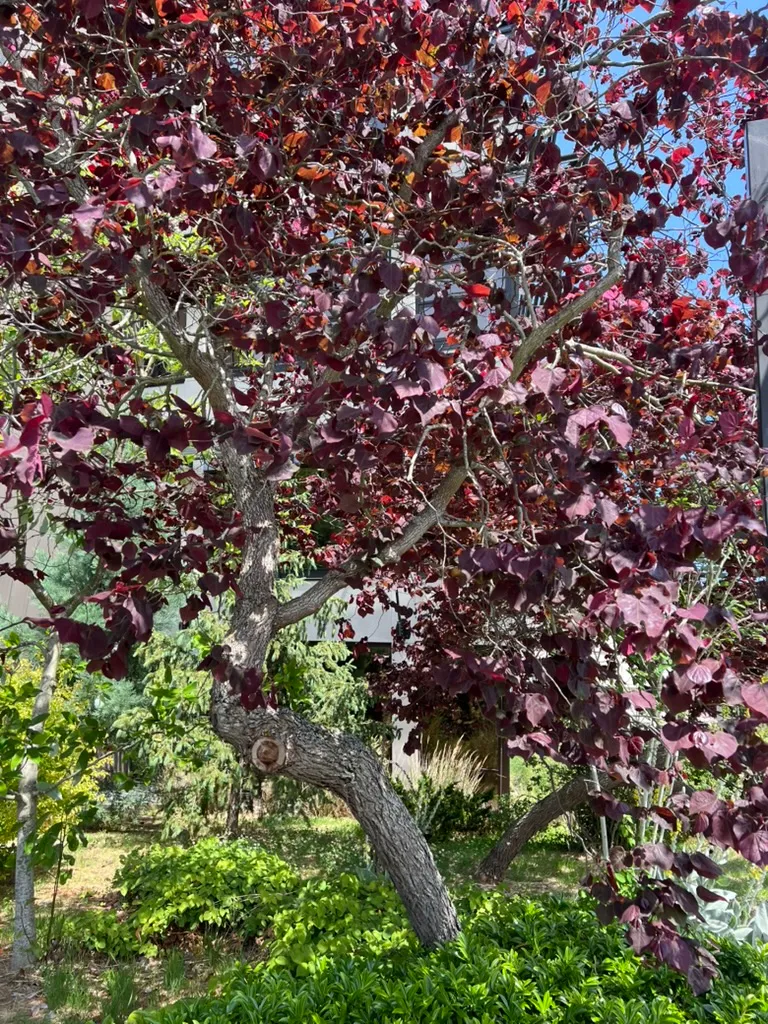
Cercis canadensis 'Forest Pansy' is the most widely grown purple-leaved cultivar of eastern redbud, combining the species' spectacular cauliflory spring bloom with deep burgundy-purple heart-shaped foliage that persists through the growing season. It reaches 15–25 feet (4.5–7.5 m) tall and 20–30 feet (6–9 m) wide — slightly smaller and slower-growing than the straight species. In March through April, small pea-like magenta-pink flowers emerge in dense clusters directly from bare bark before the leaves, producing the same stunning early spring display as the species. The leaves then unfurl a rich, saturated burgundy-red to deep purple-red, 2–5 inches (5–13 cm) across. Through summer, the foliage gradually transitions: in the Pacific Northwest's moderate climate, the purple-red color holds reasonably well through the season, fading somewhat to a reddish-green or bronzed purple by late summer — significantly better color retention than in hotter eastern US climates where fading is more pronounced. Fall foliage may be yellow, orange, or reddish-purple depending on conditions, but is less spectacular than the green-leaved species. Flat papery bean pods develop in summer and persist into winter. 'Forest Pansy' was introduced around 1971 by Forest Farm Nursery in Williams, Oregon — a PNW origin. Shares the same disease susceptibilities (Botryosphaeria canker, Verticillium wilt) as the species; good drainage is essential.
Native Range
Cercis canadensis is native to eastern North America. 'Forest Pansy' is a cultivar introduced around 1971 by Forest Farm Nursery in Williams, Oregon.Suggested Uses
Grown as a small specimen or focal point tree in residential gardens and mixed borders where the combination of cauliflory spring bloom, deep burgundy-purple summer foliage, and manageable size are the primary attractions. The purple foliage provides season-long contrast with silver, chartreuse, and blue-green companion plants. Particularly effective underplanted with shade-tolerant plants or paired with spring bulbs that complement the magenta-pink bloom. The Oregon nursery origin makes this cultivar a PNW connection worth noting. Shares Great Plant Picks endorsement context of the species for PNW zone 7 and warmer.How to Identify
Appearance
Size & Dimensions
Height15' - 25'
Width/Spread20' - 30'
Reaches mature size in approximately 12 years
Colors
Flower Colors
pink
purple
Foliage Colors
red
purple
Fall Foliage Colors
yellow
orange
red
Bloom Information
Bloom Period
~3 weeksJ
F
M
A
M
J
J
A
S
O
N
D
Spring
Detailed Descriptions
Flower Description
magenta-pinkFoliage Description
deep burgundy-red to purple in spring and early summer; fading to reddish-bronze-green by late summer; yellow-orange or reddish-purple in fallGrowing Conditions
Sun Requirements
Full Sun
Partial Shade
Requires 3-8 hours of direct sunlight daily
• Full Sun: 6+ hours of direct sunlight
• Partial Shade: 3-6 hours of direct sunlight
• Full Shade: Less than 3 hours of direct sunlight
Soil Requirements
pH Range6.0 - 7.5(Neutral)
357912
Soil Types
loamclaysandsilt
Drainage
well drained
Water & Climate
Water Needs
Medium
Frost Tolerance
hardy
Time to Maturity
10-15 years
Drought Tolerance
Drought tolerant when established
Care & Maintenance
Care Guide
Plant in full sun to part shade in well-drained soil. Full sun produces the most vivid purple foliage color throughout the season; significant shade leads to greener, less saturated foliage. Good drainage is critical — waterlogged soils promote Botryosphaeria canker and Verticillium wilt. Water regularly during establishment. Avoid planting in frost pockets where late-spring freezes can destroy emerging flower buds. In PNW coastal areas below zone 7, flowering may be less reliable. The Pacific Northwest's moderate summers favor color retention relative to hotter eastern climates — 'Forest Pansy' generally performs well here. Watch for Botryosphaeria cankers (sunken, dark bark areas on stems) and prune out affected wood immediately, cutting 6–8 inches (15–20 cm) below visible discoloration.Pruning
Prune after flowering (April through May) or in summer. Avoid late fall and winter pruning, which increases canker susceptibility. Remove dead, damaged, or crossing branches. Like the species, 'Forest Pansy' develops an attractive natural form with minimal intervention. Prune canker-affected wood 6–8 inches (15–20 cm) below visible margins with sterilized tools. The cultivar is slightly less vigorous than the straight species; avoid excessive pruning that reduces overall vigor.Pruning Schedule
J
F
M
A
M
J
J
A
S
O
N
D
late springsummer