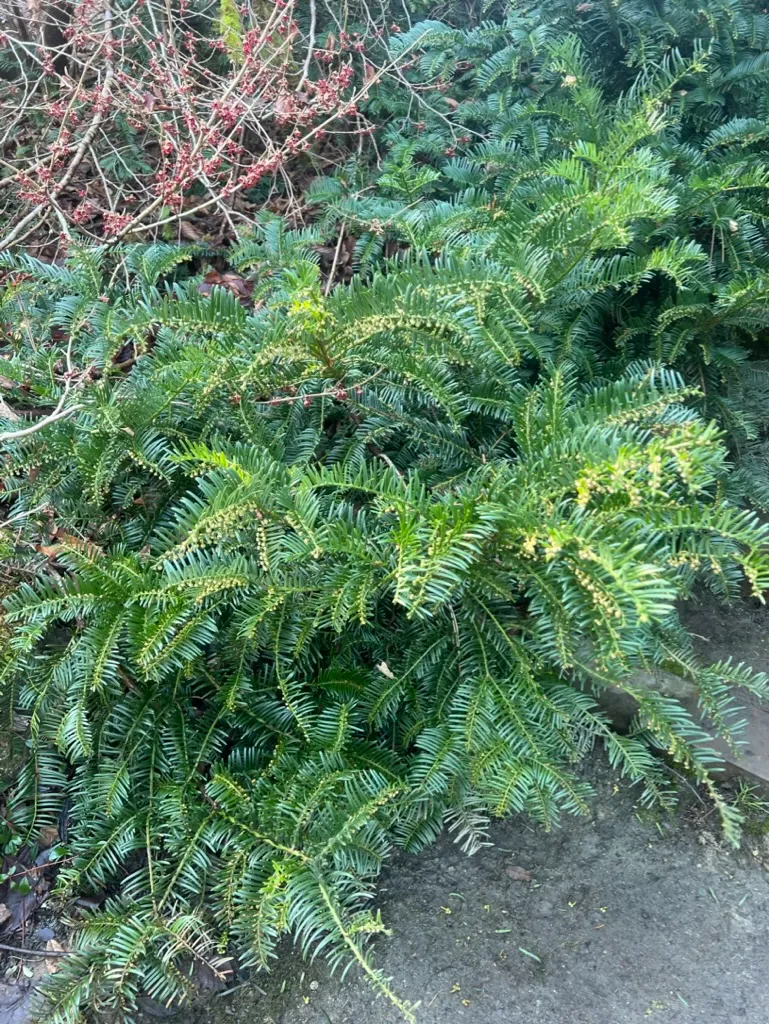
Coniferous Shrubs
Cephalotaxus harringtonia
Japanese Plum Yew
Taxaceae
Forest understories of Japan, Korea, and eastern China
At a Glance
TypeShrub
HabitSpreading
FoliageEvergreen
Height5-10 feet (1.5-3 m)
Width5-10 feet (1.5-3 m)
Maturity15 years
Growing Zones
USDA Hardiness Zones
6 - 9Zone 6
Zone 7
Zone 8
Zone 9
These zones indicate the coldest temperatures this plant can typically survive.
Frost Tolerancehardy
Key Features
Deer Resistant
Drought Tolerant
Maintenancelow
Overview
Cephalotaxus harringtonia is a spreading to mounding, evergreen coniferous shrub in the family Taxaceae (yew family), native to forest understories of Japan, Korea, and eastern China — the most widely cultivated Cephalotaxus species. The specific epithet harringtonia honors the Earl of Harrington, an early 19th-century English garden enthusiast. Plants grow 5–10 feet (1.5–3 m) tall and 5–10 feet (1.5–3 m) wide in the straight species. The flat needles are 1–1.5 inches (2.5–4 cm) long — shorter than C. fortunei (1.5–3 in) — arranged in two flattened ranks, creating yew-like sprays; deep glossy green above with two pale yellowish-white stomatal bands beneath. DIOECIOUS. Female plants produce olive-green to purple-brown, drupe-like fleshy seeds 0.8–1 inch (2–2.5 cm) in fall. ⚠️ TOXIC — contains taxine alkaloids; all parts should be considered toxic to humans and pets. Exceptional shade and dry-shade tolerance; deer resistant. Well-suited to Pacific Northwest gardens.
Native Range
Native to forest understories of Japan, Korea, and eastern China.Suggested Uses
Cephalotaxus harringtonia is planted in Pacific Northwest shaded or dry-shaded garden situations under established trees, in north-facing borders, or as a deer-resistant evergreen foundation shrub. 'Fastigiata' provides a narrow upright accent in shade gardens. 'Prostrata' works as a low groundcover under trees. All forms provide year-round evergreen structure in challenging conditions where most conifers fail. Educational value: comparison with C. fortunei (needle length), Taxaceae family toxicity, DIOECIOUS reproduction.How to Identify
Appearance
Size & Dimensions
Height5' - 10'
Width/Spread5' - 10'
Reaches mature size in approximately 15 years
Colors
Flower Colors
yellow
green
Foliage Colors
green
Fall Foliage Colors
no change
Bloom Information
Bloom Period
~3 weeksJ
F
M
A
M
J
J
A
S
O
N
D
Spring
Detailed Descriptions
Flower Description
DIOECIOUS; male: pale yellow pollen clusters Mar–Apr; female: OLIVE-TO-PURPLE DRUPE-LIKE SEEDS 0.8–1 inch Sept–OctFoliage Description
deep glossy green above; two pale yellowish-white stomatal bands beneath; needles 1–1.5 inches in two flat ranks; SHORTER than C. fortunei (1.5–3 in); harringtonia = Earl of Harrington; DIOECIOUS; EXCEPTIONAL SHADE/DRY-SHADE TOLERANCE; deer resistant; ⚠️ TOXIC taxine alkaloids; cultivars: 'Fastigiata' (upright), 'Prostrata' (groundcover), 'Duke Gardens' (mounding); DATA CORRECTIONS: species null; rewrote curly-brace proseGrowing Conditions
Sun Requirements
Partial Shade
Full Shade
Tolerates up to 4 hours of direct sunlight daily
• Full Sun: 6+ hours of direct sunlight
• Partial Shade: 3-6 hours of direct sunlight
• Full Shade: Less than 3 hours of direct sunlight
Soil Requirements
pH Range5.5 - 7.5(Neutral)
357912
Soil Types
loamsandclay
Drainage
well drained
Water & Climate
Water Needs
Low
Frost Tolerance
hardy
Time to Maturity
10-15 years
Drought Tolerance
Drought tolerant when established
Care & Maintenance
Care Guide
Cephalotaxus harringtonia requires partial shade to full shade in moist to moderately dry, well-drained, acidic to neutral soil with a pH of 5.5–7.5. Exceptional shade and dry-shade tolerance — one of the most adaptable conifers for difficult shaded sites. Tolerates more drought once established than most shade plants. Avoid waterlogged soils. Deer resistant. ⚠️ All parts toxic to humans and pets — plant away from areas frequented by children or animals.Pruning
No pruning required for natural form. Unlike most conifers, Cephalotaxus regenerates readily from old wood — tolerates hard pruning and shearing for hedges or formal shapes. Prune in early spring or late summer. 'Fastigiata' may develop multiple leaders that can be thinned for a cleaner form. For natural habit, remove dead or damaged branches only.Pruning Schedule
J
F
M
A
M
J
J
A
S
O
N
D
early springsummer