1 / 2
Perennials
Campanula spp.
bellflowers
Campanulaceae
Northern Hemisphere; greatest diversity in Mediterranean and southwestern Asia
At a Glance
TypePerennial
HabitUpright
FoliageDeciduous
Height2 inches–5 feet (5–150 cm)
Width6 inches–3 feet (15–90 cm)
Growing Zones
USDA Hardiness Zones
3 - 8Zone 3
Zone 4
Zone 5
Zone 6
Zone 7
Zone 8
These zones indicate the coldest temperatures this plant can typically survive.
Frost Tolerancehardy
Key Features
Attracts Pollinators
Attracts Butterflies
Container Friendly
Native to North America
Maintenancemoderate
Overview
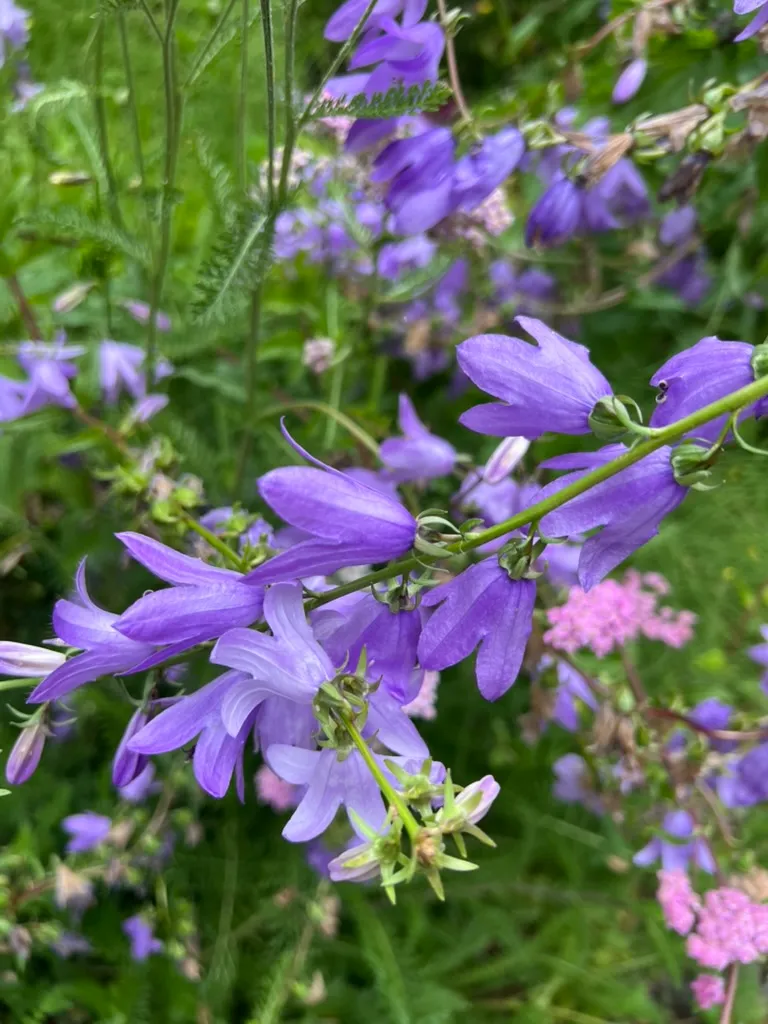
A large genus of approximately 500 species in the family Campanulaceae, ranging from low, mat-forming groundcovers 2–4 inches (5–10 cm) tall to erect border perennials reaching 4–5 feet (120–150 cm). Growth habit, foliage, and size vary substantially by species. Leaves are alternate, toothed, and range from small and heart-shaped to lance-shaped; basal and stem leaves often differ in shape. Flowers are bell-shaped or star-shaped with five fused petals, 0.5–3 inches (1.3–8 cm) across depending on species, in shades of blue-violet, purple, lavender, pink, or white. Most species bloom from late spring through summer; some produce a second flush if deadheaded. The genus includes annuals, biennials, and perennials. Some species, including C. rapunculoides and C. poscharskyana, spread aggressively by rhizomes and self-seeding and can become invasive in suitable conditions. Hardiness varies widely by species, from zone 3 to zone 9. Most garden species perform best in cool to moderate summers; quality and longevity decline in zones 8–9 heat.
Native Range
The genus is native to the Northern Hemisphere, with the greatest diversity in the Mediterranean region and southwestern Asia. Individual species occur across Europe, the Caucasus, central Asia, Siberia, and North America. Habitats range from alpine meadows and rocky slopes to woodland edges and disturbed roadsides.Suggested Uses
Used across a wide range of garden settings depending on species: low-growing types (C. carpatica, C. poscharskyana) for rock gardens and wall crevices; mid-height types for border midground at 12–18 inch (30–45 cm) spacing; tall types for border backgrounds. Some species naturalize readily in informal and meadow-style gardens. Spreading species require containment in formal or small-space gardens.How to Identify
Appearance
Size & Dimensions
Height2" - 5'
Width/Spread6" - 3'
Colors
Flower Colors
blue
violet
purple
lavender
pink
white
Foliage Colors
green
Fall Foliage Colors
no change
Bloom Information
Bloom Period
~6 weeksJ
F
M
A
M
J
J
A
S
O
N
D
SpringSummer
Detailed Descriptions
Flower Description
blue-violet, purple, lavender, pink, whiteFoliage Description
medium greenGrowing Conditions
Sun Requirements
Full Sun
Partial Shade
Requires 4-8 hours of direct sunlight daily
• Full Sun: 6+ hours of direct sunlight
• Partial Shade: 3-6 hours of direct sunlight
• Full Shade: Less than 3 hours of direct sunlight
Soil Requirements
pH Range6.0 - 7.5(Neutral)
357912
Soil Types
loamsandchalk
Drainage
well drained
Water & Climate
Water Needs
Medium
Frost Tolerance
hardy
Time to Maturity
1-2 years
Care & Maintenance
Care Guide
Plant in full sun to partial shade in well-drained, moderately fertile soil with a pH of 6.0–7.5. Most species tolerate a range of soil types but decline in waterlogged conditions. Water regularly during establishment; established plants vary by species in drought tolerance. Tall species (C. lactiflora, C. latifolia) require staking when stems exceed 24 inches (60 cm) in exposed locations. Deadhead spent flowers to extend bloom and control self-seeding. Division every 2–4 years in early spring maintains vigor; some species spread rapidly and require more frequent management. Monitor spreading species such as C. rapunculoides — once established, the fleshy rhizomes are difficult to eradicate.Pruning
Cut back spent flower stems after bloom to reduce self-seeding and encourage lateral branching. For species with a second flush, cut the main stem back by one-half after first bloom. Cut all stems to ground level in late fall or early spring. Divide in early spring every 2–4 years; discard old center portions and replant vigorous outer divisions.Pruning Schedule
J
F
M
A
M
J
J
A
S
O
N
D
summerfall
Maintenance Level
moderateContainer Growing
✓ Suitable for container growing
Minimum container size: 3 gallons