1 / 3
Deciduous Shrubs
Berberis thunbergii f. atropurpurea 'Rose Glow'
Rose Glow Japanese barberry
Berberidaceae
Japan (species); cultivar of garden origin
At a Glance
TypeShrub
HabitMounding
FoliageDeciduous
Height4-5 feet (120-150 cm)
Width4-5 feet (120-150 cm)
Maturity5 years
Growing Zones
USDA Hardiness Zones
4 - 8Zone 4
Zone 5
Zone 6
Zone 7
Zone 8
These zones indicate the coldest temperatures this plant can typically survive.
Frost Tolerancehardy
Key Features
Attracts Pollinators
Deer Resistant
Drought Tolerant
Maintenancelow
Overview
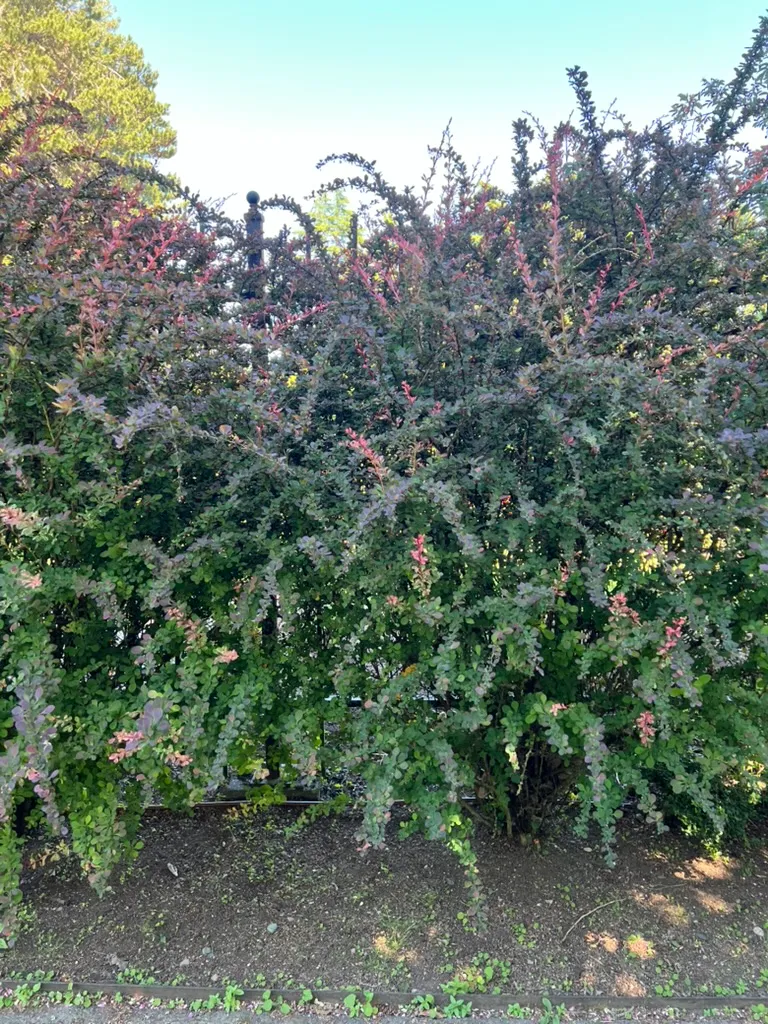
Berberis thunbergii f. atropurpurea 'Rose Glow' is a deciduous shrub reaching 4–5 feet (120–150 cm) tall and 4–5 feet (120–150 cm) wide in a rounded mound with arching branches. Its principal ornamental feature is the variegated foliage: new leaves emerge deep burgundy-purple mottled with pink, rose, and creamy-white splashes — producing the distinctive glowing multicolor effect the cultivar is named for. As leaves mature and harden through summer, the pink and white variegation fades and older foliage becomes more uniformly dark purple. The result is a shrub with a two-toned effect: brightly mottled new growth at the branch tips against darker, more solid purple mature foliage in the interior. In April through May, small yellow flowers hang inconspicuously beneath the stems. Bright red berries ripen in fall and persist through winter after leaf drop. Sharp single thorns at each node. Fall foliage turns vivid orange-red before dropping. Berberis thunbergii is listed as invasive in numerous eastern and midwestern US states where bird-dispersed seeds naturalize in forests; it is not currently regulated in Washington or Oregon. All cultivars produce viable seeds.
Native Range
Berberis thunbergii is native to Japan. 'Rose Glow' is a cultivar of garden origin with no independent native range.Suggested Uses
Used as a medium-sized foliage accent shrub in mixed borders, foundation plantings, and informal hedges where the spring and early summer variegation provides seasonal interest. Effective as a specimen where the two-toned new-growth-versus-mature-foliage contrast can be appreciated up close. Deer-resistant. Not recommended adjacent to natural areas or forest margins.How to Identify
Appearance
Size & Dimensions
Height4' - 5'
Width/Spread4' - 5'
Reaches mature size in approximately 5 years
Colors
Flower Colors
yellow
Foliage Colors
red
purple
pink
white
Fall Foliage Colors
orange
red
Bloom Information
Bloom Period
~3 weeksJ
F
M
A
M
J
J
A
S
O
N
D
Spring
Detailed Descriptions
Flower Description
yellowFoliage Description
new growth: deep burgundy mottled with pink, rose, and creamy-white; mature leaves: more uniform dark purple; fall: orange-redGrowing Conditions
Sun Requirements
Full Sun
Partial Shade
Requires 4-8 hours of direct sunlight daily
• Full Sun: 6+ hours of direct sunlight
• Partial Shade: 3-6 hours of direct sunlight
• Full Shade: Less than 3 hours of direct sunlight
Soil Requirements
pH Range5.5 - 7.5(Neutral)
357912
Soil Types
loamclaysandsilt
Drainage
well drained
Water & Climate
Water Needs
Low
Frost Tolerance
hardy
Time to Maturity
4-6 years
Drought Tolerance
Drought tolerant when established
Care & Maintenance
Care Guide
Plant in full sun for the most vivid foliage variegation — shade reduces pink and white color intensity, resulting in more uniformly green-purple leaves. Tolerates a wide range of well-drained soils; avoid poorly drained sites. Water regularly during establishment; very drought-tolerant once established. The continuously produced new growth (which bears the brightest variegation) can be encouraged by light tip-pruning in early summer, stimulating vigorous flushes of colorful new shoots. Do not plant adjacent to forest edges or natural areas. Berberis thunbergii is banned in several eastern US states; verify local regulations if planting outside Washington or Oregon.Pruning
Prune after main flowering (May through June) or in winter dormancy (November through February). Light tip-pruning in early summer encourages new growth flushes with the brightest variegation. Remove dead, damaged, or crossing branches. Shear to maintain a tidy mound. Wear thick gloves — thorns are sharp. Remove any all-green reversion shoots at their base promptly to prevent loss of the variegated character.Pruning Schedule
J
F
M
A
M
J
J
A
S
O
N
D
late springwinter