1 / 4
Broadleaf Evergreen Shrubs
Arctostaphylos uva-ursi
kinnikinnick
Ericaceae
Key Features
Attracts Pollinators
Attracts Butterflies
Drought Tolerant
Native to North America
Maintenancevery low
Overview
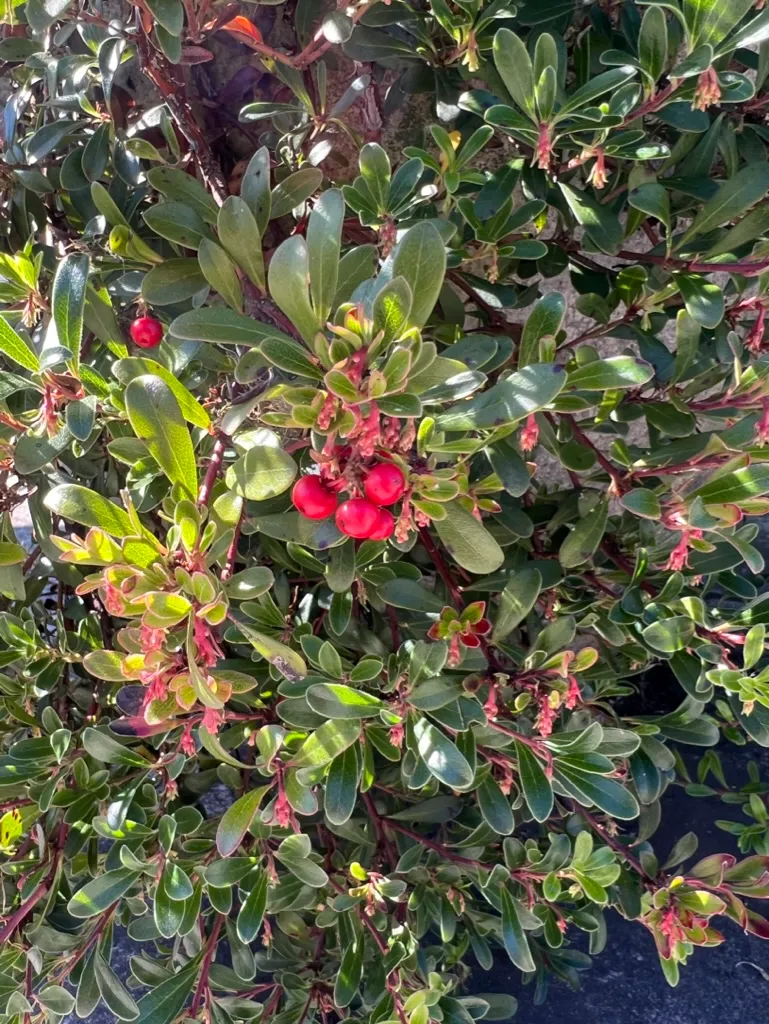
A prostrate, mat-forming, evergreen shrub in the family Ericaceae, native to a wide range of open to lightly forested habitats across the Pacific Northwest including coastal bluffs, rocky outcrops, dry open forests, and sandy slopes from Alaska south through British Columbia, Washington, and Oregon — one of the most widely distributed native groundcover shrubs of the Pacific Northwest and circumpolar regions. The specific epithet uva-ursi means 'bear's grape' — 'uva' (grape) in Latin and 'ursi' (bear) in Latin, reflecting the same meaning as the common name 'kinnikinnick' from Algonquian, also meaning 'that which is smoked.' Plants grow 4–8 inches (10–20 cm) tall, spreading by trailing stems that root at nodes to form dense mats 3–6 feet (0.9–1.8 m) or more across. The alternate, evergreen leaves are small, spoon-shaped to obovate, 0.5–1 inch (12–25 mm) long, with a leathery texture, glossy dark green upper surface, and smooth (not toothed) margins. Reddish-brown stems with shredding bark root at nodes where they contact soil. In April–June, clusters of small, urn-shaped, white to pale pink flowers 0.2 inch (5 mm) long hang at branch tips — characteristic of the heath family. Bright red, waxy, round berries 0.3–0.4 inch (8–10 mm) develop by August and persist through winter, providing food for bears, grouse, and other wildlife. Highly drought-tolerant once established. Non-toxic; berries were an important food source for many Indigenous peoples.
Native Range
PNW nativeHow to Identify
Appearance
Colors
Flower Colors
white
pink
Foliage Colors
green
Bloom Information
Bloom Period
J
F
M
A
M
J
J
A
S
O
N
D
Spring
Growing Conditions
Soil Requirements
Drainage
well drained
Water & Climate
Drought Tolerance
Drought tolerant when established