1 / 4
Annuals
Allium cepa 'Australian Brown'
Australian Brown Onion
UnknownAsia
At a Glance
Typeannual
Habitupright
Foliagedeciduous
Height18-24 inches
Width6-8 inches
Maturity0.42 years
Key Features
Deer Resistant
Drought Tolerant
Container Friendly
Maintenancelow
Overview
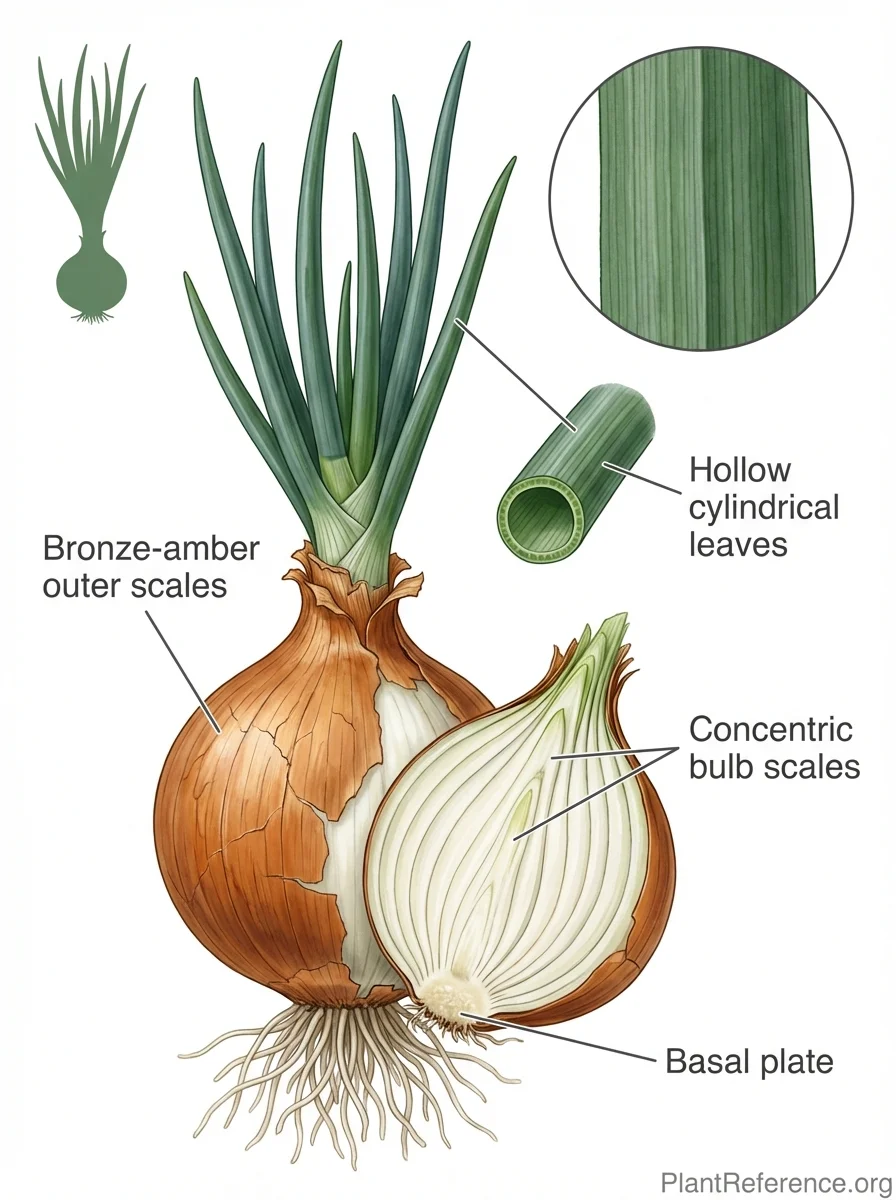
Allium cepa 'Australian Brown' is a robust storage onion cultivar prized for its exceptional keeping qualities and rich, pungent flavor. This variety develops medium to large, globe-shaped bulbs that are slightly flattened at both ends, measuring 3-4 inches in diameter when mature. The distinctive bronze-brown papery outer skin gives this cultivar its name and sets it apart from typical yellow storage onions. Beneath the bronze exterior lie dense, concentric layers of firm white flesh with subtle purple tinges on the outer scales. The plant produces characteristic hollow, tubular leaves that are blue-green in color with a slight glaucous coating, reaching heights of 18-24 inches during the growing season. These leaves emerge directly from the bulb base and gradually die back as the onion approaches maturity. When allowed to bolt, Allium cepa 'Australian Brown' produces tall flower scapes topped with spherical umbels of small, white six-petaled flowers, though commercial growers typically harvest bulbs before flowering occurs to maximize bulb size and storage potential.
Native Range
Allium cepa originates from the mountainous regions of Central Asia, particularly the areas encompassing modern-day Iran, Afghanistan, Pakistan, and surrounding highlands. The species likely evolved in these harsh, arid climates which contributed to its natural storage capabilities and drought tolerance. 'Australian Brown' as a distinct cultivar was developed through selective breeding programs, though it maintains the genetic heritage of its Central Asian ancestors.Suggested Uses
culinary herb, storage crop, kitchen garden, vegetable garden, container growing, companion plantingHow to Identify
Appearance
Size & Dimensions
Height1'6" - 2'
Width/Spread6" - 8"
Reaches mature size in approximately 0.42 years
Colors
Flower Colors
white
Foliage Colors
blue
green
Bloom Information
Bloom Period
J
F
M
A
M
J
J
A
S
O
N
D
Summer
Detailed Descriptions
Flower Description
whiteFoliage Description
blue-green with glaucous coatingGrowing Conditions
Sun Requirements
Full Sun
• Full Sun: 6+ hours of direct sunlight
• Partial Shade: 3-6 hours of direct sunlight
• Full Shade: Less than 3 hours of direct sunlight
Soil Requirements
pH Range6.0 - 7.0(Neutral)
357912
Soil Types
loam
Drainage
well drained
Water & Climate
Water Needs
moderate, reducing near harvest
Frost Tolerance
hardy
Time to Maturity
4-5 months
Drought Tolerance
Drought tolerant when established
Care & Maintenance
Care Guide
Allium cepa 'Australian Brown' thrives with consistent moisture management throughout its growing cycle, requiring regular watering during active growth but benefiting from reduced irrigation as bulbs approach maturity. Plant in well-draining, fertile soil that has been amended with compost or well-rotted manure, ensuring good drainage to prevent bulb rot. Maintain consistent soil moisture during the first three months of growth when foliage is actively developing and bulbs are forming. Apply a balanced fertilizer or side-dress with compost at mid-season, but avoid high-nitrogen fertilizers in the final 6-8 weeks as this can delay maturity and compromise storage life. As the growing season progresses and tops begin to yellow naturally, gradually reduce watering frequency to allow proper curing. The key to successful storage is allowing the neck area to dry completely before harvest.Pruning
Allium cepa 'Australian Brown' requires minimal pruning during active growth, with the primary focus being the removal of flower stalks if they appear. Avoid cutting or damaging the green foliage throughout the growing season, as these leaves are essential for photosynthesis and bulb development. If flower scapes emerge, remove them promptly by cutting at the base to redirect energy into bulb formation rather than seed production. At harvest time, allow the tops to die back naturally, then cut them to approximately 1 inch above the bulb after they have completely dried. For traditional storage methods, leave longer stems that can be braided together, ensuring all foliage is thoroughly dried to prevent moisture retention that could lead to rot.Maintenance Level
lowContainer Growing
✓ Suitable for container growing
⚠️ Toxicity Warning
Allium cepa 'Australian Brown' is safe for human consumption when properly prepared, though raw onions may cause digestive discomfort in sensitive individuals. The bulbs contain compounds that can cause eye irritation during preparation due to sulfur compounds released when cell walls are damaged. All parts of the onion plant are highly toxic to dogs, cats, horses, and other pets, potentially causing hemolytic anemia, weakness, and other serious health complications even in small quantities. Keep harvested bulbs, plant trimmings, and compost containing onion material away from all pets and livestock. Onions are also toxic to many birds and should not be included in backyard poultry diets.Planting Guide
Planting Methods & Timing
Planting Method
both
Indoor Start
10 weeks before last frost
Direct Sow Timing
early spring, 2-4 weeks before last frost
Days to Maturity
110–130 days
Plant Spacing
4 inches
Companion Planting
Good Companions
carrots
brassicas
tomatoes
peppers
lettuce
leeks
parsley
chamomile
Avoid Planting With
beans
peas
asparagus
sage
parsley