1 / 8
Broadleaf Deciduous Trees
Aesculus carnea var. Briotii 'Briotii'
red horse chestnut
Sapindaceae
Hybrid of garden origin; parents native to the Balkans and southeastern United States
At a Glance
TypeTree
HabitSpreading
FoliageDeciduous
Height30-40 feet (9-12 m)
Width20-30 feet (6-9 m)
Maturity18 years
Growing Zones
USDA Hardiness Zones
4 - 8Zone 4
Zone 5
Zone 6
Zone 7
Zone 8
These zones indicate the coldest temperatures this plant can typically survive.
Frost Tolerancehardy
Key Features
Attracts Pollinators
Attracts Hummingbirds
Deer Resistant
Maintenancelow
Overview
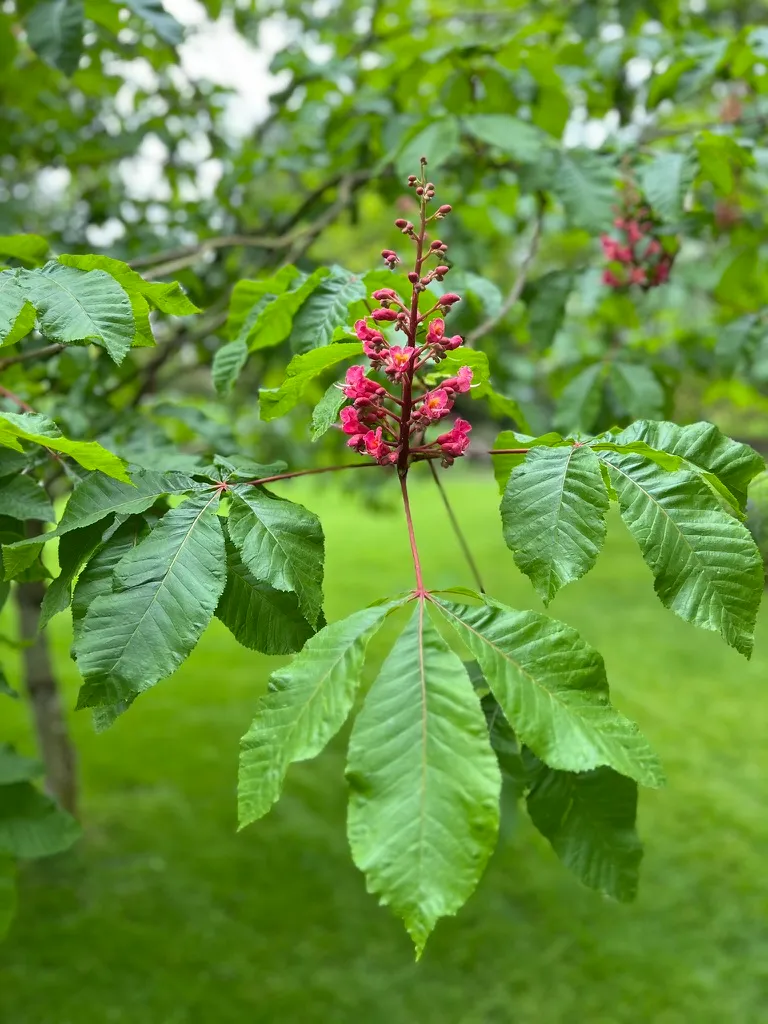
Aesculus x carnea 'Briotii' is a cultivar of red horse chestnut, a hybrid between Aesculus hippocastanum and Aesculus pavia, reaching 30–40 feet (9–12 m) tall and 20–30 feet (6–9 m) wide, with a broadly rounded to oval crown. Leaves are palmately compound with 5–7 leaflets, each 4–8 inches (10–20 cm) long, dark green and glossy above, borne on long petioles. In May through June, upright panicles of flowers 6–12 inches (15–30 cm) tall appear above the foliage; 'Briotii' is selected for deeper ruby-red flowers compared to typical A. × carnea. Fruit are smooth, round capsules approximately 1.5 inches (4 cm) in diameter containing 1–2 shiny brown seeds (conkers), ripening in September through October. All parts of the plant — leaves, seeds, bark, and flowers — are toxic to humans and most animals if ingested; children and pets must not be allowed access to fallen seeds. Bark is smooth and gray, becoming plated with age. Growth rate is moderate, 1–1.5 feet (30–45 cm) per year. In the Pacific Northwest, this cultivar is largely resistant to the leaf blotch disease (Guignardia aesculi) that disfigures Aesculus hippocastanum by midsummer in humid climates, making it a more reliable ornamental choice in wet coastal conditions.
Native Range
Aesculus × carnea is a hybrid of garden origin with no native range. The parent species — A. hippocastanum (native to the Balkans) and A. pavia (native to the southeastern United States) — do not occur naturally in the same region.Suggested Uses
Aesculus x carnea 'Briotii' is planted as an ornamental specimen in parks, large residential gardens, and public spaces where the flower panicles and bold compound foliage can be appreciated. Provides dense summer shade. Requires a minimum of 20–30 feet (6–9 m) horizontal clearance from structures. Not suitable for planting near playgrounds, pet areas, or locations where children or animals have frequent access to fallen seeds, which are toxic.How to Identify
Appearance
Size & Dimensions
Height30' - 40'
Width/Spread20' - 30'
Reaches mature size in approximately 18 years
Colors
Flower Colors
red
Foliage Colors
dark green
Fall Foliage Colors
yellow
brown
Bloom Information
Bloom Period
~4 weeksJ
F
M
A
M
J
J
A
S
O
N
D
Spring
Detailed Descriptions
Flower Description
ruby-redFoliage Description
dark green and glossy in summer; yellow-brown in fallGrowing Conditions
Sun Requirements
Full Sun
Partial Shade
Requires 4-8 hours of direct sunlight daily
• Full Sun: 6+ hours of direct sunlight
• Partial Shade: 3-6 hours of direct sunlight
• Full Shade: Less than 3 hours of direct sunlight
Soil Requirements
pH Range5.5 - 7.5(Neutral)
357912
Soil Types
loamclaysilt
Drainage
well drained
Water & Climate
Water Needs
Medium
Frost Tolerance
hardy
Time to Maturity
15-20 years
Care & Maintenance
Care Guide
Aesculus x carnea 'Briotii' is established with regular watering for the first 2–3 growing seasons; once established, the tree tolerates moderate drought and average urban soils. Apply 2–3 inches (5–8 cm) of mulch from the drip line inward, keeping it clear of the trunk. Keep fallen seeds and capsules cleaned up from areas accessible to children and pets — the seeds (conkers) contain aescin and other compounds toxic to humans and animals if ingested. 'Briotii' shows good resistance to leaf blotch disease compared to A. hippocastanum, but may develop some browning of older leaves by late summer in wet climates — this is cosmetic and does not affect tree health.Pruning
Prune during dormancy (November through February). Remove dead, damaged, or crossing branches at the branch collar. The tree develops a naturally rounded crown with minimal corrective pruning needed. Structural pruning of young trees in years 3–10 to establish a clear trunk and well-spaced scaffold branches reduces the need for large corrective cuts later. Avoid pruning in spring or early summer during active growth.Pruning Schedule
J
F
M
A
M
J
J
A
S
O
N
D
winter