Actinidia, Genus, kolomikta, Species,
- Genus & species
same
Russian Far East, northeastern China, Korea, and Japan; mixed deciduous and coniferous forests
Overview
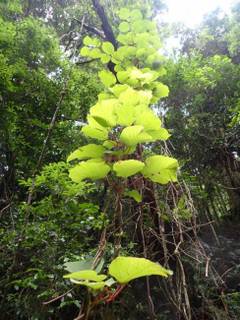
Actinidia kolomikta is a deciduous twining vine in the family Actinidiaceae, climbing 12-20 feet (3.6-6 m) tall with a spread of 6-10 feet (1.8-3 m). Heart-shaped leaves 3-5 inches (7-13 cm) long emerge green in spring and develop white and pink variegation in late spring — the leaf tips turn white first, then develop pink tones. Variegation is most saturated on male plants and is often faint or absent on female plants. Small fragrant white flowers 0.5 inch (1.3 cm) across open in clusters of 1-3 in May and June. Small smooth-skinned green fruit 1 inch (2.5 cm) long ripens on female plants in August and September; the fruit is edible with a sweet flavor similar to commercial kiwi. The species is cold-hardy to zone 3 — much hardier than commercial fuzzy kiwi Actinidia deliciosa (zone 7) — and tolerates northern climates where other kiwi species fail. The species is dioecious, and both a male and a female plant are required for fruit production on the female. Foliage variegation takes 2-3 years to develop after planting and is the main limitation for gardeners expecting immediate display. Cats are strongly attracted to the stems and roots, which contain actinidine (a compound similar to the nepetalactone in catnip), and will dig up or damage young plants. The species is not drought-tolerant and requires consistent summer moisture.
Native Range
Actinidia kolomikta is native to the Russian Far East, northeastern China, Korea, and Japan, where it grows in mixed deciduous and coniferous forests as an understory climber on shrubs and small trees in moist sheltered positions.Suggested Uses
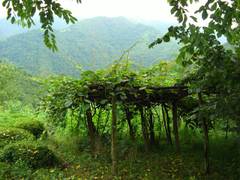
Planted on trellises, fences, arbors, and pergolas at 8-10 foot (2.4-3 m) spacing between plants. Variegated foliage on male plants carries the primary ornamental interest, and edible fruit on female plants adds a secondary use. Zone-3 cold hardiness extends kiwi cultivation into regions too cold for commercial fuzzy kiwi. Combined with climbing Clematis or Lonicera on the same structure for layered seasonal interest in zones 3-8. Not suited to dry exposed sites, windy positions that break the twining stems, deep shade where variegation fades, or garden positions accessible to cats where young vines will be dug up before they establish.How to Identify
Appearance
Size & Dimensions
Height12' - 20'
Width/Spread6' - 10'
Bloom Information
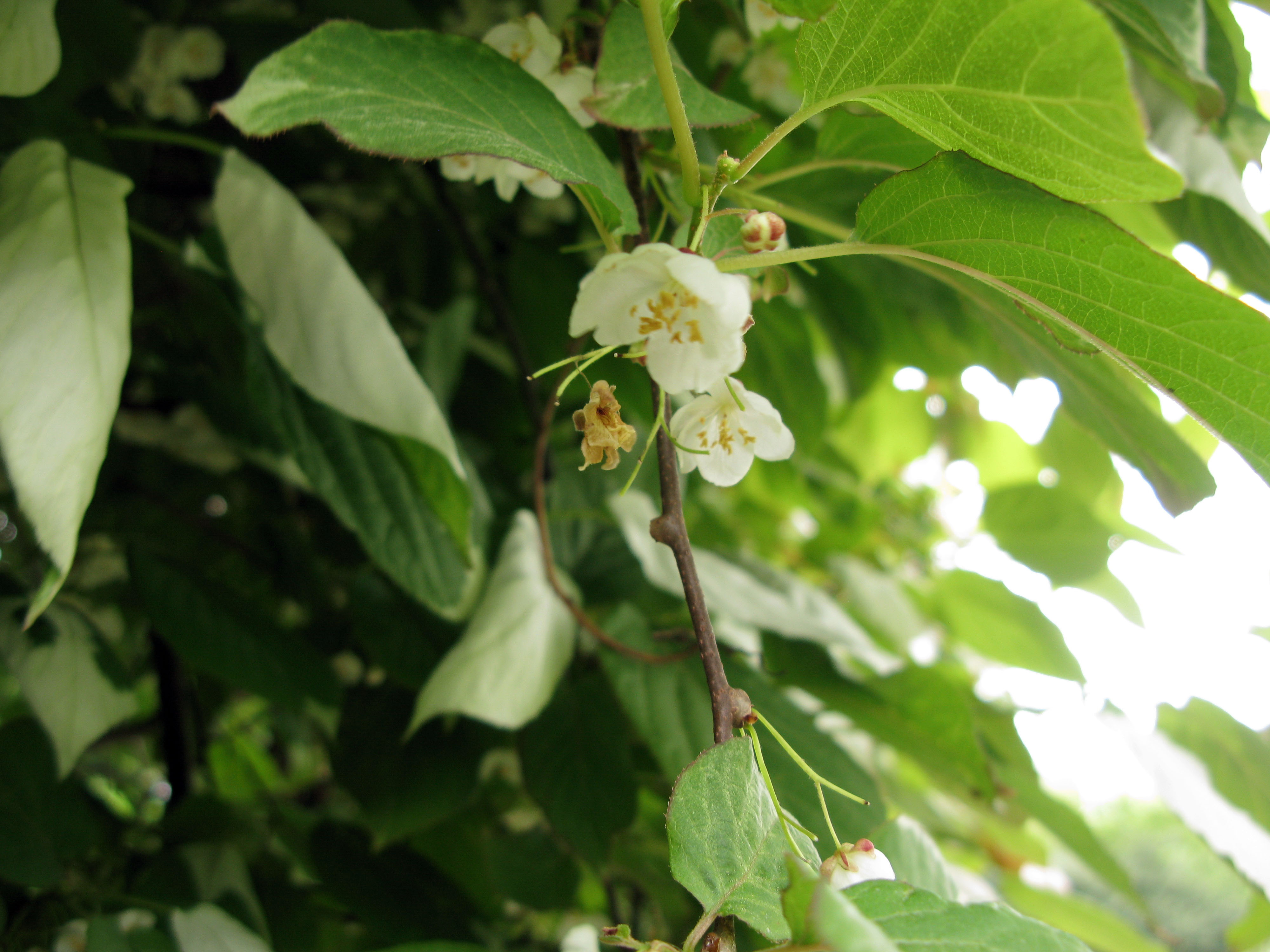
Small fragrant white flowers 0.5 inch (1.3 cm) across open in clusters of 1-3 in May and June, averaging 2 weeks of bloom. Flowers are bee-pollinated and lightly fragrant. The species is dioecious, and a male plant within bee-foraging distance of a female plant is required for fruit set on the female. Small smooth-skinned green fruit 1 inch (2.5 cm) long ripens on female plants in August and September and is sweet and edible.
Detailed Descriptions
Flower Description
white; small, 0.5 inch (1.3 cm) across; lightly fragrant; borne in clusters of 1-3Foliage Description
green with white and pink variegation developing in late spring (most saturated on male plants, often faint or absent on female plants); heart-shaped leaves 3-5 inches (7-13 cm) longGrowing Conditions
Sun Requirements
Requires 4-8 hours of direct sunlight daily
• Full Sun: 6+ hours of direct sunlight
• Partial Shade: 3-6 hours of direct sunlight
• Full Shade: Less than 3 hours of direct sunlight
Care & Maintenance
Care Guide
Plant in well-drained, moist, humus-rich soil with a pH of 5.5-7.0 in full sun to part shade. Water weekly through the first 2 growing seasons and continue regular summer watering on established vines because the species is not drought-tolerant and summer dry spells cause leaf scorch and bloom loss. A sturdy trellis, fence, or arbor is installed at planting because the twining stems reach 12-20 feet (3.6-6 m) and cannot support themselves. Both a male and female plant are needed for fruit production on female vines. Young vines are shielded with wire cages because cats damage or destroy stems and roots by digging at the actinidine content — caging is removed once stems are woody at the base. Foliage variegation develops 2-3 years after planting rather than in the first season. The species is cold-hardy to zone 3, which extends cultivation into northern climates where A. deliciosa cannot grow.Pruning
Pruning is done in late winter (February-March) before growth resumes and before heavy sap flow begins. Dead or crowded canes are removed and lateral shoots are shortened to 3-5 buds to channel growth into the retained framework. The vine is trained on a trellis, fence, or arbor with a single main stem or a fan of main stems; subsequent pruning maintains the chosen framework. Less vigorous than A. deliciosa, so annual removal is moderate rather than heavy.Pruning Schedule
Prune: February–March
early spring