1 / 3
Broadleaf Deciduous Trees
Acer palmatum f. atropurpureum
red Japanese maple
Sapindaceae
Japan, Korea, eastern China (species range; forma has no separate native range)
At a Glance
TypeTree
HabitSpreading
FoliageDeciduous
Height15-20 feet (4.5-6 m)
Width12-20 feet (3.7-6 m)
Maturity12 years
Growing Zones
USDA Hardiness Zones
5 - 8Zone 5
Zone 6
Zone 7
Zone 8
These zones indicate the coldest temperatures this plant can typically survive.
Frost Tolerancehardy
Key Features
Attracts Pollinators
Container Friendly
Maintenancelow
Overview
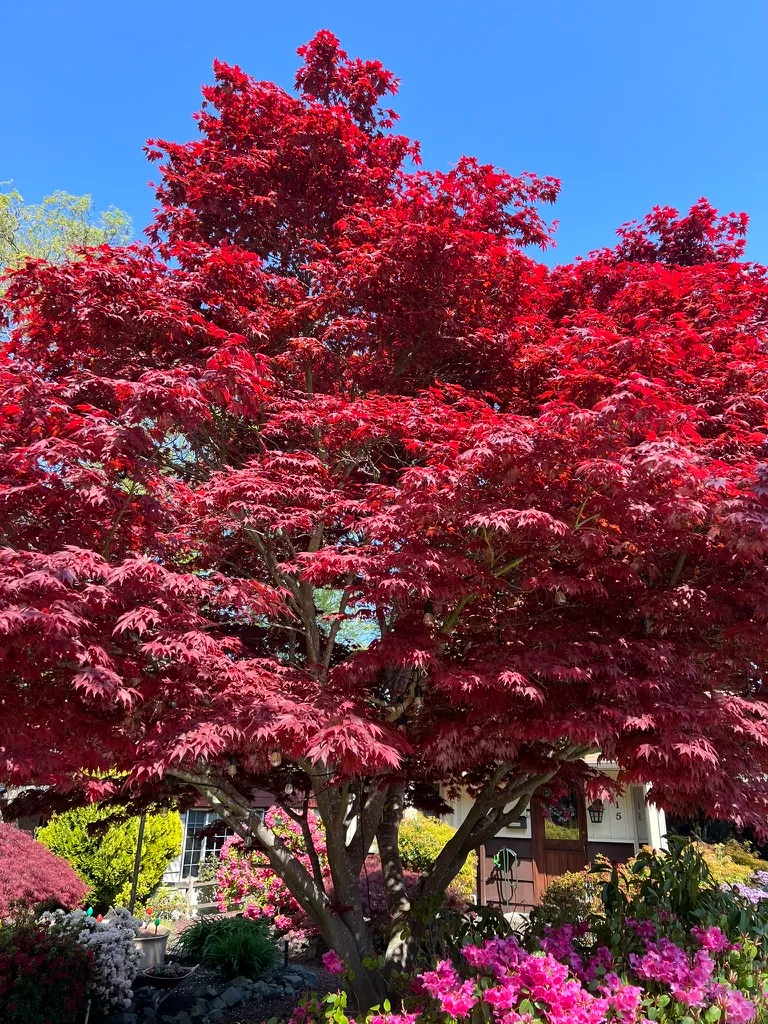
Acer palmatum f. atropurpureum is a botanical form of Japanese maple encompassing seedling-raised plants with red-purple foliage throughout the growing season, rather than a single clonal cultivar. Plants in this form typically reach 15–20 feet (4.5–6 m) tall and 12–20 feet (3.7–6 m) wide, with a rounded to broadly vase-shaped crown similar to the species. Leaves are palmate with 5–7 pointed, serrated lobes, 2–4 inches (5–10 cm) across, emerging red to red-purple in spring and holding burgundy to dark red-purple tones through summer before turning bright crimson to red in fall. Foliage color intensity varies among seedling individuals; plants grown in full sun typically develop richer red tones, while those in shade may show more greenish-burgundy coloration by midsummer. Small red-purple flowers appear in spring before leaf emergence is complete. Paired samaras ripen July through October. Because f. atropurpureum encompasses seedling populations, foliage hue, habit, and mature size vary more than named cultivars grown from cuttings or grafts. Leaf scorch occurs when plants experience afternoon sun combined with dry soil in zones 7 and warmer.
Native Range
Acer palmatum f. atropurpureum has no distinct native range separate from the species. Acer palmatum is native to Japan, Korea, and eastern China, where it grows as a forest understory tree at elevations from near sea level to 4,900 feet (1,500 m).Suggested Uses
Planted as a specimen tree in mixed borders, woodland gardens, and residential landscapes where red-purple foliage color is desired through the growing season. Used as a contrast plant against green-leaved shrubs and trees. Named cultivars are preferred when consistent size, habit, or foliage intensity is required; f. atropurpureum seedlings are used when variability is acceptable or when budget favors seed-grown plants.How to Identify
Appearance
Size & Dimensions
Height15' - 20'
Width/Spread12' - 20'
Reaches mature size in approximately 12 years
Colors
Flower Colors
red
purple
Foliage Colors
red
purple
burgundy
Fall Foliage Colors
red
crimson
Bloom Information
Bloom Period
~3 weeksJ
F
M
A
M
J
J
A
S
O
N
D
Spring
Detailed Descriptions
Flower Description
red-purpleFoliage Description
red-purple in spring and summer, brightening to crimson-red in fallGrowing Conditions
Sun Requirements
Full Sun
Partial Shade
Requires 4-6 hours of direct sunlight daily
• Full Sun: 6+ hours of direct sunlight
• Partial Shade: 3-6 hours of direct sunlight
• Full Shade: Less than 3 hours of direct sunlight
Soil Requirements
pH Range5.5 - 6.5(Neutral)
357912
Soil Types
loamsandsilt
Drainage
well drained
Water & Climate
Water Needs
Medium
Frost Tolerance
hardy
Time to Maturity
10-15 years
Care & Maintenance
Care Guide
Water weekly during the first 1–2 growing seasons; established plants tolerate moderate drought but develop leaf scorch when exposed to afternoon sun combined with dry soil. Apply 2–3 inches (5–8 cm) of mulch from the drip line inward, keeping mulch 4–6 inches (10–15 cm) from the trunk. Afternoon shade in zones 7 and warmer helps prevent leaf margin scorch. Avoid high-nitrogen fertilizers; use a balanced slow-release formulation in early spring if growth is poor. Verticillium wilt causes sudden branch dieback; remove affected limbs and avoid root zone disturbance. Foliage color in shade-grown plants may revert toward green by midsummer — this is a normal response to reduced light, not a nutrient deficiency.Pruning
Prune during dormancy (November through January) or in summer (July–August) to minimize sap loss and reduce Verticillium risk through fresh cuts. Remove dead, crossing, or inward-growing branches. The natural layered branching pattern develops best with minimal corrective pruning. Avoid removing more than 20% of the canopy in a single season. Structural pruning in years 3–8 reduces the need for larger corrective cuts later.Pruning Schedule
J
F
M
A
M
J
J
A
S
O
N
D
wintersummer
Maintenance Level
lowContainer Growing
✓ Suitable for container growing
Minimum container size: 25 gallons