1 / 6
Broadleaf Deciduous Trees
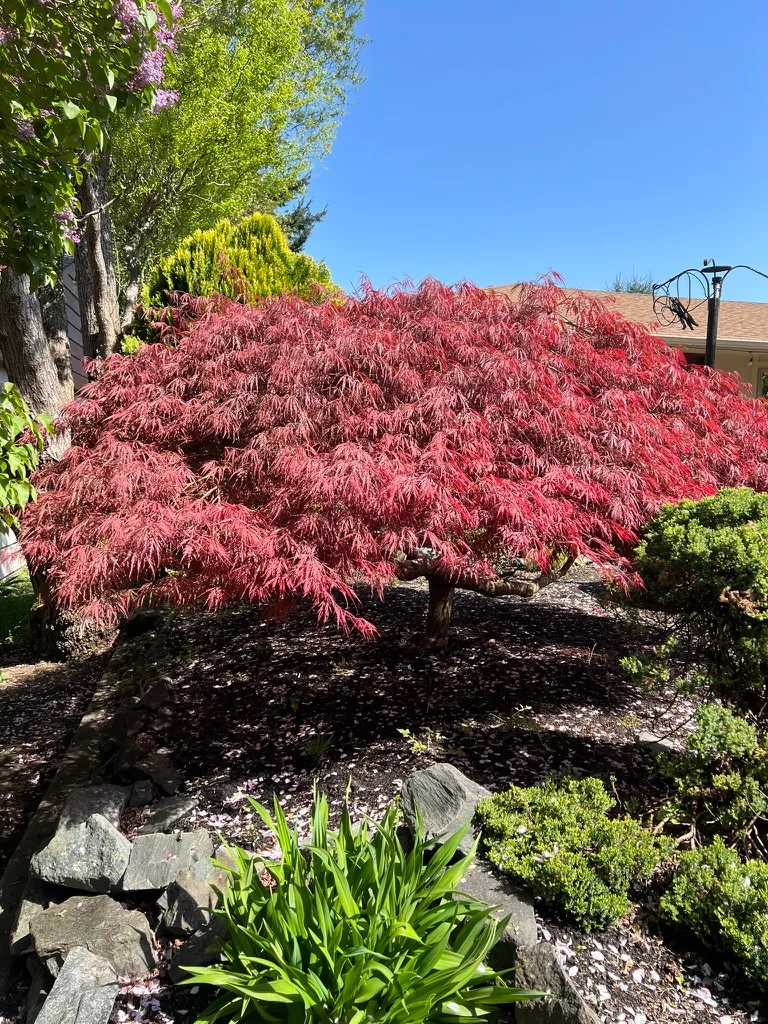
Acer palmatum var. dissectum dissectum 'Dissectum Atropurpreum'
weeping red laceleaf Japanese maple
Sapindaceae
Cultivar; parent species native to Japan, Korea, and eastern China
At a Glance
TypeTree
HabitMounding
FoliageDeciduous
Height4-8 feet (1.2-2.4 m)
Width6-10 feet (1.8-3 m)
Maturity20 years
Growing Zones
USDA Hardiness Zones
5 - 8Zone 5
Zone 6
Zone 7
Zone 8
These zones indicate the coldest temperatures this plant can typically survive.
Frost Tolerancehardy
Key Features
Attracts Pollinators
Container Friendly
Maintenancelow
Overview
Acer palmatum var. dissectum 'Dissectum Atropurpreum' is a weeping, mounding cultivar of laceleaf Japanese maple with red-purple dissected foliage. Plants typically reach 4–8 feet (1.2–2.4 m) tall and 6–10 feet (1.8–3 m) wide at maturity, forming a broad cascading mound — somewhat smaller than green-leaved dissectum forms. Leaves are palmate with 7–9 lobes, each lobe deeply cut into narrow, toothed segments, 2–4 inches (5–10 cm) across; the overall texture is fine and feathery. Foliage emerges dark red-purple in spring, holds burgundy tones through summer, and intensifies to bright crimson or red-orange in fall. Sun exposure affects summer color: full sun produces darker, richer red tones; part shade may cause tones to shift toward red-green by late summer. Small red-purple flowers appear in spring. Growth rate is slow — typically 3–6 inches (8–15 cm) per year for the first several years, accelerating slightly once established. The fine leaf segments are susceptible to margin scorch in hot, dry, or windy conditions. This cultivar is propagated by grafting onto seedling rootstock; occasional vigorous shoots arising below the graft union (from rootstock) should be removed promptly.
Native Range
This cultivar has no native range. The parent species, Acer palmatum, is native to Japan, Korea, and eastern China, growing as a forest understory tree from near sea level to 4,900 feet (1,500 m) elevation.Suggested Uses
Planted as a specimen in Japanese-style gardens, mixed shrub borders, rock gardens, and near water features where the cascading red foliage provides season-long color contrast. Used in containers of at least 25 gallons (95 L) with protection from afternoon sun in zones 7 and warmer. Allow 6–10 feet (1.8–3 m) horizontal clearance for mature spread. Grafted plants should be inspected annually for rootstock shoot emergence.How to Identify
Appearance
Size & Dimensions
Height4' - 8'
Width/Spread6' - 10'
Reaches mature size in approximately 20 years
Colors
Flower Colors
red
purple
Foliage Colors
red
purple
burgundy
Fall Foliage Colors
red
crimson
orange
Bloom Information
Bloom Period
~3 weeksJ
F
M
A
M
J
J
A
S
O
N
D
Spring
Detailed Descriptions
Flower Description
red-purpleFoliage Description
dark red-purple in spring and summer; bright crimson to red-orange in fallGrowing Conditions
Sun Requirements
Full Sun
Partial Shade
Requires 4-6 hours of direct sunlight daily
• Full Sun: 6+ hours of direct sunlight
• Partial Shade: 3-6 hours of direct sunlight
• Full Shade: Less than 3 hours of direct sunlight
Soil Requirements
pH Range5.5 - 6.5(Neutral)
357912
Soil Types
loamsandsilt
Drainage
well drained
Water & Climate
Water Needs
Medium
Frost Tolerance
hardy
Time to Maturity
15-25 years
Care & Maintenance
Care Guide
Water weekly during the first 2–3 growing seasons; fine leaf segments scorch faster than broader-lobed Japanese maples under moisture stress. Apply 2–3 inches (5–8 cm) of mulch from the drip line inward, keeping 4–6 inches (10–15 cm) clear of the graft union at the base. Site in afternoon shade in zones 7 and warmer to reduce leaf scorch; morning sun plus afternoon shade produces good red color and reduces damage. Remove any shoots that emerge below the graft union (indicated by larger, undissected leaves) immediately by cutting them at their point of origin. Verticillium wilt can cause sudden branch dieback; no cure exists — remove affected limbs and avoid root zone disturbance. Avoid high-nitrogen fertilizers, which promote soft growth vulnerable to frost damage.Pruning
Prune during dormancy (November through January) or in summer (July–August). Remove dead or crossing branches by tracing to the branch collar and cutting cleanly. The cascading, mounding form develops best with minimal corrective pruning; remove interior congestion lightly every 3–5 years to improve air circulation. Do not attempt to raise or reshape the canopy by cutting the pendulous outer branches — this permanently alters the characteristic weeping habit. Remove rootstock shoots below the graft at any time of year.Pruning Schedule
J
F
M
A
M
J
J
A
S
O
N
D
wintersummer
Maintenance Level
lowContainer Growing
✓ Suitable for container growing
Minimum container size: 25 gallons