1 / 3
Conifers
Abies koreana 'Kohout's Ice Breaker'
Kohout's ice breaker fir
PinaceaeAsia
At a Glance
Typetree
Habitupright conical
Foliageevergreen
Height1.5-3 feet
Width2-3 feet
Growing Zones
USDA Hardiness Zones
4a - 7bZone 4a
Zone 4b
Zone 5a
Zone 5b
Zone 6a
Zone 6b
Zone 7a
Zone 7b
These zones indicate the coldest temperatures this plant can typically survive.
Frost Tolerancehardy
Overview
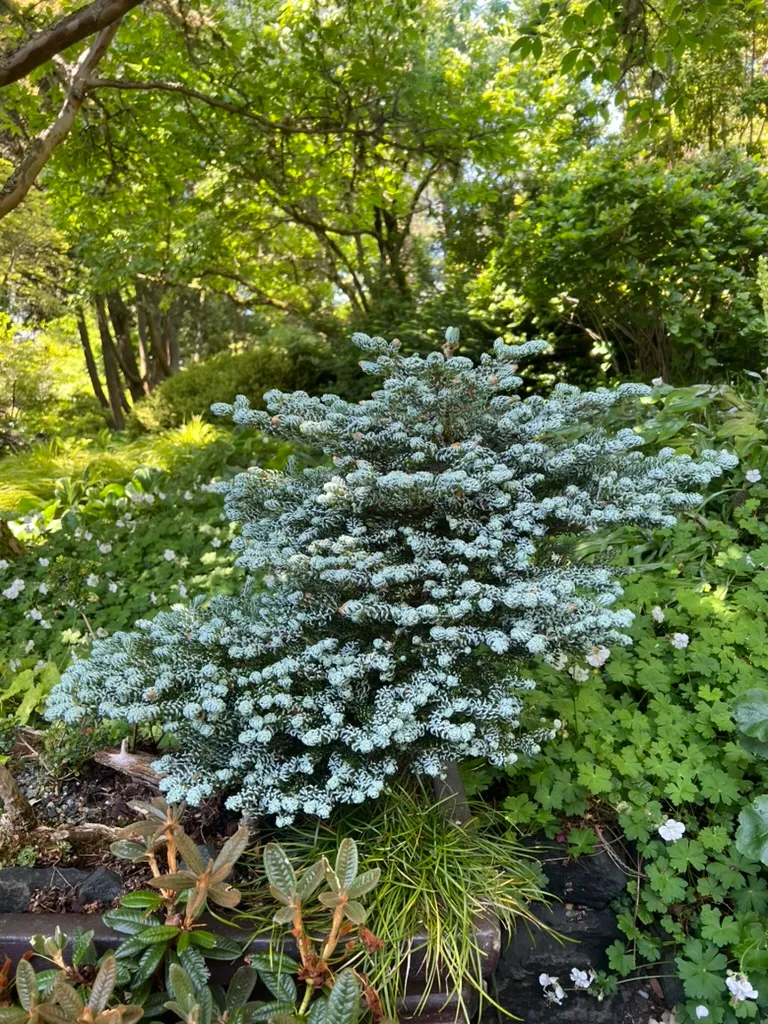
Abies koreana 'Kohout's Ice Breaker' is a remarkable dwarf cultivar of Korean fir that exemplifies the beauty of compact conifers. This evergreen tree grows slowly to just 0.5-1 meter in height, making it dramatically smaller than the parent species which can reach 10-18 meters. The cultivar is distinguished by its striking needle-like leaves that display a beautiful contrast of glossy dark green upper surfaces and distinctive broad white stomatic bands beneath, creating an almost silvery appearance when viewed from below.
The needles are typically 1-2 cm long and densely arranged on the branches, giving the plant a full, compact appearance. This cultivar has earned recognition from the Royal Horticultural Society with an Award of Garden Merit, testament to its exceptional garden value. Abies koreana 'Kohout's Ice Breaker' maintains the characteristic upright conical form of Korean firs but in a miniature package, making it an ideal specimen for rock gardens, container growing, or as an accent plant in smaller landscapes where space is at a premium.
Native Range
Abies koreana is native to the mountainous regions of South Korea, particularly thriving in the higher elevations of the Korean Peninsula including the volcanic slopes of Jeju Island. The species naturally occurs in cool, moist montane forests at elevations between 1,000-1,900 meters, where it experiences cool summers and cold winters.Suggested Uses
Abies koreana 'Kohout's Ice Breaker' works exceptionally well in rock gardens, alpine gardens, and as a specimen plant in small landscapes. Its compact size makes it ideal for container growing on patios or in courtyards, and it serves as an excellent focal point in mixed borders with other dwarf conifers and perennials. The cultivar is perfect for foundation plantings near entryways, in Japanese-style gardens, or as part of a collection of miniature conifers. Its year-round interest and attractive foliage also make it suitable for winter gardens and areas viewed from indoor windows.How to Identify
Appearance
Bloom Information
late springDetailed Descriptions
Flower Description
inconspicuousFoliage Description
dark green above with white stomatic bands beneathGrowing Conditions
Sun Requirements
full sun to partial shade
Soil pH
5.5-6.5
Water & Climate
Water Needs
moderate
Frost Tolerance
hardy
Time to Maturity
8-10 years