1 / 4
Broadleaf Evergreen Shrubs
Abelia grandiflora 'Kaleidoscope'
Kaleidoscope Abelia
Caprifoliaceae
Hybrid of garden origin; parent species from China
At a Glance
TypeShrub
HabitMounding
FoliageSemi-evergreen
Height2–3 feet (60–90 cm)
Width2–3 feet (60–90 cm)
Maturity3 years
Growing Zones
USDA Hardiness Zones
6 - 9Zone 6
Zone 7
Zone 8
Zone 9
These zones indicate the coldest temperatures this plant can typically survive.
Frost Tolerancehardy
Key Features
Attracts Pollinators
Attracts Butterflies
Drought Tolerant
Fragrant (light)
Container Friendly
Maintenancemoderate
Overview
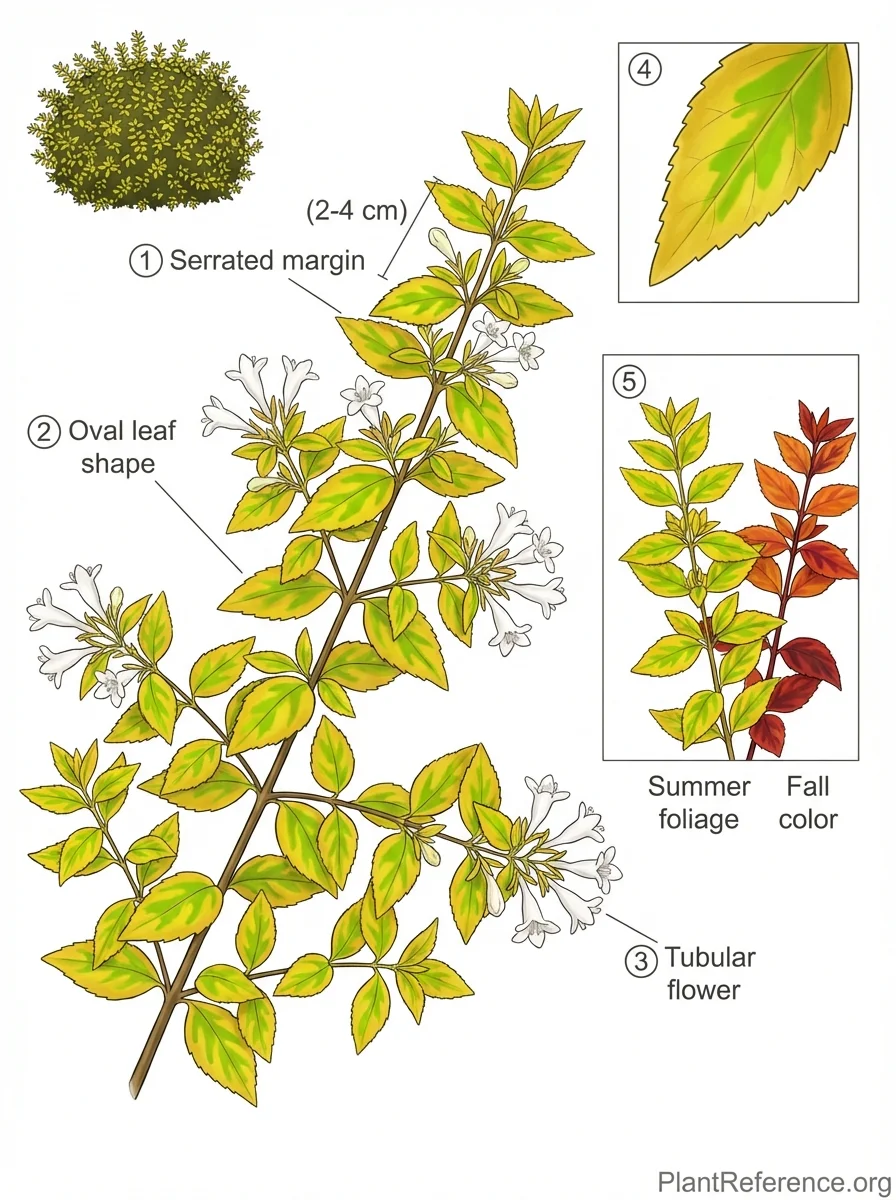
A compact semi-evergreen shrub reaching 2–3 feet (60–90 cm) tall and 2–3 feet (60–90 cm) wide, significantly smaller than the parent Abelia × grandiflora. Kaleidoscope is grown primarily for its exceptional foliage, which progresses through one of the most dramatic seasonal color sequences of any hardy shrub: golden-yellow leaves with contrasting lime-green centers in spring and summer, transitioning to vivid orange-red in fall, then settling into deep burgundy-red for winter. Leaves small, oval, 0.75–1.25 inches (2–3 cm) long, finely serrated. Small tubular white flowers are lightly fragrant, borne sporadically June through September — flowering is notably sparser than the species, as this cultivar was selected for foliage rather than bloom. Watch for vigorous all-green reversion shoots and remove immediately to preserve the cultivar's distinctive coloring. Hardy in USDA zones 6–9.
Native Range
Abelia × grandiflora is an artificial hybrid of Abelia chinensis and Abelia uniflora, both from China, first produced in Italian nurseries in the 19th century. Kaleidoscope is a cultivar of garden origin with no native range.Suggested Uses
Used as a low hedge, border edging, or foliage accent in mixed perennial or shrub borders at 2.5–3 foot (75–90 cm) spacing. The changing seasonal foliage provides four-season interest. Excellent for brightening partially shaded areas, though best color in full sun. Suitable for containers of 5+ gallons (19+ L) with winter protection in zone 6. Pairs well with purple-leaved Heuchera and blue-flowered perennials.How to Identify
Appearance
Size & Dimensions
Height2' - 3'
Width/Spread2' - 3'
Reaches mature size in approximately 3 years
Colors
Flower Colors
white
Foliage Colors
gold
green
orange
burgundy
Fall Foliage Colors
orange
red
burgundy
Bloom Information
Bloom Period
~14 weeksJ
F
M
A
M
J
J
A
S
O
N
D
SummerFall
Detailed Descriptions
Flower Description
White, small tubular, lightly fragrantFoliage Description
Golden-yellow with lime-green centers in spring and summer; vivid orange-red in fall; deep burgundy-red in winterGrowing Conditions
Sun Requirements
Full Sun
Partial Shade
Requires 4-12 hours of direct sunlight daily
• Full Sun: 6+ hours of direct sunlight
• Partial Shade: 3-6 hours of direct sunlight
• Full Shade: Less than 3 hours of direct sunlight
Soil Requirements
pH Range5.5 - 7.5(Neutral)
357912
Soil Types
loamclaysand
Drainage
well drained
Water & Climate
Water Needs
Low
Frost Tolerance
hardy
Time to Maturity
2–3 years
Drought Tolerance
Drought tolerant when established
Care & Maintenance
Care Guide
Plant in full sun to part shade in well-drained soil; full sun produces the most intense foliage coloration. Space plants 2.5–3 feet (75–90 cm) apart. Water regularly during the first season; once established, tolerates dry periods but colors best with consistent moisture. Avoid waterlogged conditions. Fertilize lightly with a balanced slow-release formula in early spring; avoid excess nitrogen, which promotes green growth at the expense of colorful foliage. Monitor carefully and remove all-green reversion shoots immediately whenever they appear. Generally pest-free; aphids may appear on new growth in spring.Pruning
Prune in late winter to early spring before new growth begins. Remove dead or winter-damaged stems to the ground. Immediately remove all-green reversion shoots whenever they appear throughout the season. Light shaping after flowering is fine. For full rejuvenation, cut to 6–8 inches (15–20 cm) above ground in early spring — regrowth is rapid.Pruning Schedule
J
F
M
A
M
J
J
A
S
O
N
D
early spring
Maintenance Level
moderateContainer Growing
✓ Suitable for container growing
Minimum container size: 5 gallons