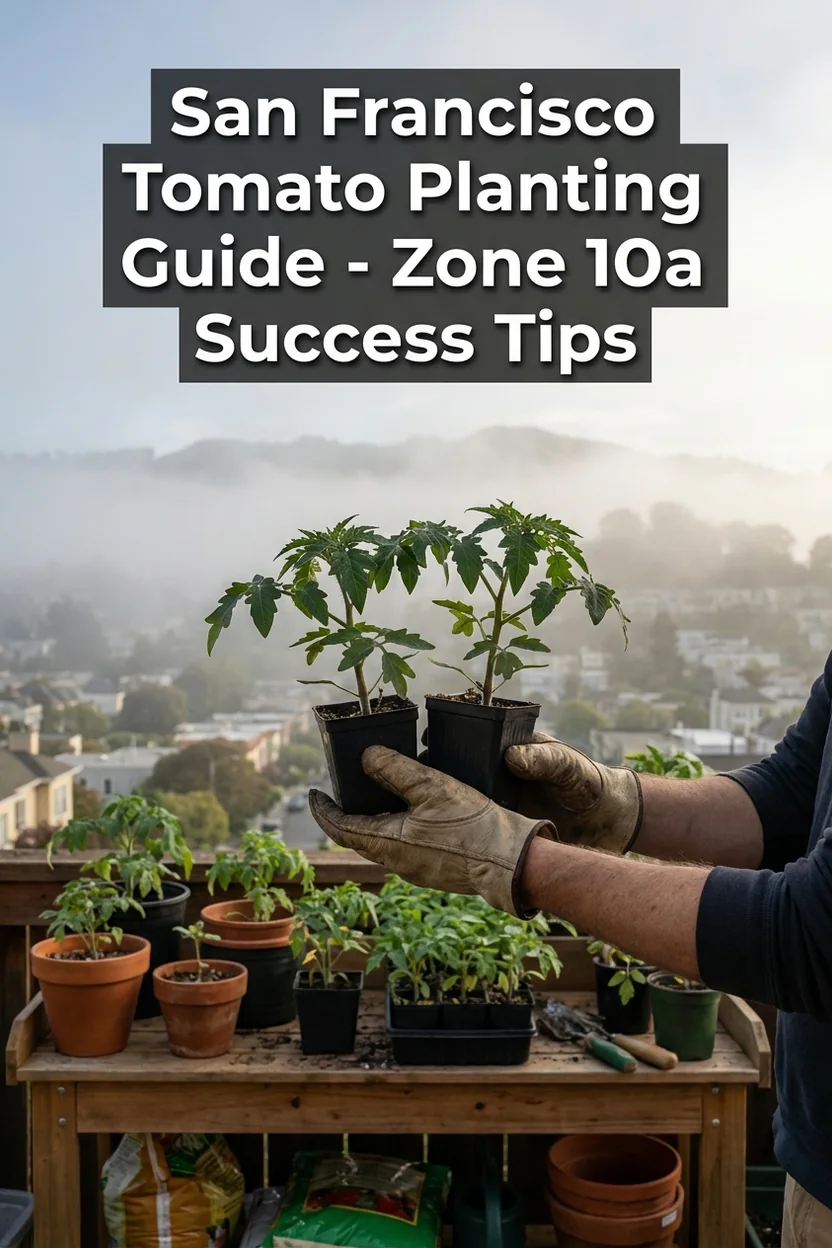
When to Plant Tomatoes in San Francisco: Complete Guide + Best Varieties for Zone 10a
Pets & Toxicity
Recorded toxicity for plants linked in this guide. An unknown status is not a safety assessment.
Toxic to pets: early girl tomato, Stupice tomato, cherokee purple tomato and 4 moreDetailsHide
Solanum lycopersicum 'Early Girl' — Toxicity Warning
Toxic to petsView Solanum lycopersicum 'Early Girl' plant profileSolanum lycopersicum 'Stupice' — Toxicity Warning
Toxic to petsView Solanum lycopersicum 'Stupice' plant profileSolanum lycopersicum 'Cherokee Purple' — Toxicity Warning
Toxic to petsView Solanum lycopersicum 'Cherokee Purple' plant profileSolanum lycopersicum 'Brandywine' — Toxicity Warning
Toxic to petsView Solanum lycopersicum 'Brandywine' plant profileSolanum lycopersicum 'Surefire Red' — Toxicity Warning
Toxic to petsView Solanum lycopersicum 'Surefire Red' plant profileSolanum lycopersicum 'Glacier' — Toxicity Warning
Toxic to petsView Solanum lycopersicum 'Glacier' plant profileSolanum lycopersicum 'Phoenix' — Toxicity Warning
Toxic to petsView Solanum lycopersicum 'Phoenix' plant profile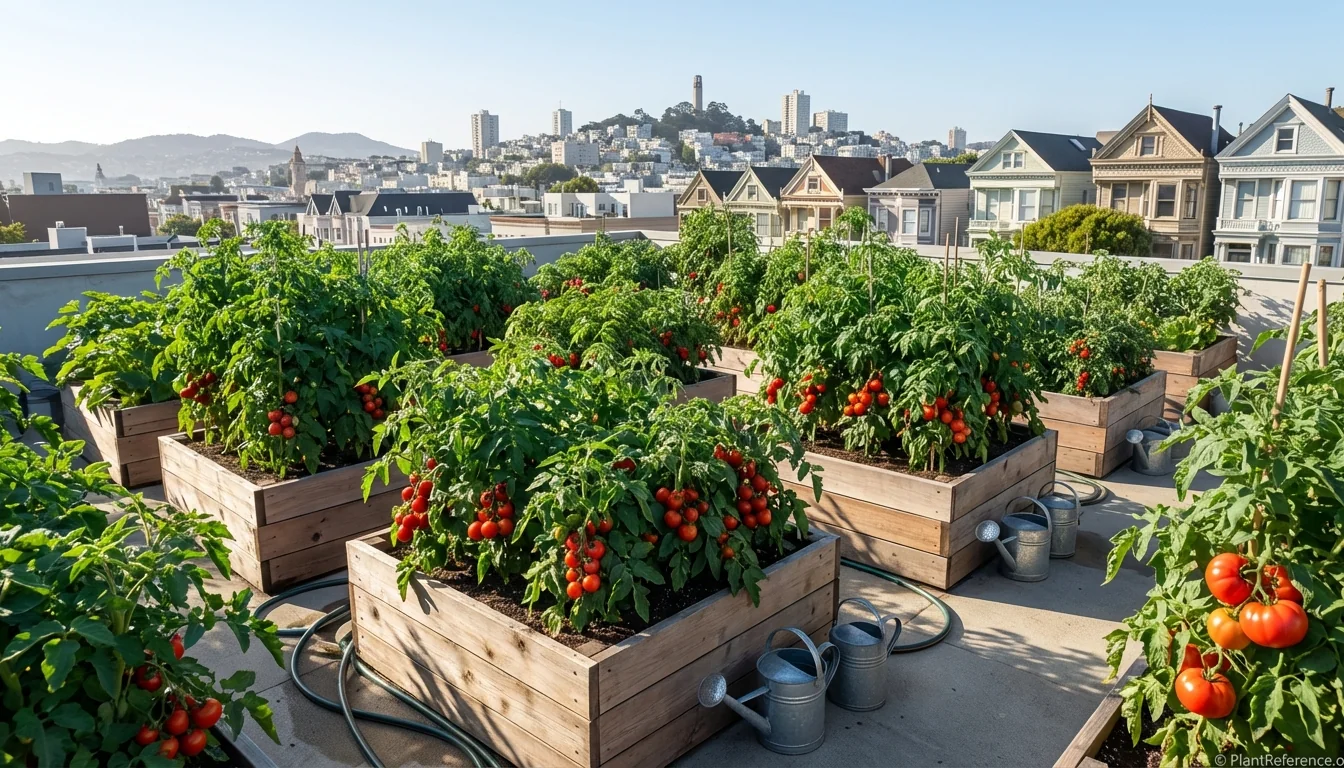
— Image © Plant Reference 2026
San Francisco's unique Zone 10a climate creates both opportunities and challenges for tomato growers. While frost is rare, the city's famous fog and cool summers require specific varieties and strategic timing to achieve success.
I've been helping Bay Area gardeners grow tomatoes for over forty years, and I'll tell you straight: San Francisco isn't like anywhere else. Your Zone 10a designation might suggest tropical growing, but that summer fog changes everything. The key is working with the city's microclimates, not against them.
San Francisco's growing season technically runs 334 days—from January 14 (last frost) through December 14 (first frost). But those numbers don't tell the whole story. The real challenge is those foggy summers when temperatures hover in the 60s, making heat-loving tomatoes sulk.
The secret to success is understanding San Francisco's two distinct growing seasons: spring-early summer (March through July) and fall (August through November). Smart gardeners plant twice, catching the warm weather before and after the fog season.
Best Tomato Varieties for San Francisco's Climate
Not all tomatoes handle San Francisco's cool, foggy conditions. After decades of testing varieties across different neighborhoods—from the foggy Sunset to the warmer Mission—I've identified the champions for Bay Area success.
Variety | Days to Maturity | Best For | Notes for San Francisco |
|---|---|---|---|
50-62 days | Quick harvest | Sets fruit in cool weather, perfect for fog season | |
52-60 days | Cold tolerance | Originally from Czech Republic, handles 45°F nights | |
60-70 days | Reliable producer | Bred specifically for cool Pacific climates | |
Solanum lycopersicum 'Oregon Spring' | 58-68 days | Determinate option | Compact plants ideal for windy conditions |
Solanum lycopersicum 'San Francisco Fog' | 65-75 days | Local favorite | Developed specifically for Bay Area microclimates |
45-55 days | Ultra-early | Earliest variety, beats the fog every time |
Cool-Season Champions
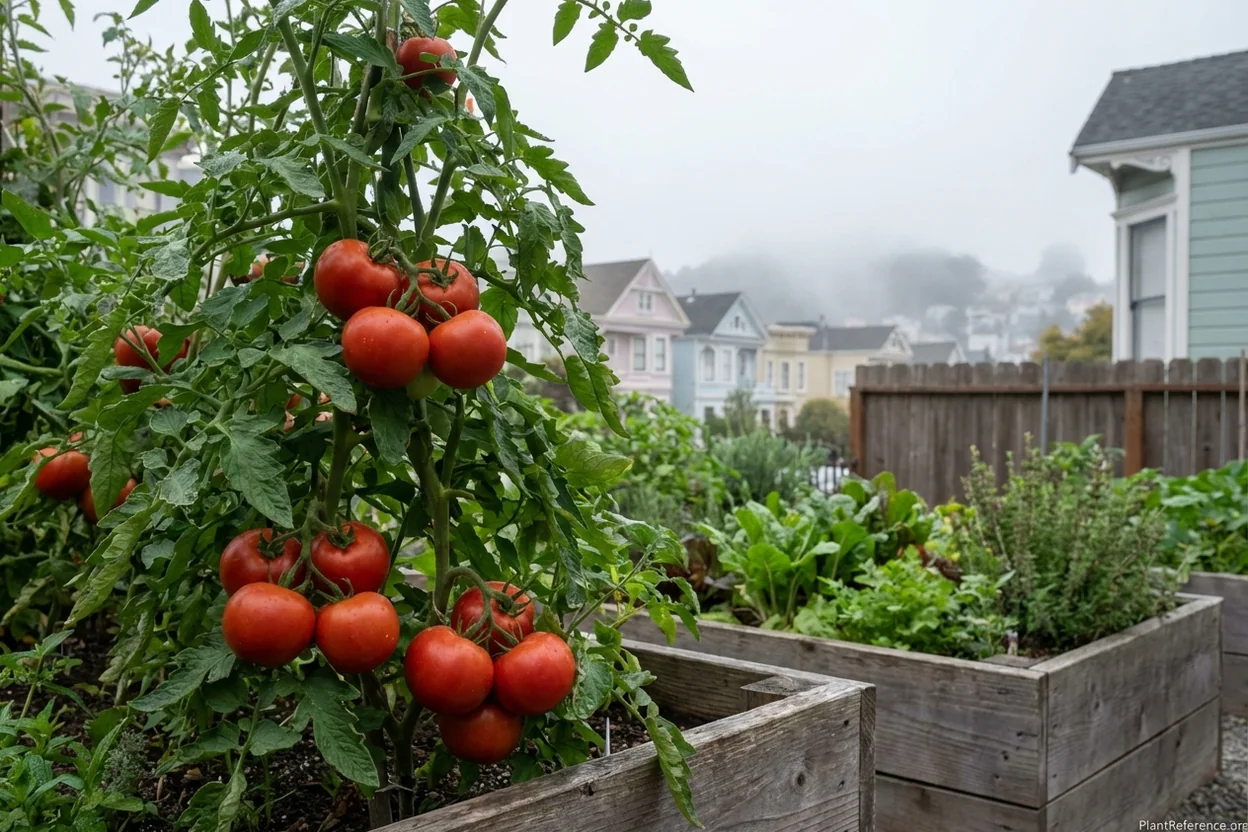
🌿Solanum lycopersicum 'Early Girl' remains my top recommendation for San Francisco gardeners. This variety sets fruit reliably when nighttime temperatures drop to 45°F—common during San Francisco summers. It produces medium-sized, flavorful tomatoes that ripen even in cool conditions.
🌿Solanum lycopersicum 'Stupice' is your insurance policy. This Czech heirloom was bred for short, cool summers and performs beautifully in the foggy neighborhoods like the Richmond and Sunset districts. The flavor is excellent, with a perfect balance of sweet and tart.
Heat-Loving Varieties for Protected Spots
If you garden in one of San Francisco's warmer microclimates—the Mission, SOMA, or against a south-facing wall—you can grow heat lovers like 🌿Solanum lycopersicum 'Cherokee Purple' and 🌿Solanum lycopersicum 'Brandywine'. These need consistent warmth and protection from wind.
Specific Planting Dates for San Francisco
San Francisco's mild Zone 10a climate allows for year-round growing, but timing your plantings around the fog season maximizes your harvest. Here's my tested schedule based on forty years of Bay Area gardening:
Spring Planting Schedule (Primary Season)
January 15-February 1: Start seeds indoors for spring crop. San Francisco's indoor temperatures stay consistent, so you don't need heat mats like colder climates.
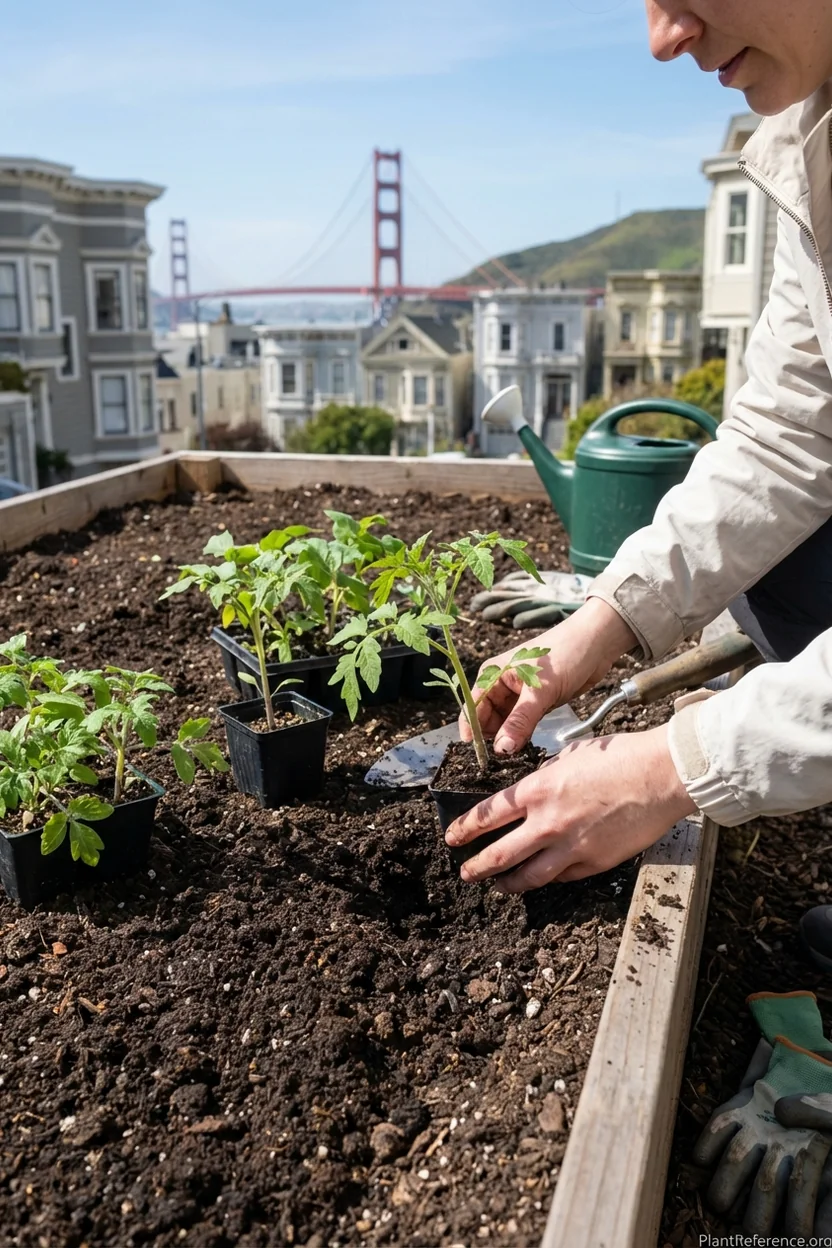
March 1-April 15: Transplant outdoors. This timing catches the warming trend before summer fog settles in. Soil temperature should be consistently above 55°F (13°C).
June-July: Peak harvest from spring plantings. Your tomatoes will be producing heavily before the fog thickens.
Fall Planting Schedule (Secondary Season)
July 15-August 1: Start seeds indoors for fall crop. This timing ensures plants mature during San Francisco's warmest months—September and October.
August 15-September 15: Transplant fall seedlings. They'll establish before the brief warm period that often occurs in late September and October.
October-November: Fall harvest period. San Francisco's Indian summer often provides the best tomato weather of the year.
Microclimate Adjustments
San Francisco's neighborhoods vary dramatically in temperature and fog exposure. Adjust these dates based your location:
Foggy Areas (Richmond, Sunset, Outer Mission): Plant 2 weeks later in spring, 2 weeks earlier for fall crop. The fog keeps these areas cooler longer.
Warm Pockets (Mission, SOMA, Potrero Hill): You can plant 2 weeks earlier in spring and extend fall planting into early October.
Coastal Areas (Ocean Beach vicinity): Focus entirely on spring planting. The persistent marine layer makes fall crops challenging.
Complete Growing Guide for San Francisco
Growing tomatoes successfully in San Francisco requires understanding the city's unique conditions. The mild temperatures are deceptive—what looks like perfect growing weather can actually stress tomato plants adapted to hotter climates.
Site Selection and Soil Preparation
Choose your location carefully. San Francisco's microclimates vary within single city blocks. The warmest spots are:
South-facing walls that absorb and radiate heat
Areas protected from western wind and fog
Raised beds that warm faster than ground-level plantings
Locations with good air circulation but wind protection
Soil preparation is critical in San Francisco's naturally acidic soils. Most Bay Area soil ranges from pH 5.5-6.5, while tomatoes prefer 6.0-7.0. I add agricultural lime in fall and compost year-round to maintain proper pH and drainage.
Container Growing Advantages
Container growing works exceptionally well in San Francisco because you can:
Move plants to follow sun patterns throughout the day
Protect plants during unexpected cool spells
Use quality potting soil instead of amending native clay
Position containers against heat-absorbing walls
Use containers at least 20 gallons for indeterminate varieties. Smaller pots dry out too quickly in San Francisco's dry summers and don't provide adequate root space.
Watering and Fertilizing
San Francisco's dry summers mean consistent irrigation is essential. I use drip irrigation or soaker hoses to maintain even moisture without wetting leaves—important for preventing disease in the cool, humid air.
Fertilizing schedule:
At planting: Incorporate 2-3 inches of compost
3 weeks after transplant: First feeding with balanced fertilizer
Monthly thereafter: Continue feeding through the growing season
Stop nitrogen-heavy fertilizers in late summer to encourage ripening
Season Extension Techniques
Protection during cool spells: Even in Zone 10a, San Francisco can have surprisingly cool nights. Keep row covers or clear plastic sheeting ready for unexpected temperature drops.
Maximizing heat: Use techniques to create warmer microclimates:
Plant against south or west-facing walls
Use water-filled tomato cages for thermal mass
Mulch with clear plastic early in season, switch to organic mulch once soil warms
Consider cold frames for early and late season protection
Troubleshooting San Francisco-Specific Problems
San Francisco presents unique challenges that gardeners in other climates don't face. Here are the most common problems I help local gardeners solve:
Cool-Weather Blossom Drop
Problem: Flowers form but drop off without setting fruit, especially during foggy periods.
Cause: San Francisco's cool nights (often 50-55°F (10-13°C) even in summer) can prevent proper pollination. Tomato pollen becomes sticky and clumps together when temperatures stay consistently below 60°F (15°C).
Solution: Choose varieties bred for cool conditions like '🌿Solanum lycopersicum 'Stupice'' and 'Solanum lycopersicum 'Oregon Spring''. Use blossom set spray (naphthaleneacetic acid) during cool periods to encourage fruit development without pollination.
Slow Ripening in Fog
Problem: Tomatoes stay green for weeks, showing little color development during peak fog season.
Cause: Tomatoes need consistent temperatures above 65°F (18°C) to develop lycopene (red pigment). San Francisco's summer fog can keep temperatures in the high 50s to low 60s (13-16°C) for days.
Solution: Harvest mature green tomatoes and ripen indoors. Place in paper bags with a ripe apple—the ethylene gas speeds ripening. For plants, use reflective mulch to bounce more light onto fruits and consider temporary plastic covers during heavy fog periods.
Wind Damage
Problem: San Francisco's afternoon winds can break stems, shred leaves, and dessicate plants.
Cause: The thermal differences between the hot Central Valley and cool Pacific Ocean create strong afternoon winds that funnel through the Golden Gate and across the city.
Solution: Stake plants early and securely. Use bamboo stakes at least 6 feet tall for indeterminate varieties. Create windbreaks with lattice panels or plant screens. In very windy areas, choose determinate varieties that stay more compact.
Poor Fruit Set in Heat Pockets
Problem: In San Francisco's warmest neighborhoods, tomatoes may fail to set fruit when temperatures exceed 85°F (29°C).
Cause: While most of San Francisco stays cool, areas like the Mission District can experience hot spells that stress tomatoes.
Solution: Provide afternoon shade with shade cloth (30-50%) during heat waves. Plant heat-tolerant varieties like '🌿Solanum lycopersicum 'Phoenix'' in these warmer microclimates. Ensure consistent watering to help plants cope with heat stress.
Clay Soil Drainage Issues
Problem: San Francisco's heavy clay soil holds too much water, leading to root rot and poor plant performance.
Cause: The city's native soils are predominantly clay with poor drainage, especially in lower elevations and areas with poor historical drainage.
Solution: Always amend clay soil with compost and create raised beds for better drainage. Add perlite or sand to improve soil structure. Consider container growing in areas with particularly heavy clay.
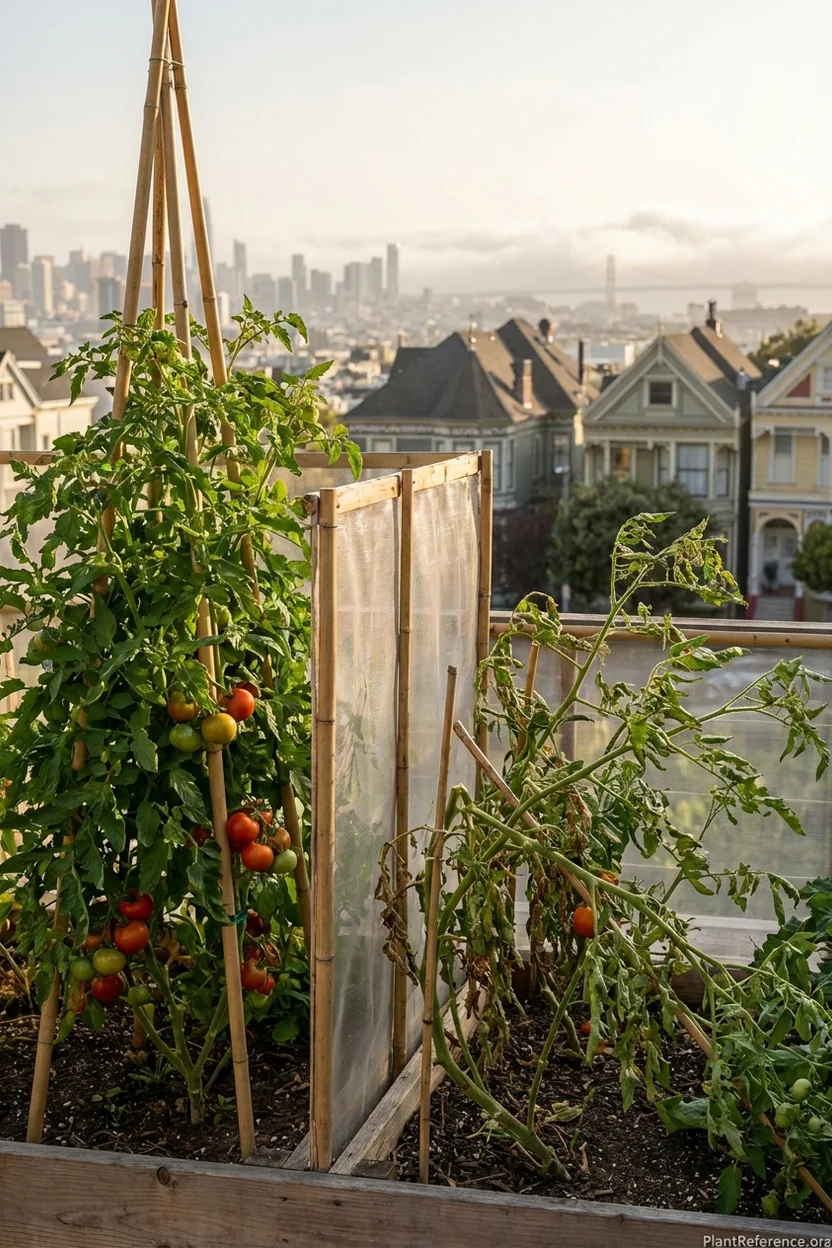
Harvest & Storage
San Francisco's extended growing season means you'll be harvesting tomatoes from June through November with proper planning. The key is knowing when and how to harvest for maximum flavor and storage life.
Optimal Harvest Timing
For immediate use: Harvest when fruits show full color but still feel slightly firm. San Francisco's cool nights mean tomatoes can hang on the vine longer than in hot climates without becoming overripe.
For storage: Pick tomatoes at the "breaker" stage (showing first blush of color) when fog threatens or temperatures drop consistently below 50°F (10°C) at night. They'll continue ripening indoors and maintain better texture.
End-of-season harvest: Before the first frost (typically mid-December in San Francisco), harvest all green tomatoes larger than golf balls. Wrap individually in newspaper and store in a cool, dark place. They'll ripen gradually through winter.
Storage Techniques for Extended Harvest
San Francisco's mild climate allows unique storage approaches:
Green tomato storage: Layer green tomatoes in shallow boxes, separated by newspaper. Check weekly and remove ripe ones.
Whole plant harvest: When frost threatens, pull entire healthy plants and hang upside down in garage or basement. Tomatoes continue ripening on the vine.
Succession ripening: Store harvested tomatoes at different temperatures (55°F (13°C) for slow ripening, 70°F (21°C) for quick ripening) to extend fresh tomato season.
Preservation for Year-Round Enjoyment
San Francisco's Mediterranean climate produces tomatoes with excellent flavor for preservation:
Best preservation methods: - Freezing: Wash, core, and freeze whole. Perfect for winter sauces and soups. - Dehydrating: San Francisco's low humidity makes air-drying possible. Slice and place on screens in a well-ventilated area. - Canning: The city's long harvest season provides ample tomatoes for sauce-making and canning.
The beauty of San Francisco tomato growing is the extended harvest. While other climates rush to preserve everything before frost, you can enjoy fresh tomatoes well into autumn and even early winter with protection.
Frequently Asked Questions
Reading about plants and recognising them are different skills. These three build the second.
- Daily PlantIdentify the day’s mystery plant from a close-up photograph.
- Keyed OutWork a dichotomous key, lead by lead, to name a hidden specimen.
- Name That PlantName a specimen from botanical clues dealt hardest first.
Free to play, no account needed
David is a software engineer who got into gardening after buying a fixer-upper in the Sunset District with a neglected backyard. San Francisco's microclimates fascinated him—he quickly learned that what grows three blocks away might not work in his fog belt yard. David now maintains a productive vegetable garden despite the marine layer, growing cool-season crops almost year-round and experimenting with season extension techniques. He volunteers at a local community garden and writes about urban food growing, microclimate gardening, and the particular challenges of Bay Area conditions. His approach is methodical—he keeps detailed notes and isn't afraid to share what didn't work.