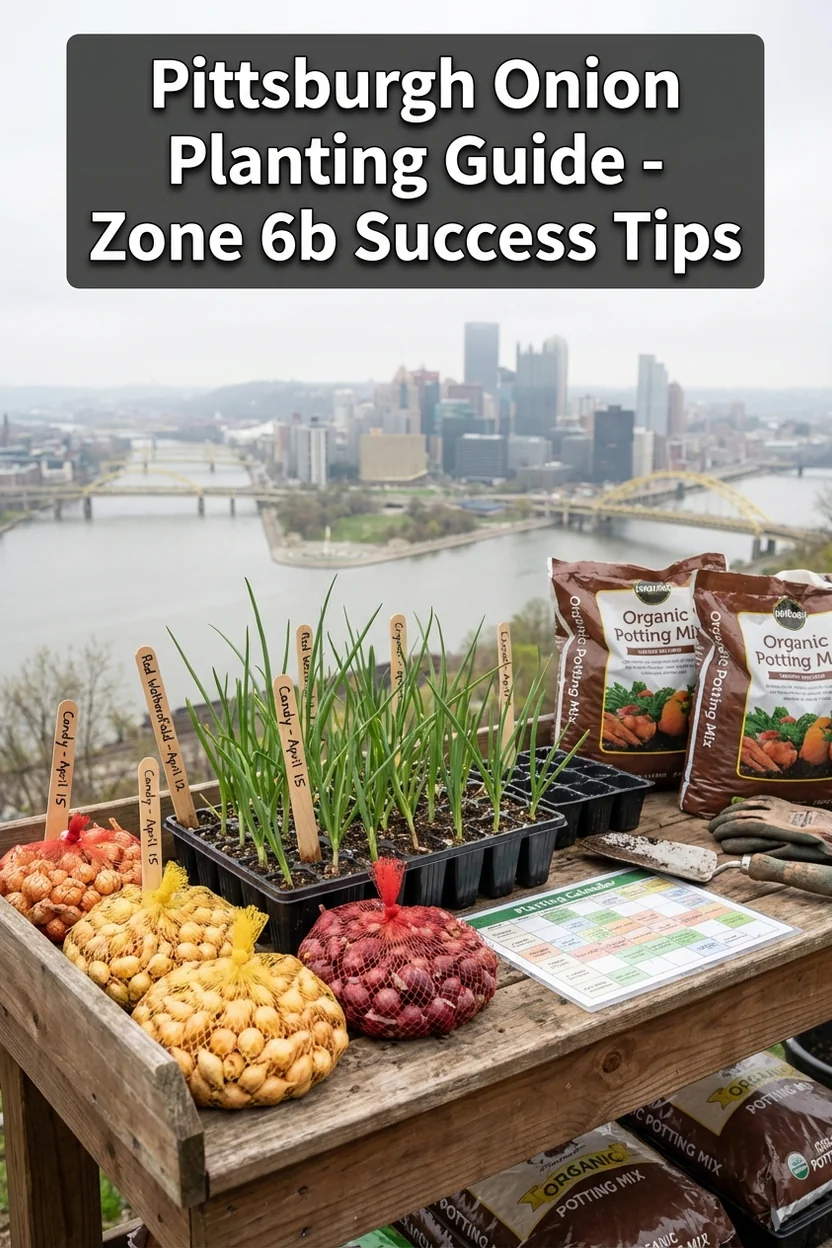
When to Plant Onions in Pittsburgh: Complete Guide + Best Varieties for Zone 6b
Pets & Toxicity
Recorded toxicity for plants linked in this guide. An unknown status is not a safety assessment.
Toxic to pets: red wing storage onion, Walla Walla sweet onion, yellow sweet Spanish onion and 3 moreDetailsHide
Allium cepa 'Red Wing' — Toxicity Warning
Toxic to cats and dogs if eaten; cats are especially susceptible, and raw, cooked or concentrated plant material can damage red blood cells and cause anaemia.View Allium cepa 'Red Wing' plant profileAllium cepa 'Walla Walla' — Toxicity Warning
Toxic to cats and dogs if eaten; cats are especially susceptible, and raw, cooked or concentrated plant material can damage red blood cells and cause anaemia.View Allium cepa 'Walla Walla' plant profileAllium cepa 'Yellow Sweet Spanish' — Toxicity Warning
Toxic to cats and dogs if eaten; cats are especially susceptible, and raw, cooked or concentrated plant material can damage red blood cells and cause anaemia.View Allium cepa 'Yellow Sweet Spanish' plant profileAllium sativum 'Music' — Toxicity Warning
Toxic to cats and dogs if eaten; cats are especially susceptible, and raw, cooked or concentrated plant material can damage red blood cells and cause anaemia.View Allium sativum 'Music' plant profileAllium sativum 'California Early' — Toxicity Warning
Toxic to cats and dogs if eaten; cats are especially susceptible, and raw, cooked or concentrated plant material can damage red blood cells and cause anaemia.View Allium sativum 'California Early' plant profileAllium fistulosum — Toxicity Warning
Toxic to cats and dogs if eaten; cats are especially susceptible, and raw, cooked or concentrated plant material can damage red blood cells and cause anaemia.View Allium fistulosum plant profile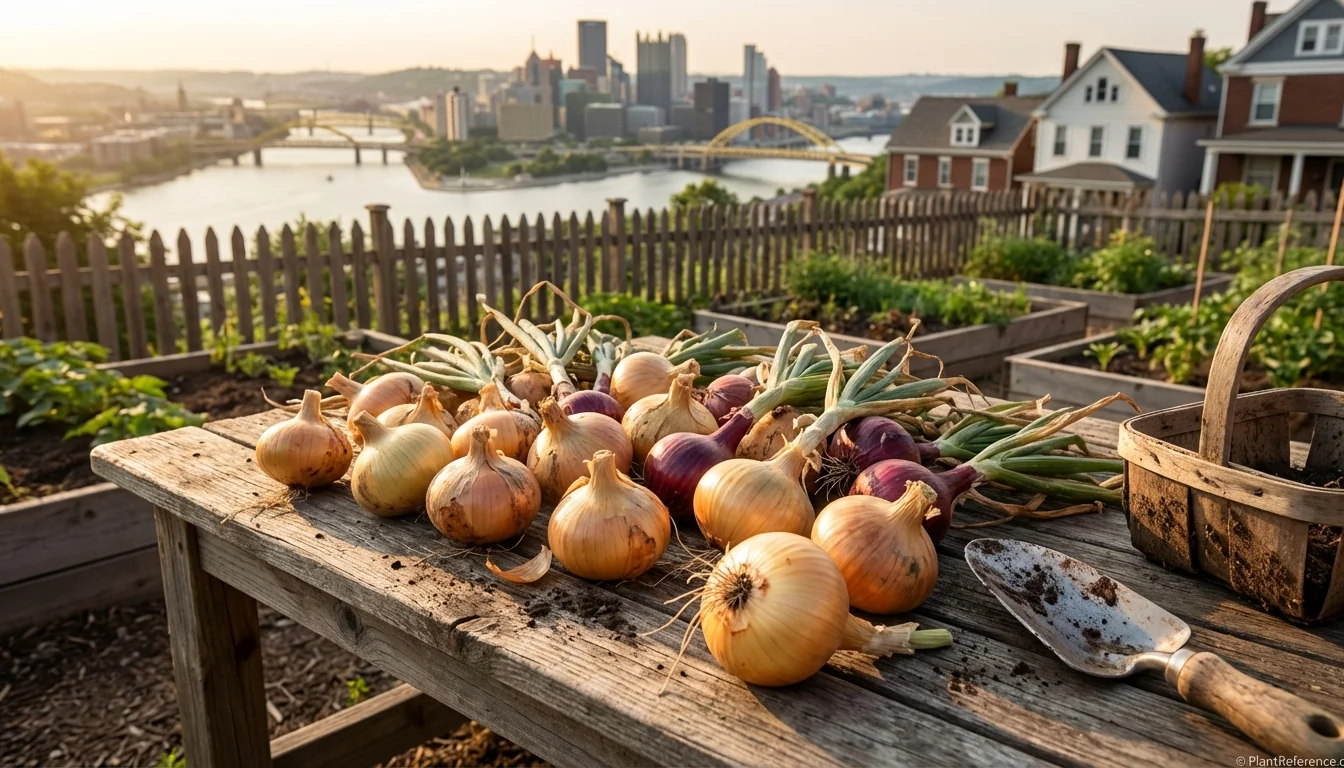
— Image © Plant Reference 2026
I've been growing onions in western Pennsylvania for forty years, and I'll tell you what works in Pittsburgh: timing is everything. This city sits right in the sweet spot for long-day onions at 40.4°N latitude, but our unpredictable spring weather means you need to know exactly when to plant and which varieties will actually bulb up properly in our Zone 6b climate.
Best Onion Varieties for Pittsburgh's Climate
Pittsburgh gardeners need to understand one critical fact: latitude determines which onions will actually form bulbs. At 40.4°N, we're firmly in long-day onion territory, meaning our varieties must be triggered by 14-16 hours of daylight to switch from leaf growth to bulb formation.
The onion 🌿Allium cepa 'Red Wing' (AL-ee-um SEE-pah) is a photoperiod-sensitive plant. If you plant short-day varieties here, you'll get giant green tops but tiny bulbs—or no bulbs at all. I learned this the hard way thirty years ago when I tried some Texas varieties that looked promising in the catalog.
Variety | Days to Maturity | Best For | Notes for Pittsburgh |
|---|---|---|---|
105-120 days | Long-term storage | Perfect for Zone 6b, stores 8-10 months | |
110-125 days | Fresh eating | Sweet variety, use within 2 months | |
110-120 days | Large bulbs | Reliable producer, good storage | |
240-270 days | Cold-hardy garlic | Hardneck type, excellent for PA winters | |
240-270 days | Mild garlic | Softneck type, better storage | |
60-70 days | Green onions | Continuous harvest, cold-tolerant |
Storage Onions That Work in Pittsburgh
For serious storage—the kind that lasts through winter in a root cellar—stick with 🌿Allium cepa 'Red Wing'. This hybrid produces uniform globe-shaped bulbs with thick, protective skin that cures beautifully in our climate. The deep red color holds through storage, and these onions maintain their pungency and firmness well into spring.
🌿Allium cepa 'Yellow Sweet Spanish' gives you the biggest bulbs, often over a pound each when grown properly. These store moderately well—3 to 4 months if cured correctly—and have that mild, sweet flavor that's perfect for roasting or caramelizing.
Sweet Onions for Fresh Use
🌿Allium cepa 'Walla Walla' is the exception to the storage rule. Originally from Italy but adapted to the Pacific Northwest, this variety tolerates our cold springs better than most sweet onions. The bulbs are mild and juicy but won't keep past October. Plan to use these fresh or preserve them by pickling or freezing.
Specific Planting Dates for Pittsburgh
With our last average frost on April 24, you've got a comfortable window for onion planting. Unlike tender vegetables that wait for warm soil, onions are tough enough to handle cool spring weather—in fact, they prefer it.
Spring Onion Planting Schedule
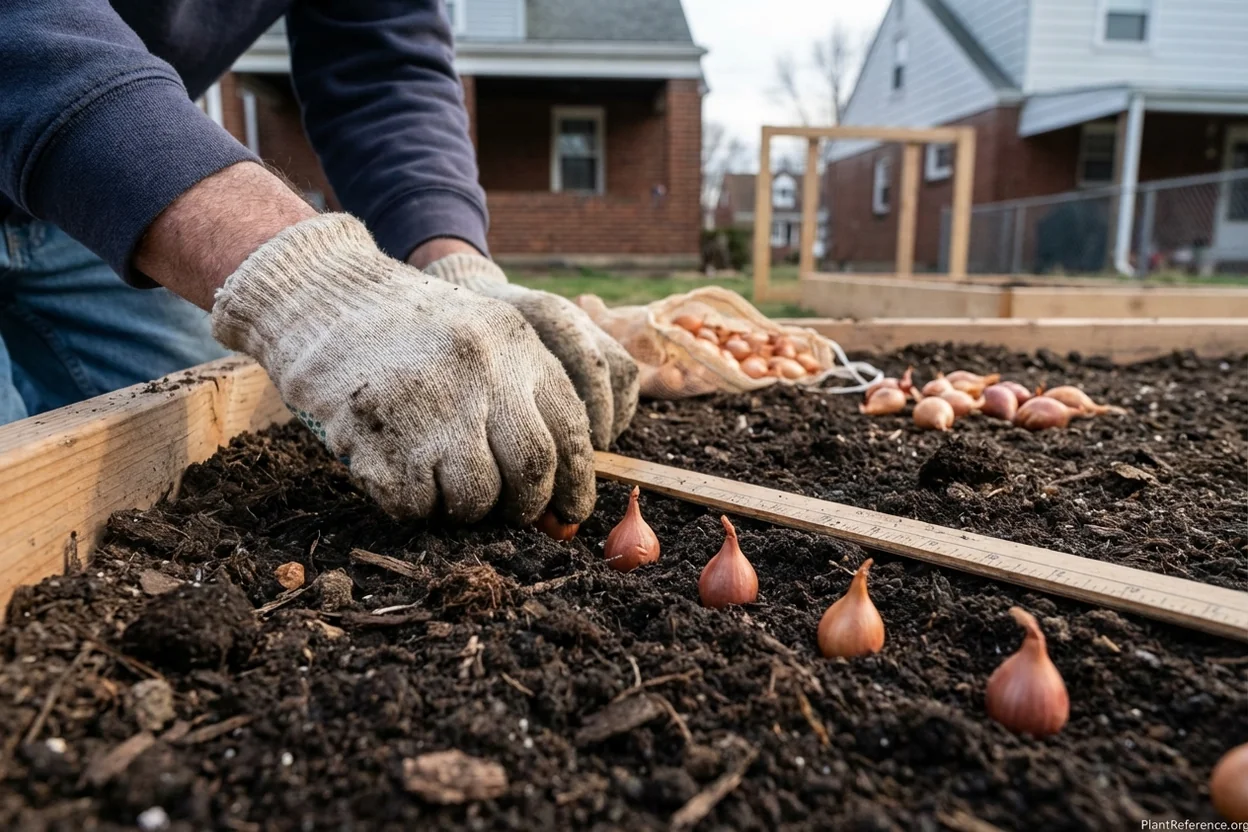
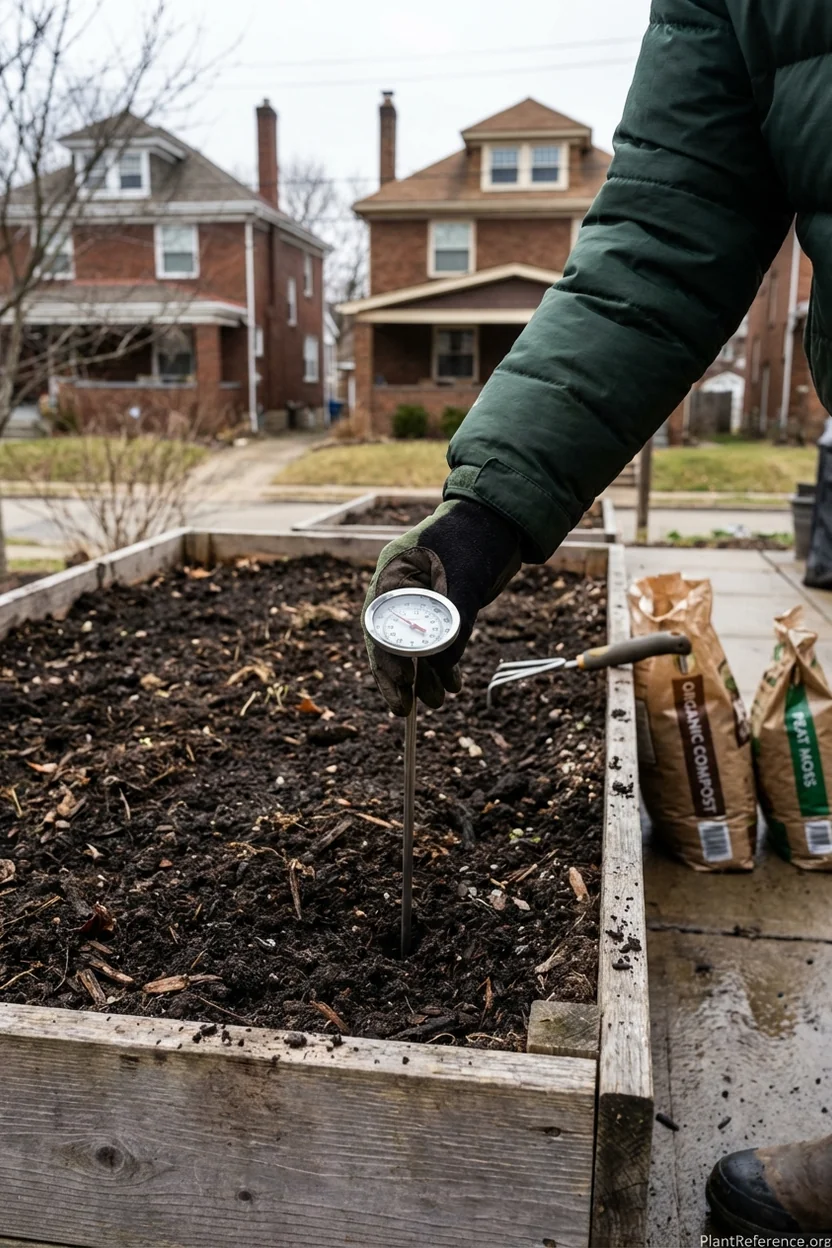
March 15-31: Start with onion sets if soil is workable. These small, dormant bulbs tolerate temperatures down to 20°F (−7°C) once planted. Check soil conditions by grabbing a handful—it should crumble, not form a muddy ball.
April 1-15: Plant onion transplants or direct-sow seeds if you started them indoors in February. This timing gives maximum leaf growth before the June solstice triggers bulbing.
April 15-30: Last chance for onion planting in Pittsburgh. Later planting reduces the vegetative growth period, resulting in smaller bulbs.
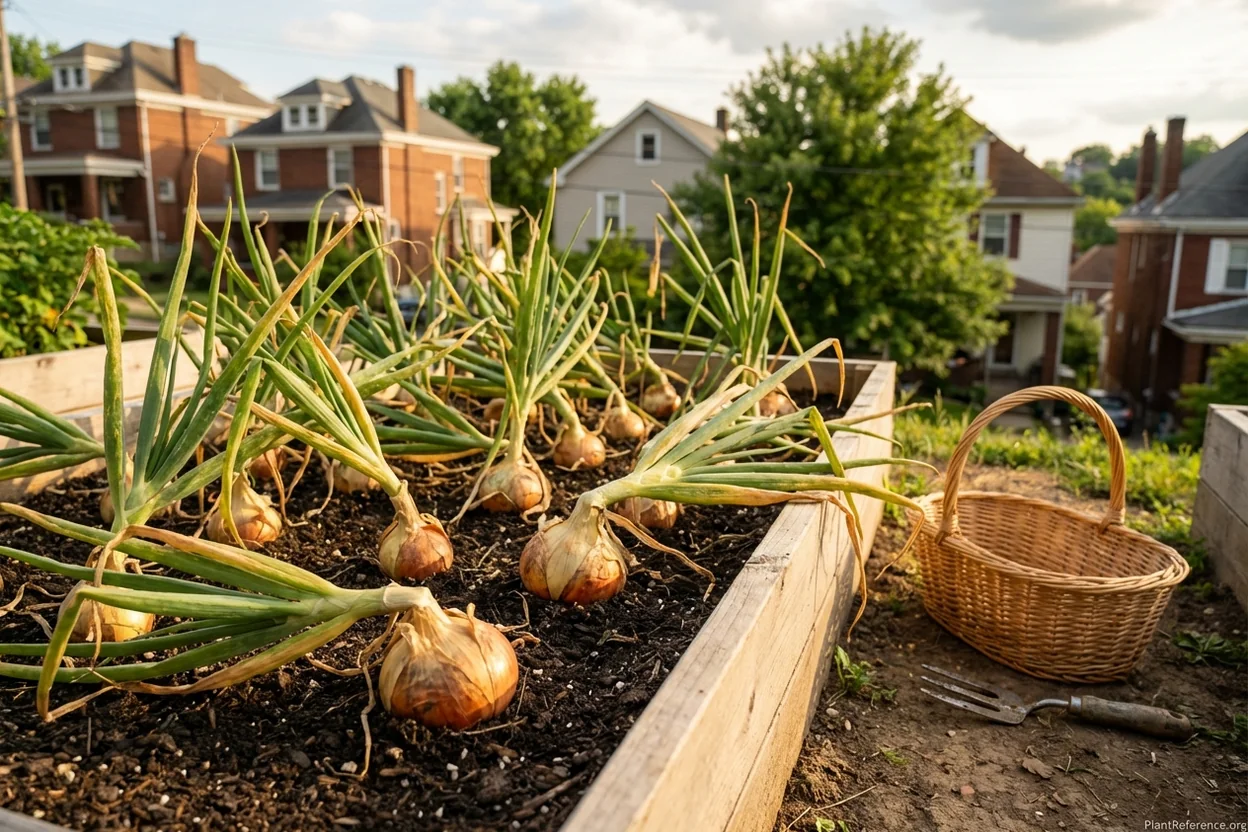
The key is understanding that each green leaf corresponds to one ring of the bulb. More leaf growth before bulbing begins equals larger onions. In Pittsburgh, you want at least 10-12 leaves per plant before the 14-hour day length trigger hits in late May.
Garlic Fall Planting Dates
Garlic requires a different approach entirely. 🌿Allium sativum 'Music' needs 4-8 weeks of cold temperatures (32-50°F) to form proper cloves, so fall planting is mandatory.
October 15-25: Ideal planting window for Pittsburgh. This timing allows root establishment before ground freeze but prevents excessive top growth that winter could damage.
November 1-15: Backup planting period if October was too warm or wet. Mulch heavily with 4-6 inches of straw to prevent soil temperature fluctuations.
Plant garlic cloves pointed end up, 2 inches deep and 6 inches apart. In Pittsburgh's clay-heavy soils, adding compost or aged manure improves drainage and prevents rot.
Complete Growing Guide for Pittsburgh
Success with onions in Pittsburgh comes down to three factors: variety selection, soil preparation, and timing. Get these right, and you'll have storage onions that last through winter.
Soil Preparation for Pittsburgh Gardens
Pittsburgh's soils tend toward clay, which holds too much moisture for onions. These plants need well-draining soil to prevent rot and allow proper bulb development. Work in 2-3 inches of compost or aged manure each spring.
Test your soil pH—onions prefer 6.0 to 6.8. Pittsburgh soils often run slightly acidic, so adding lime in fall helps reach the optimal range by spring planting time.
Create raised beds or plant in mounded rows if your soil drains poorly. Even 4-6 inches of elevation makes a significant difference in wet springs.
Fertilizing Strategy
Onions are heavy nitrogen feeders during the leaf growth phase but require a complete nutrition cutoff when bulbing begins. Here's the Pittsburgh schedule:
At planting (March-April): Apply balanced fertilizer like 10-10-10 at 2 pounds per 100 square feet. Side-dress with compost.
May 1: Begin bi-weekly nitrogen applications using blood meal (12-0-0) or fish emulsion. Continue through late May.
June 1: Stop all nitrogen fertilization. Late nitrogen creates thick-necked onions that won't cure properly and are prone to rot.
Mid-June: Apply potassium sulfate (0-0-50) to improve bulb firmness and storage life. This timing coincides with bulb formation beginning.
Watering Requirements
Pittsburgh's average annual rainfall of 38 inches usually provides adequate moisture, but distribution matters more than total amount. Onions need consistent moisture during leaf growth (April through early June) but should dry down as harvest approaches.
Water deeply once weekly if rainfall is insufficient, providing about 1 inch total. Avoid overhead watering after mid-June to prevent foliar diseases that thrive in our humid summers.
Stop watering completely when tops begin to yellow and fall over naturally. This signals bulb maturity and prevents splitting or rot during curing.
Troubleshooting Pittsburgh-Specific Problems
Forty years of growing onions in this climate teaches you what can go wrong and how to prevent it. Here are the problems I see most often in Pittsburgh gardens.
Bolting (Premature Flowering)
Bolting happens when onions send up flower stalks instead of forming bulbs. In Pittsburgh, this usually occurs from planting sets that are too large or using varieties with incorrect day-length requirements.
Prevention: Choose sets smaller than a dime. Larger sets are physiologically older and more likely to bolt when stressed by late spring cold snaps.
Treatment: Cut flower stalks immediately if they appear. The onion won't form a proper bulb, but you can still use it fresh as a scallion-type onion.
Small Bulb Development
Small bulbs result from inadequate leaf growth before the day-length trigger initiates bulbing. In Pittsburgh, this often happens from late planting or poor soil nutrition.
Solution: Plant earlier (mid-March when possible) and ensure adequate nitrogen during the April-May growth period. Each leaf becomes one bulb ring—more leaves equal larger bulbs.
Fungal Diseases in Humid Weather
Pittsburgh's humid summers create ideal conditions for onion diseases like downy mildew and purple blotch. These fungal problems spread rapidly in wet foliage.
Prevention: Space plants properly for air circulation. Avoid overhead watering after June 1. Apply mulch to prevent soil splash onto lower leaves.
Organic Treatment: Spray with baking soda solution (1 tablespoon per quart water) weekly if disease appears. Remove affected plants promptly.
Thick Necks That Won't Cure
Thick, fleshy necks prevent proper curing and lead to storage rot. This problem typically results from excessive nitrogen late in the season or overwatering near harvest.
Prevention: Stop nitrogen fertilization by June 1. Reduce watering frequency in July-August. Allow plants to naturally begin the curing process while still in the ground.
Harvest & Storage
Proper harvest and curing transform your growing success into storage success. Pittsburgh's late summer weather usually cooperates, but timing remains critical.
Harvest Timing
Begin harvest when 50-75% of the tops have fallen over naturally. This typically occurs in mid to late August for spring-planted onions. Don't be tempted to push the tops over manually—this damages the neck and prevents proper curing.
Pull onions on a dry day if possible. Lay them in the garden for 24-48 hours if conditions remain dry, covering bulbs with tops from adjacent rows to prevent sunscald.
Curing Process for Pittsburgh Climate
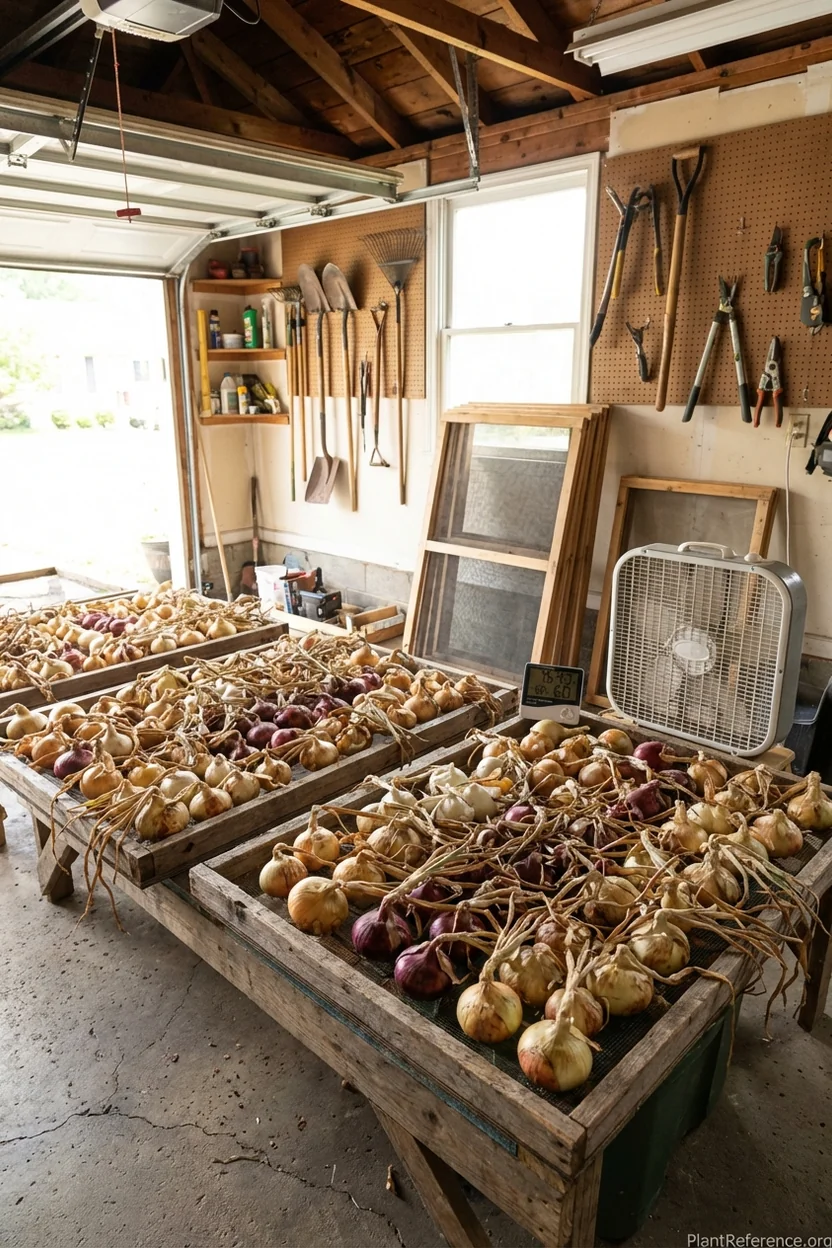
Pittsburgh's August humidity requires careful attention to curing conditions. Move onions to a warm (75-85°F), dry, well-ventilated area. A garage with open doors and a box fan works perfectly.
Spread onions in single layers on screens or hang in mesh bags. Ensure good air circulation around each bulb. Curing takes 2-4 weeks—onions are ready when outer skins are papery and necks feel completely dry and tight.
Trim roots and tops to 1 inch after curing is complete. Never trim green material—this introduces pathogens into moist tissue.
Storage Guidelines
Store cured onions at 32-40°F (0-4°C) with 65-70% humidity. A basement room or unheated garage often provides these conditions in Pittsburgh winters.
Storage expectations by variety: - 🌿Allium cepa 'Red Wing': 8-10 months - 🌿Allium cepa 'Yellow Sweet Spanish': 4-5 months - 🌿Allium cepa 'Walla Walla': 1-2 months maximum
Check stored onions monthly, removing any showing signs of sprouting or soft spots. One bad onion can quickly spread rot to others in storage.
Frequently Asked Questions
Reading about plants and recognising them are different skills. These three build the second.
- Daily PlantIdentify the day’s mystery plant from a close-up photograph.
- Keyed OutWork a dichotomous key, lead by lead, to name a hidden specimen.
- Name That PlantName a specimen from botanical clues dealt hardest first.
Free to play, no account needed
Linda's been growing tomatoes in containers on her suburban Pittsburgh balcony—ever since her kids grew up and she finally had time for hobbies again. She's a medical billing specialist by day and a tomato enthusiast by night and weekend. Linda started documenting her container growing experiments on a simple blog and discovered other renters and condo dwellers were desperate for practical advice. She tests different varieties every season, tracking yields, disease resistance, and flavor in a detailed spreadsheet. Linda's approach is practical and budget-conscious—she saves seeds, reuses containers, and makes her own fertilizer from kitchen scraps. Her specialty is maximizing production in small spaces, and she's perfected the art of growing full-size tomatoes in 5-gallon buckets. She's a Pennsylvania Master Gardener and teaches container growing workshops at her local library.