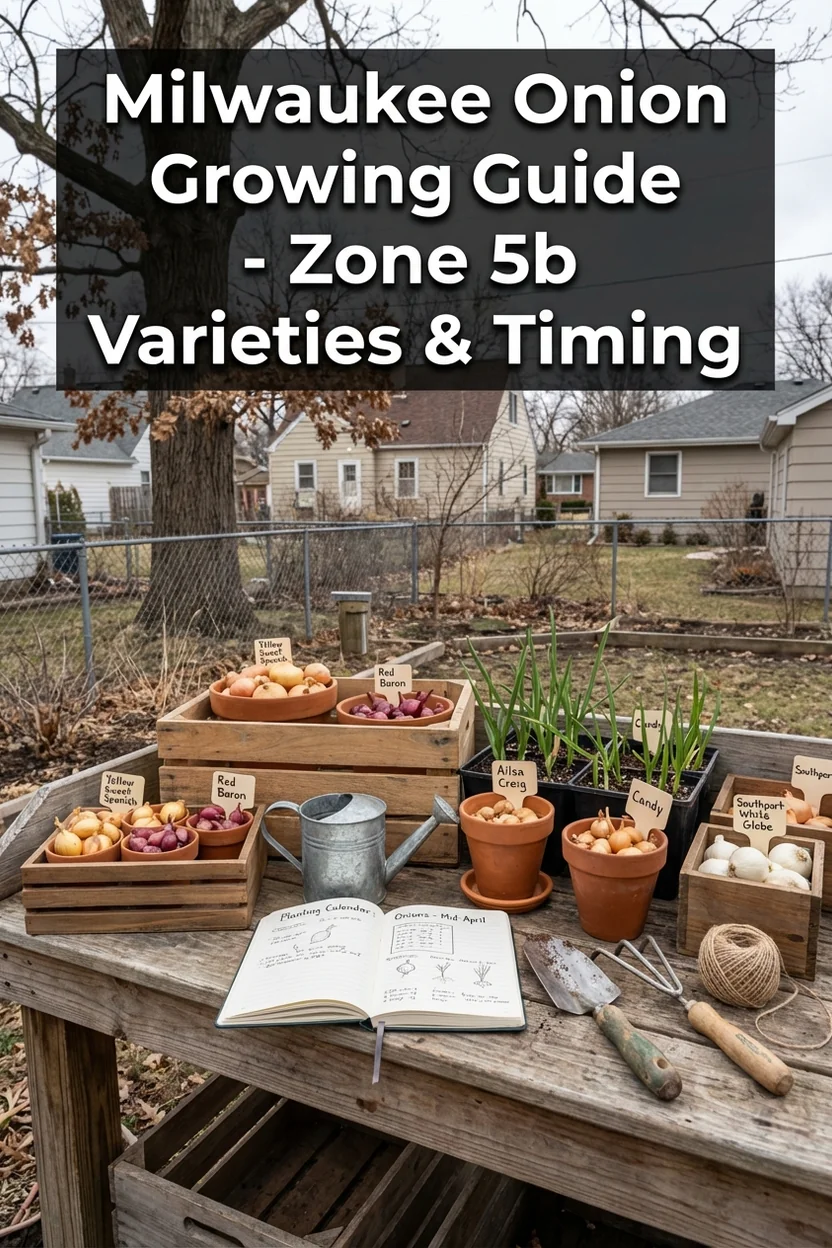
When to Plant Onions in Milwaukee: Complete Guide + Best Varieties for Zone 5b
Pets & Toxicity
Recorded toxicity for plants linked in this guide. An unknown status is not a safety assessment.
Toxic to pets: Walla Walla sweet onion, red wing storage onion, yellow sweet Spanish onion and 3 moreDetailsHide
Allium cepa 'Walla Walla' — Toxicity Warning
Toxic to cats and dogs if eaten; cats are especially susceptible, and raw, cooked or concentrated plant material can damage red blood cells and cause anaemia.View Allium cepa 'Walla Walla' plant profileAllium cepa 'Red Wing' — Toxicity Warning
Toxic to cats and dogs if eaten; cats are especially susceptible, and raw, cooked or concentrated plant material can damage red blood cells and cause anaemia.View Allium cepa 'Red Wing' plant profileAllium cepa 'Yellow Sweet Spanish' — Toxicity Warning
Toxic to cats and dogs if eaten; cats are especially susceptible, and raw, cooked or concentrated plant material can damage red blood cells and cause anaemia.View Allium cepa 'Yellow Sweet Spanish' plant profileAllium sativum 'Music' — Toxicity Warning
Toxic to cats and dogs if eaten; cats are especially susceptible, and raw, cooked or concentrated plant material can damage red blood cells and cause anaemia.View Allium sativum 'Music' plant profileAllium cepa 'Copra' — Toxicity Warning
Toxic to cats and dogs if eaten; cats are especially susceptible, and raw, cooked or concentrated plant material can damage red blood cells and cause anaemia.View Allium cepa 'Copra' plant profileAllium fistulosum — Toxicity Warning
Toxic to cats and dogs if eaten; cats are especially susceptible, and raw, cooked or concentrated plant material can damage red blood cells and cause anaemia.View Allium fistulosum plant profile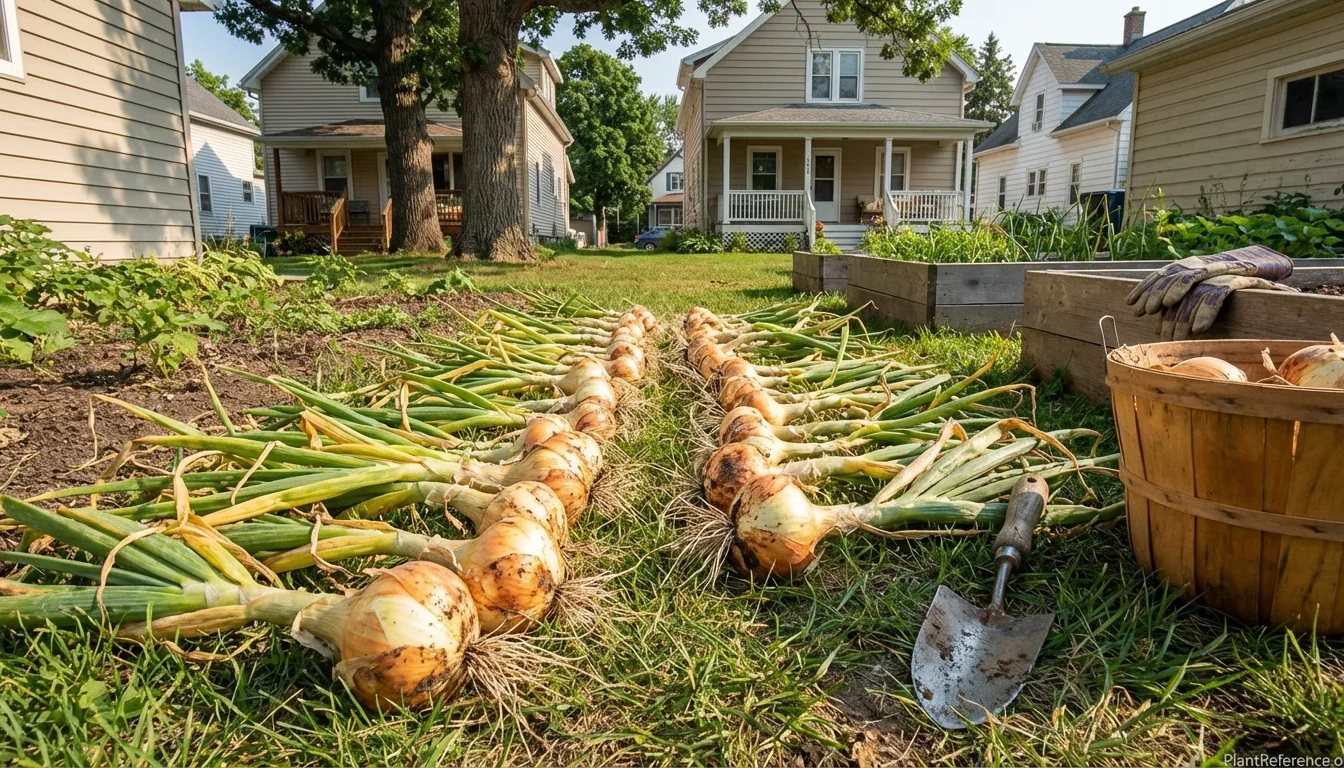
— Image © Plant Reference 2026
I've been growing onions and garlic in Milwaukee for thirty-five years, and I'll tell you what works in our Zone 5b climate. The key to success here isn't complicated—it's about planting the right varieties at the right time and working with our 139-day growing season instead of fighting it.
Milwaukee's latitude of 43°N puts us squarely in long-day onion territory, which is actually perfect for growing some of the best storage onions you'll ever taste. Our challenge isn't the day length—it's maximizing that 139-day growing season between our May 14 last frost and September 30 first frost.
Best Onion Varieties for Milwaukee's Zone 5b Climate
The biggest mistake I see Milwaukee gardeners make is planting short-day or intermediate-day onions that simply won't bulb in our latitude. We need varieties that are triggered by 14-16 hours of daylight, which we get reliably from mid-June through July.
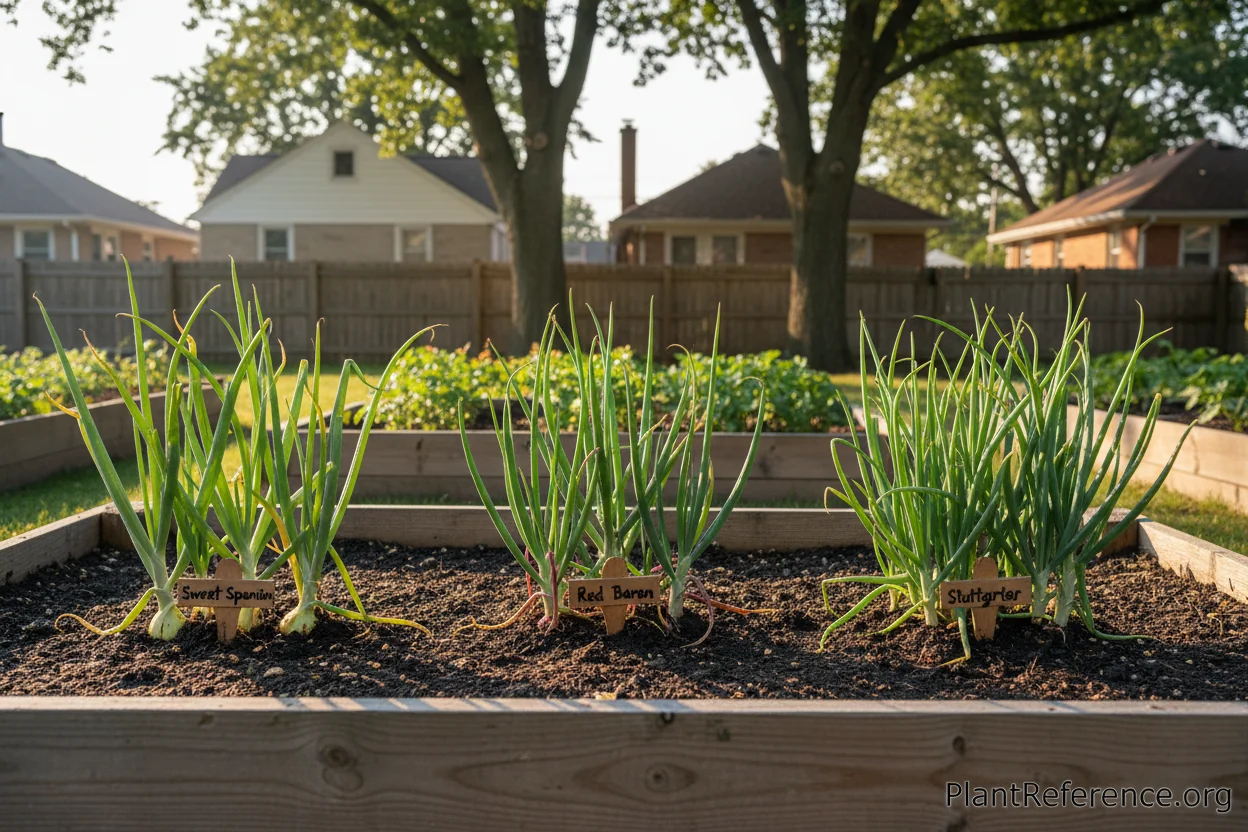
Variety | Days to Maturity | Best For | Notes for Milwaukee |
|---|---|---|---|
110-125 days | Fresh eating | Plant early April for best size, sweet flavor perfect for Wisconsin summers | |
105-120 days | Long storage | The gold standard for winter storage, keeps until spring | |
110-120 days | Large bulbs | Can produce 1+ pound bulbs in fertile Milwaukee soil | |
104-120 days | Storage | Excellent keeper, stores 8-10 months when properly cured | |
240-270 days | Cold climate garlic | Hardneck variety perfect for Wisconsin winters | |
60-70 days | Green onions | Continuous harvest, survives Milwaukee winters |
Why Long-Day Varieties Are Essential in Milwaukee
Here's what happens with onion day-length requirements: onions grow green tops until they sense the right day length, then switch to bulb formation. In Milwaukee, we get about 15.5 hours of daylight at summer solstice—perfect for long-day varieties.
🌿Allium cepa 'Walla Walla' is my top pick for fresh eating. This variety produces massive, sweet bulbs that are perfect for summer cooking. Plant these first, around April 15, because they need the longest growing season.
🌿Allium cepa 'Red Wing' is the storage champion. I've kept these onions until the following April in my root cellar. The deep red color holds through storage, and they maintain their firm texture.
🌿Allium cepa 'Yellow Sweet Spanish' can produce absolutely enormous bulbs in Milwaukee's fertile soils—I've grown them over a pound each. They're excellent for cooking and have moderate storage life.
Specific Planting Dates for Milwaukee Gardeners
Working with Milwaukee's May 14 last frost date, here's my proven planting schedule that accounts for our Zone 5b conditions:
Spring Onion Planting Schedule
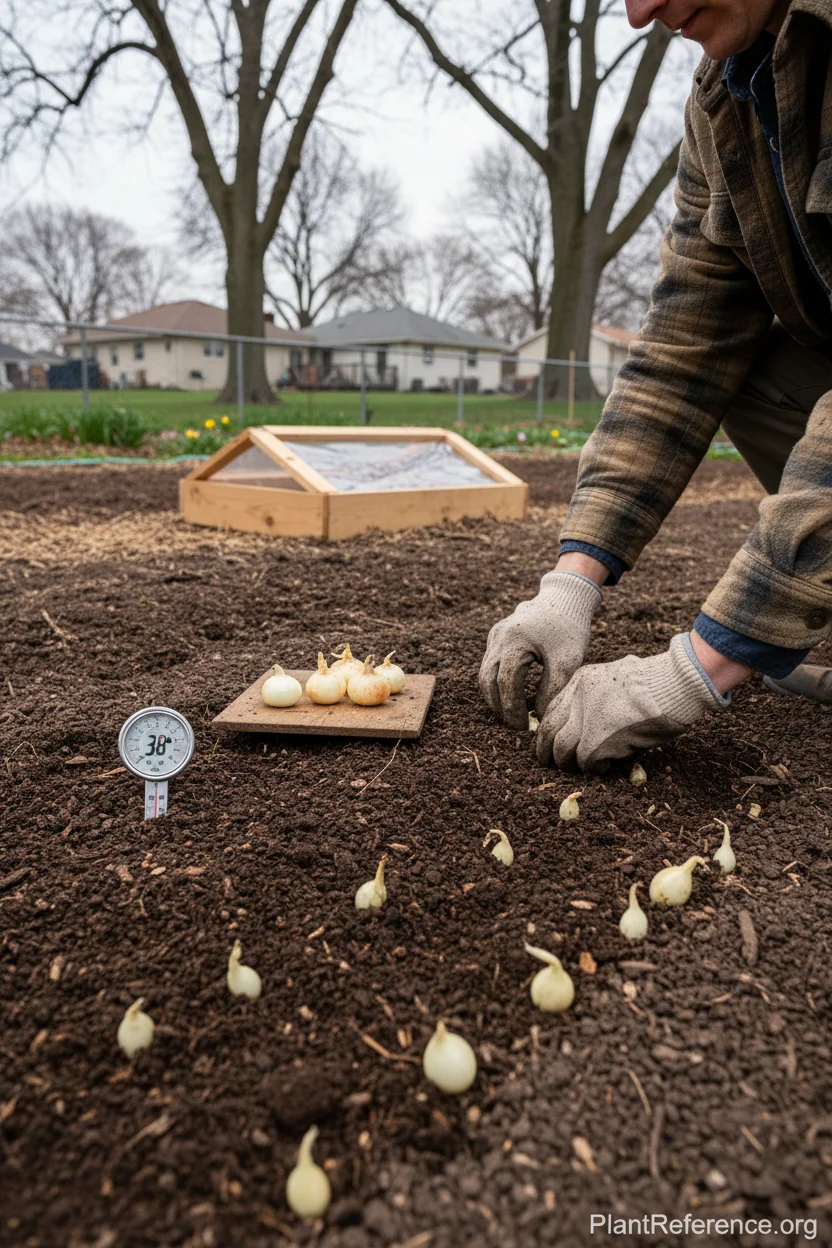
April 15-22: Early Planting Window-
Plant onion sets and transplants 3-4 weeks before last frost
Soil temperature should be 35-40°F (2-4°C)
🌿Allium cepa 'Walla Walla' sets go in first for maximum size - Cover with row cover if temperatures drop below 25°F (-4°C)
April 23-May 1: Standard Planting Window - Plant 🌿Allium cepa 'Red Wing' and 🌿Allium cepa 'Yellow Sweet Spanish' - Soil workable and warming, reduced frost risk - Transplants can go directly in without protection - Latest date for achieving full bulb size before day-length trigger
May 1-14: Final Window
Last chance for successful long-day onion planting
Later plantings produce smaller bulbs due to shortened vegetative period
Use only transplants (sets may bolt from temperature stress)
Fall Garlic Planting
October 15-November 1: Hardneck Garlic Planting - Plant 🌿Allium sativum 'Music' cloves 4-6 weeks before ground freezes - Soil temperature should be 45-50°F (7-10°C) - Cloves establish roots before winter dormancy - Mulch heavily with 4-6 inches of straw after planting
The timing is critical for garlic—too early and you get excessive top growth that winter-kills; too late and roots don't establish before the ground freezes solid.
Complete Growing Guide for Milwaukee's 139-Day Season
Soil Preparation
Milwaukee's clay-heavy soils need amendment for successful onion growing. I've learned this through trial and error over the decades. Onions hate waterlogged soil, and our clay holds water like a bathtub.
Soil Requirements:
pH: 6.0-6.8 (slightly acidic to neutral)
Drainage: Essential—onions rot in soggy soil
Organic matter: Add 2-3 inches of compost annually
Test soil pH in early spring using digital pH meter
Add sulfur in fall if pH is above 7.0
Incorporate 3-4 inches of aged compost or well-rotted manure
Create raised beds if drainage is poor
Work soil when it crumbles in your hand, not when muddy
I always tell new gardeners: if you can squeeze a handful of soil and water runs out, it's too wet to work. Wait for it to crumble naturally.
Planting Techniques
Sets vs. Transplants in Milwaukee:
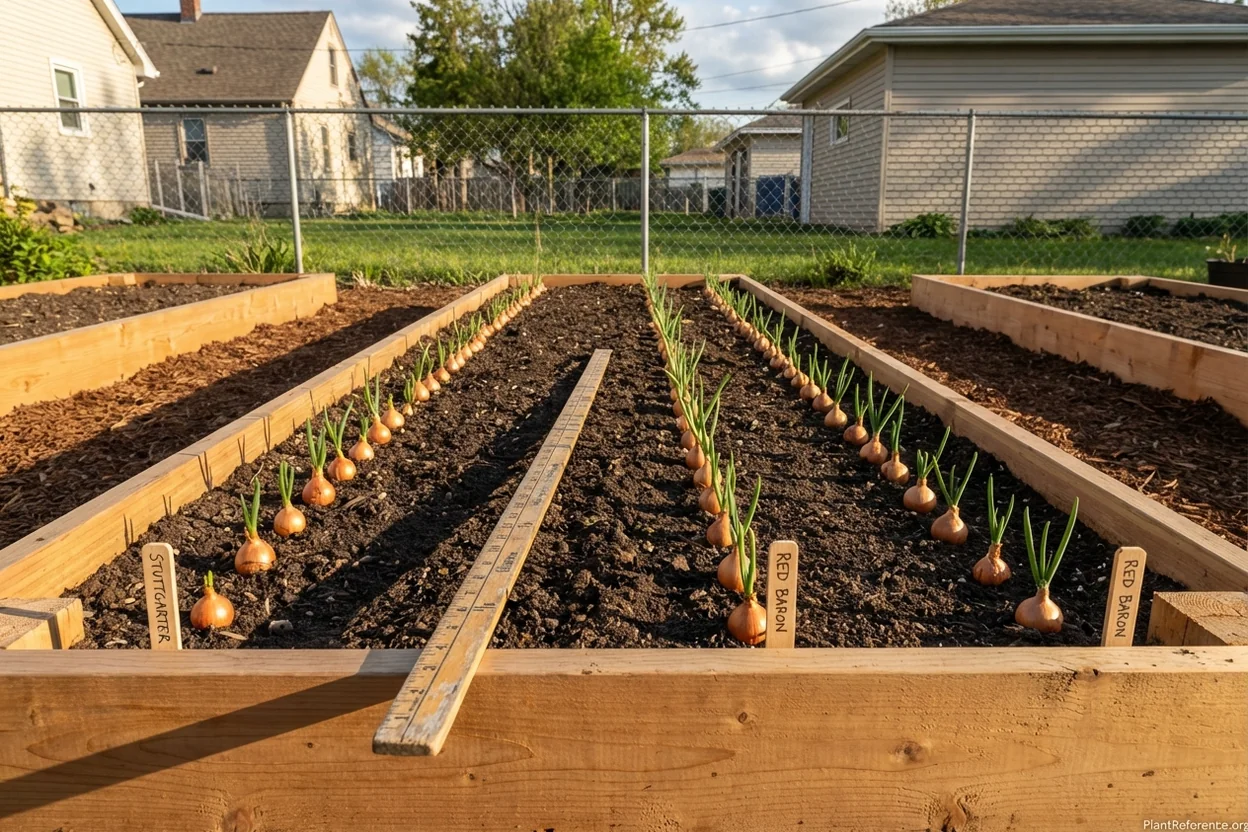
Onion sets (small dormant bulbs) are most reliable here because they handle our spring temperature fluctuations better than transplants. Choose sets smaller than a dime—large sets tend to bolt when they experience our typical April temperature swings.
Planting Depth and Spacing:
Sets: Plant 1 inch (2.5 cm) deep, 4 inches (10 cm) apart
Transplants: Plant at same depth as in container, trim tops to 4 inches
Rows: Space rows 12 inches (30 cm) apart for easy cultivation
Fertilizing Schedule
Onions are heavy nitrogen feeders during their vegetative growth phase, but timing is everything.
Early Season (April-June):
Apply balanced 10-10-10 fertilizer at planting
Side-dress with nitrogen every 3-4 weeks during active growth
Stop all nitrogen by July 1—late nitrogen delays maturity
Mid to Late Season (July-August):
Switch to low-nitrogen, high-potassium fertilizer
Potassium helps bulb development and storage quality
Reduce watering as tops begin to yellow naturally
Watering Management
Milwaukee gets about 30 inches of rainfall annually, usually well-distributed through the growing season. However, I've learned to supplement during dry spells.
Watering Guidelines:
1 inch (2.5 cm) per week during bulb formation (June-July)
Reduce watering by half when tops begin to fall over
Stop watering 2 weeks before harvest to improve storage quality
The key is consistent moisture without waterlogging. I use a rain gauge to track natural precipitation and supplement only when needed.
Troubleshooting Milwaukee-Specific Growing Problems
Bolting Issues
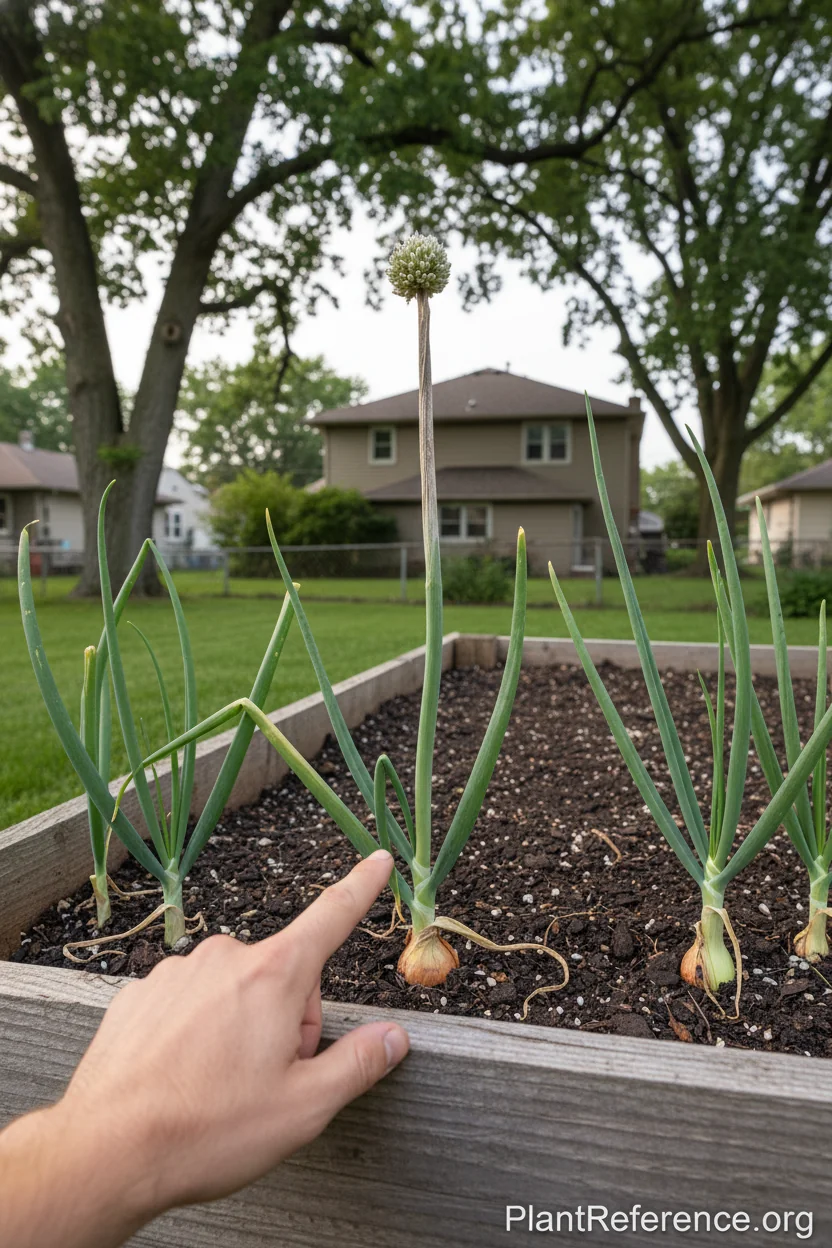
Bolting (premature flowering) ruins the bulb for storage and eating. In Milwaukee, bolting usually happens when we get those late spring cold snaps after a warm period.
Common Causes:
Large onion sets (choose smaller than a dime)
Temperature stress from typical Milwaukee spring weather swings
Wrong day-length variety (though rare with long-day types here)
Prevention:
Use small sets or transplants rather than large sets
Cover with row cover during cold snaps below 25°F (-4°C)
Plant at proper timing—not too early, not too late
Small Bulb Problems
Small bulbs usually result from late planting or poor soil fertility rather than variety issues in our climate.
Solutions:
Plant by May 1 at latest for full-sized bulbs
Ensure adequate nitrogen during vegetative growth
Maintain consistent soil moisture through June and July
Thin overcrowded plantings to 4-inch spacing
Thick Neck Syndrome
"Thick necks" that won't dry down properly for storage happen when growing conditions are too rich late in the season.
Prevention:
Stop nitrogen fertilizer by July 1
Reduce watering as tops begin to yellow
Don't bend tops over manually—let them fall naturally
Harvest and Storage for Maximum Shelf Life
Proper harvest timing makes the difference between onions that keep until spring and those that rot by December.
Harvest Timing
For Fresh Eating: - Harvest anytime after bulbs reach usable size - 🌿Allium cepa 'Walla Walla' is best used fresh within 2-3 months
For Long-Term Storage:
Wait until 50-75% of tops have fallen over naturally
Typically occurs in late August to early September in Milwaukee
Don't force tops down—this creates entry points for rot organisms
Check necks for tightness—should feel firm and dry
Harvest on a dry day with several sunny days forecasted
Lift bulbs carefully to avoid bruising
Brush off excess soil but don't wash
Leave tops attached for initial curing
Curing Process
Proper curing is essential for storage onions. I've perfected this process over decades of trial and error.
Field Curing (if dry weather):
Leave pulled onions on soil surface 1-2 days
Cover bulbs with tops from adjacent row to prevent sunscald
Bring indoors if rain threatens
Barn/Garage Curing:
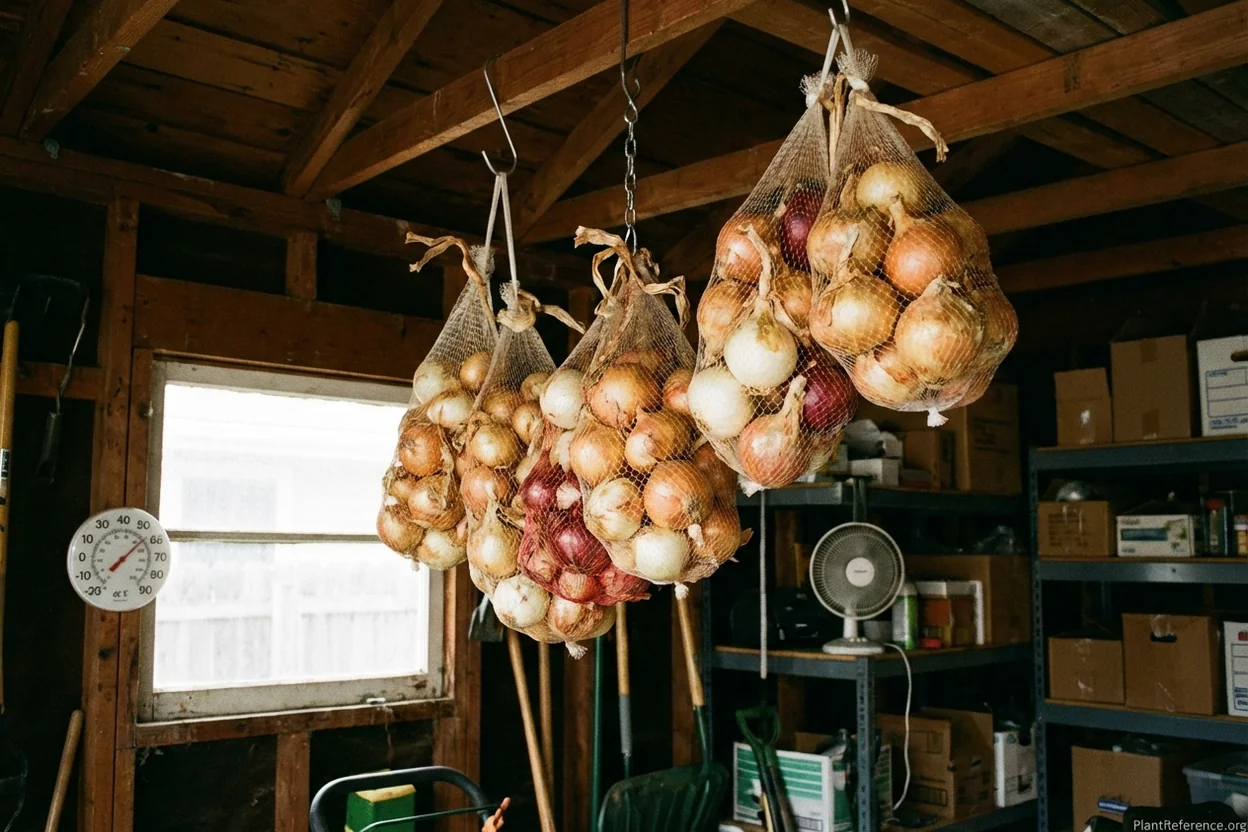
Spread in single layers on screens or hang in mesh bags
Ensure good air circulation with fans if needed
Maintain temperature 80-85°F (27-29°C) if possible
Cure for 2-4 weeks until outer skins are papery
Storage Conditions:
Temperature: 32-40°F (0-4°C)
Humidity: 65-70%
Air circulation: Essential to prevent condensation
Darkness: Light causes sprouting
Storage Life by Variety: - 🌿Allium cepa 'Red Wing': 8-10 months when properly cured - 🌿Allium cepa 'Yellow Sweet Spanish': 4-6 months - 🌿Allium cepa 'Walla Walla': 1-3 months (best used fresh)
Garlic Harvest and Storage
Garlic planted in fall is ready for harvest in July when lower leaves turn brown but 5-6 green leaves remain.
Garlic Curing: - Cure in warm, dry, well-ventilated area for 3-4 weeks - 🌿Allium sativum 'Music' stores 6-8 months at 32-50°F (0-10°C) - Braid softneck varieties or cut tops and store in mesh bags
Frequently Asked Questions
Reading about plants and recognising them are different skills. These three build the second.
- Daily PlantIdentify the day’s mystery plant from a close-up photograph.
- Keyed OutWork a dichotomous key, lead by lead, to name a hidden specimen.
- Name That PlantName a specimen from botanical clues dealt hardest first.
Free to play, no account needed
Pat has been gardening in Milwaukee for over thirty years, through every kind of Wisconsin weather. She worked as a school librarian and started gardening seriously when her kids were small—she wanted them to know where food came from. Now retired, she's a certified Master Gardener and runs the plant sale at her local garden club every spring. She specializes in cold-hardy perennials, native wildflower meadows, and the art of getting a vegetable garden producing in Wisconsin's short but intense growing season. Pat is practical and patient—she's seen enough Wisconsin winters to know that gardening here is a long game, and she writes with the steady confidence of someone who's been doing this a long time.