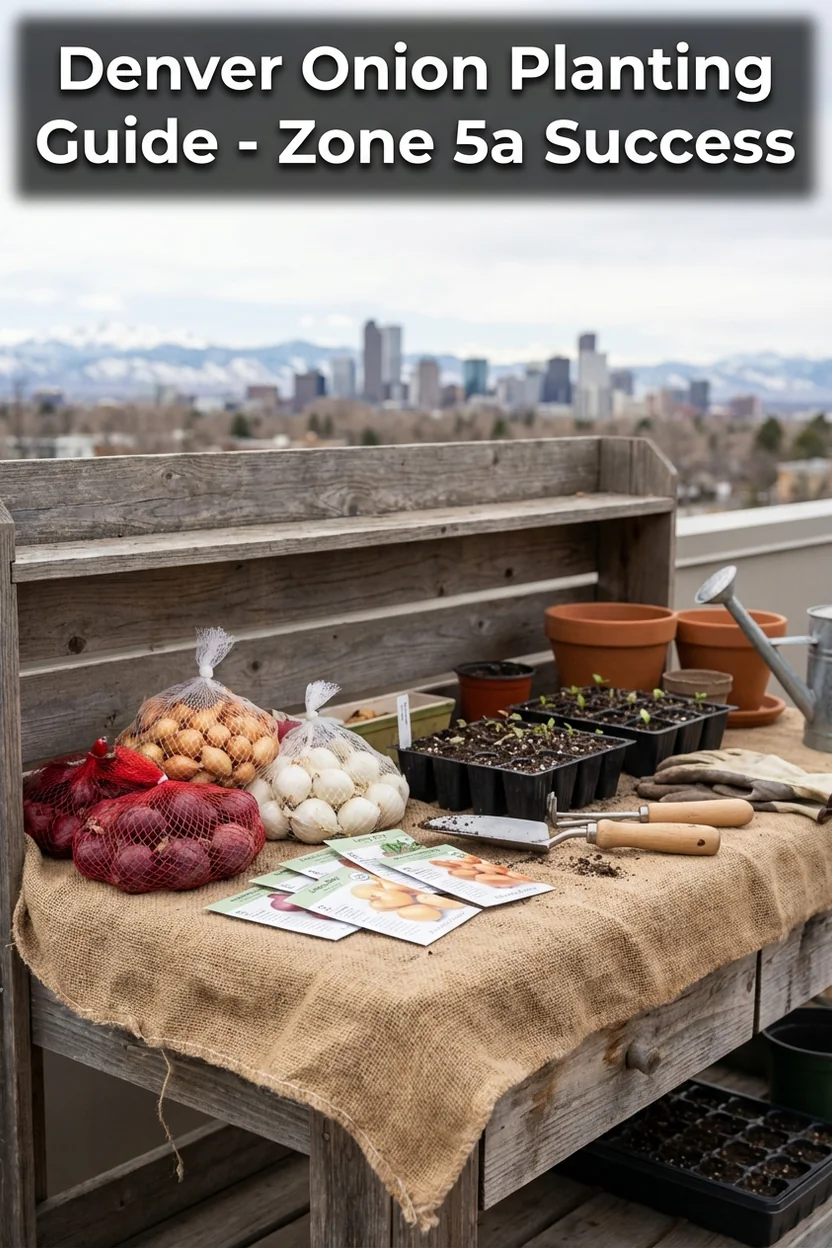
Planting Guides

When to Plant Onions in Denver: Complete Guide + Best Varieties for Zone 5a
Denver, Colorado
USDA Zone 5a
Last Frost: May 10
Last updated: December 8, 2025
Learn when to plant onions in Denver with specific dates for Zone 5a. Compare 6 varieties perfect for Colorado's high altitude climate and 148-day growing season.
DDorothy "Dot" Williams
December 8, 2025
Share:
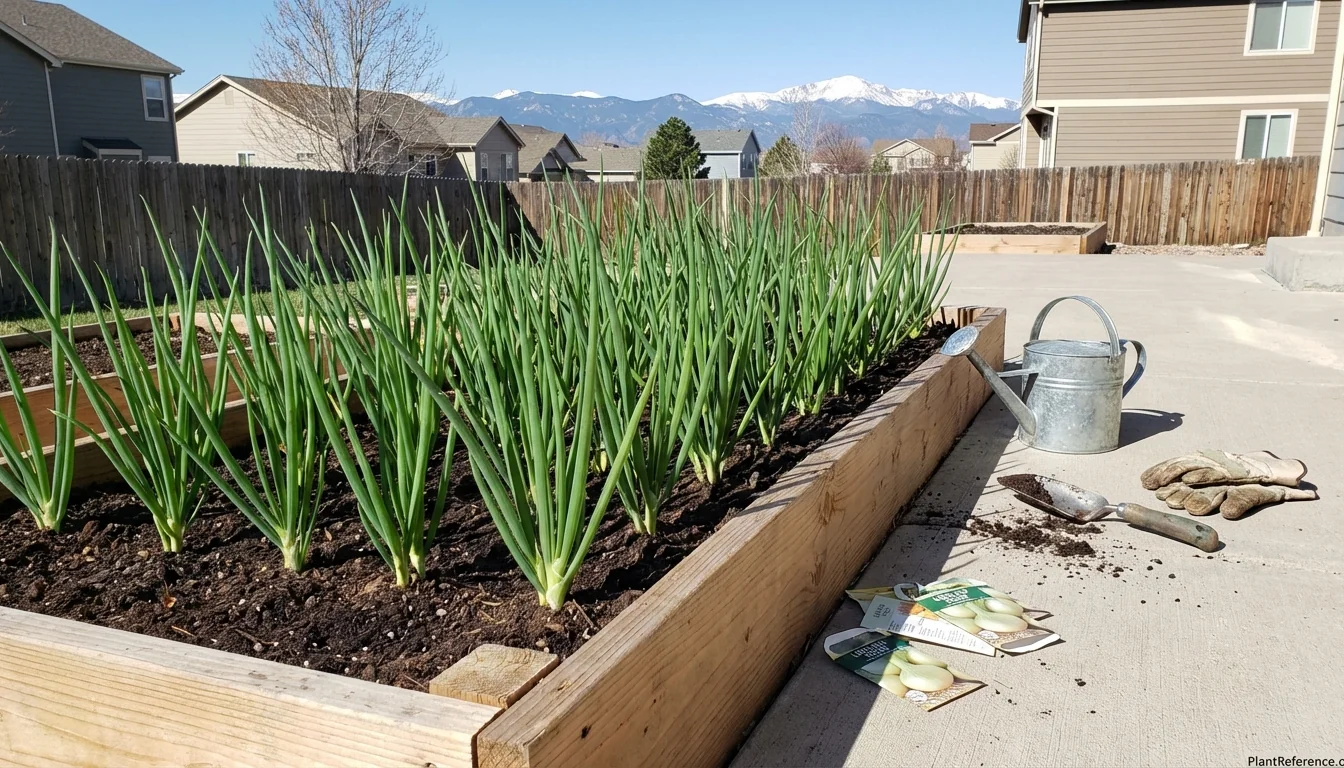
When to plant onions in Denver Colorado Zone 5a garden with mountain backdrop
Image © PlantReference.org 2025
Quick Answer
Plant onions in Denver April 11-25 using long-day varieties. Fall-plant garlic October 15-30.
TL;DR
Plant onions in Denver from April 11-25 for Zone 5a success. Choose long-day varieties like Allium cepa 'Red Wing' and Allium cepa 'Walla Walla' that need 14-16 hours daylight to bulb properly. Fall-plant hardneck garlic like Allium sativum 'Music' in mid-October. Denver's high altitude and 148-day growing season create ideal conditions for storage onions that cure well for winter use.
Product Recommendations

Red Wing Hybrid Onion Sets

($8-12)Top performer for Denver's Zone 5a climate

Red Wing F1 Hybrid Storage Onion Sets 1 Pound

https://www.dixondalefarms.com/product/redwing-onion-plants/

Premium long-day storage onion specifically bred for northern climates like Denver's Zone 5a. Produces uniform, globe-shaped bulbs with deep red color that intensifies during storage. Excellent cold hardiness handles Denver's temperature swings and late spring frosts. Superior storage life of 8-10 months when properly cured in Colorado's dry climate. Sets are sized smaller than dime to prevent bolting tendency. Matures in 105-120 days from April planting for late August harvest. Disease resistant with thick, protective outer scales ideal for high altitude growing conditions.

Price: $8.99-$11.99

Music Hardneck Garlic Bulbs

($15-22)Perfect for Colorado's cold winters

Music Hardneck Garlic Bulbs for Planting 1/2 Pound

https://www.groworganic.com/products/music-garlic

Premium porcelain-type hardneck garlic ideal for Denver's Zone 5a winters. Requires cold vernalization that Colorado naturally provides through 12-16 weeks below 40°F. Produces large bulbs with 4-6 jumbo cloves and excellent storage life of 6-8 months. Develops edible scapes in late spring that must be removed for maximum bulb size. Rich, complex flavor when raw, sweet and mild when roasted. Superior cold hardiness survives Denver winters with mulch protection. Plant October 15-30 for July harvest. Each bulb yields 4-6 planting cloves.

Price: $15.99-$21.99

Walla Walla Sweet Onion Plants

($10-14)Exceptional for fresh eating

Walla Walla Sweet Onion Live Transplants 50 Count Bundle

https://bonnieplants.com/products/walla-walla-sweet-onion

Famous sweet onion variety that adapts beautifully to Denver's high altitude conditions. Long-day type requires 14-15 hours daylight making it perfect for Colorado's latitude. Produces large, slightly flattened bulbs with ultra-mild, crisp flesh perfect for fresh eating and salads. High altitude concentrates natural sugars creating exceptional sweetness. Ready-to-transplant plants eliminate indoor seed starting requirements. Matures in 110-125 days from April planting. Limited storage life (1-2 months) requires fresh consumption but offers unmatched eating quality. Transplants establish quickly in Denver's spring conditions with excellent cold tolerance.

Price: $10.99-$13.99

Colorado Compost Blend

($18-24)Ideal for amending Denver's clay soil

Organic Compost Soil Amendment 2 Cubic Foot Bag

https://www.homedepot.com/p/Organic-Compost-1-5-cu-ft/202046852

Premium aged compost specifically formulated for Colorado's heavy clay soils common in Denver metro area. Rich organic matter improves drainage essential for onion root development in clay conditions. Balanced pH around 6.5 perfect for onion growing requirements. Contains beneficial microorganisms that enhance nutrient uptake and disease resistance. Work 2-3 inches into existing soil before planting for optimal results. Helps retain moisture during Denver's dry periods while preventing waterlogging during spring rains. Aged for 18+ months ensuring no nitrogen burn or weed seeds. Two cubic feet covers approximately 24 square feet at 1-inch depth.

Price: $18.99-$23.99

Soil pH Test Kit

($12-16)Essential for Colorado's alkaline soils

Rapitest Digital Soil pH Meter and Test Kit

https://www.amazon.com/Rapitest-Digital-Soil-Meter-1662/dp/B000BNKWZY

Accurate digital pH testing essential for Denver gardeners dealing with naturally alkaline Colorado soils often 7.5-8.0 pH. Onions require 6.0-6.8 pH for optimal nutrient uptake and bulb development. Simple push-probe operation provides instant digital readout without mixing chemicals or color matching. Durable construction withstands repeated use in multiple garden locations. Helps determine sulfur amendment needs for lowering pH to onion-friendly levels. Battery operated with long life and automatic shutoff. Accurate within 0.1 pH units for precise soil management. Essential tool for successful onion growing in Colorado's challenging alkaline soil conditions.

Price: $12.99-$15.99

Frequently Asked Questions

When is the best time to plant onions in Denver?

Plant onions in Denver from April 11-25 for optimal results in Zone 5a. This timing allows 2-3 weeks buffer before the average last frost date of May 9, giving plants time to establish strong root systems during cool weather. Planting earlier than April 11 risks soil being too cold and wet, while planting after April 25 reduces the growing season and results in smaller bulbs.

What onion varieties work best in Denver's high altitude climate?

Long-day varieties only succeed in Denver's 40°N latitude location. Choose Allium cepa 'Red Wing' for excellent storage (8-10 months), Allium cepa 'Walla Walla' for sweet eating onions, or Allium cepa 'Copra' for maximum storage life (10-12 months). Short-day varieties will never bulb at this latitude, producing only green tops. The high altitude and intense UV actually improve storage onion quality by concentrating sulfur compounds.

Can I grow onions from seed in Denver?

Yes, but start seeds indoors February 15-March 1 for transplanting outside April 11-18. Seeds need 10-12 weeks to reach transplant size in Zone 5a's short growing season. Direct seeding outdoors isn't practical because the soil is too cold until late April, leaving insufficient time for bulb development before first frost October 4.

When should I plant garlic in Denver?

Plant hardneck garlic varieties like Allium sativum 'Music' October 15-30 in Denver. This timing allows 4-6 weeks for root establishment before ground freezes, providing the 12-16 weeks of cold vernalization required for proper clove development. Mulch heavily with 4-6 inches of straw before hard freeze to insulate soil and prevent frost heaving.

How do I cure onions in Denver's dry climate?

Denver's low humidity (25-40%) accelerates curing to 2-3 weeks instead of the typical 4 weeks. After harvest, cure in a shaded, well-ventilated area like a garage or shed. Lay in single layers on screens or hang in mesh bags. Check weekly by gently squeezing necks - properly cured onions have completely dry, wiry necks and papery outer skins. The dry climate actually improves storage life by preventing rot.

Why are my onions not forming bulbs in Denver?

Wrong variety selection is the most common cause. Denver's 40°N latitude requires long-day varieties that need 14-16 hours of daylight to trigger bulbing. Short-day or intermediate-day varieties will produce large green tops but never form bulbs at this latitude. Always choose varieties specifically labeled as long-day types like Red Wing, Copra, or Yellow Sweet Spanish for Denver success.

What's the difference between hardneck and softneck garlic for Denver?

Hardneck varieties like Allium sativum 'Music' are ideal for Denver's Zone 5a climate. They require cold vernalization that Denver's winters naturally provide, produce edible scapes in spring, and have superior cold hardiness. Softneck varieties can work but need extra winter protection and may not vernalize properly in milder winters. Hardneck produces fewer (4-8) but larger cloves compared to softneck's many small cloves.
NEW PLANT DAILY

Think you know your plants?

Test your botanical knowledge with a new plant identification challenge every day. Build your streak, learn fascinating plant facts, and become a plant identification expert!

Build your streak
One chance per day
Learn as you play

Free account required • Takes less than 30 seconds

Written By
D

Dorothy "Dot" Williams

Dot grew up on a small farm in rural Virginia and has maintained a vegetable garden for decades. After retiring from teaching elementary school, she became a Master Gardener volunteer and spends her time mentoring new gardeners at community garden plots in Richmond. She's especially knowledgeable about heirloom varieties, seed saving, and traditional growing methods passed down from her grandmother. Dot's no-nonsense advice comes from extensive trial and error—she's seen every tomato disease, pest problem, and weather disaster imaginable. Her biggest pet peeve is gardeners who overcomplicate simple tasks. "Plants want to grow," she often says. "Your job is to not get in their way."

Related Plants

Other Articles You May Enjoy