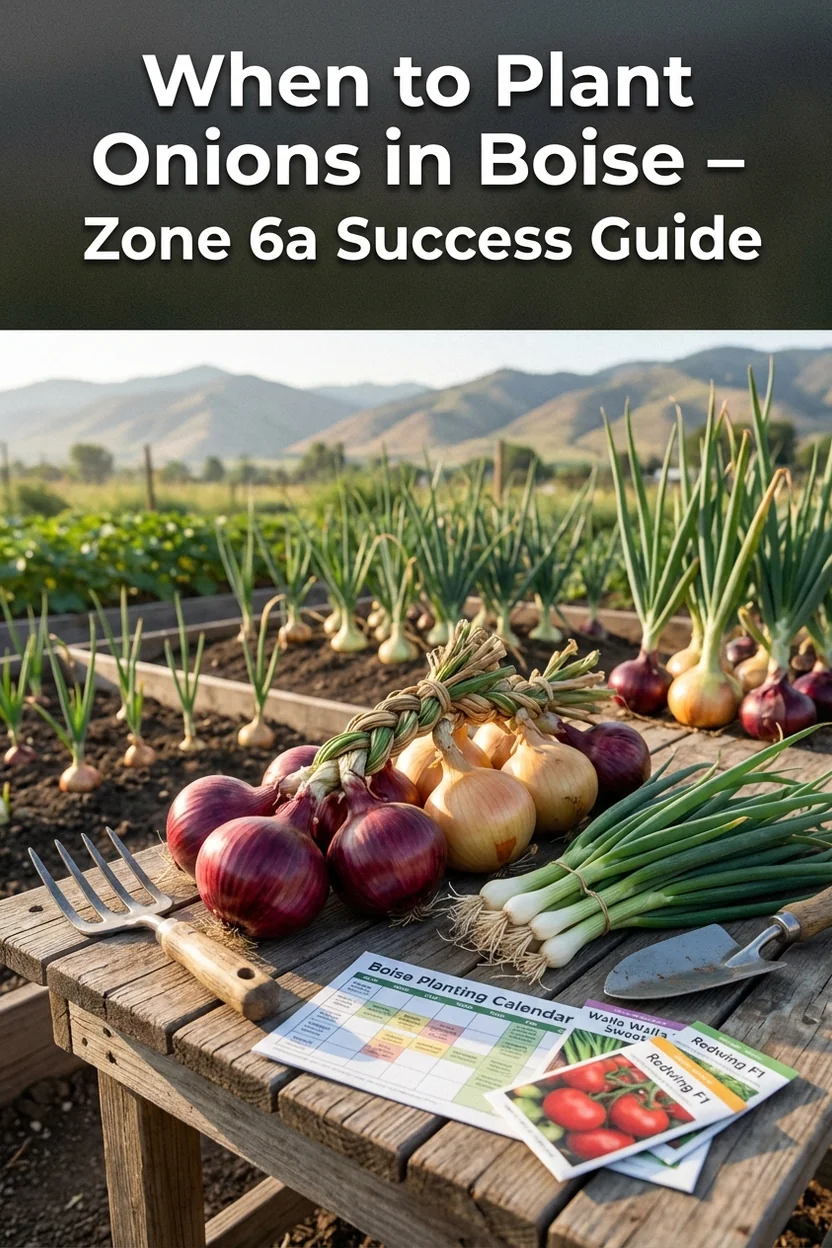
Planting Guides

When to Plant Onions in Boise: Complete Guide + Best Varieties for Zone 6a
Boise, Idaho
USDA Zone 6a
Last Frost: May 5
Last updated: October 30, 2025
Plant onions in Boise from mid-March through early April for summer harvest, or try fall planting in September for earlier crops. Zone 6a's 158-day season suits both intermediate and long-day varieties perfectly.
DDorothy "Dot" Williams
October 30, 2025
Share:
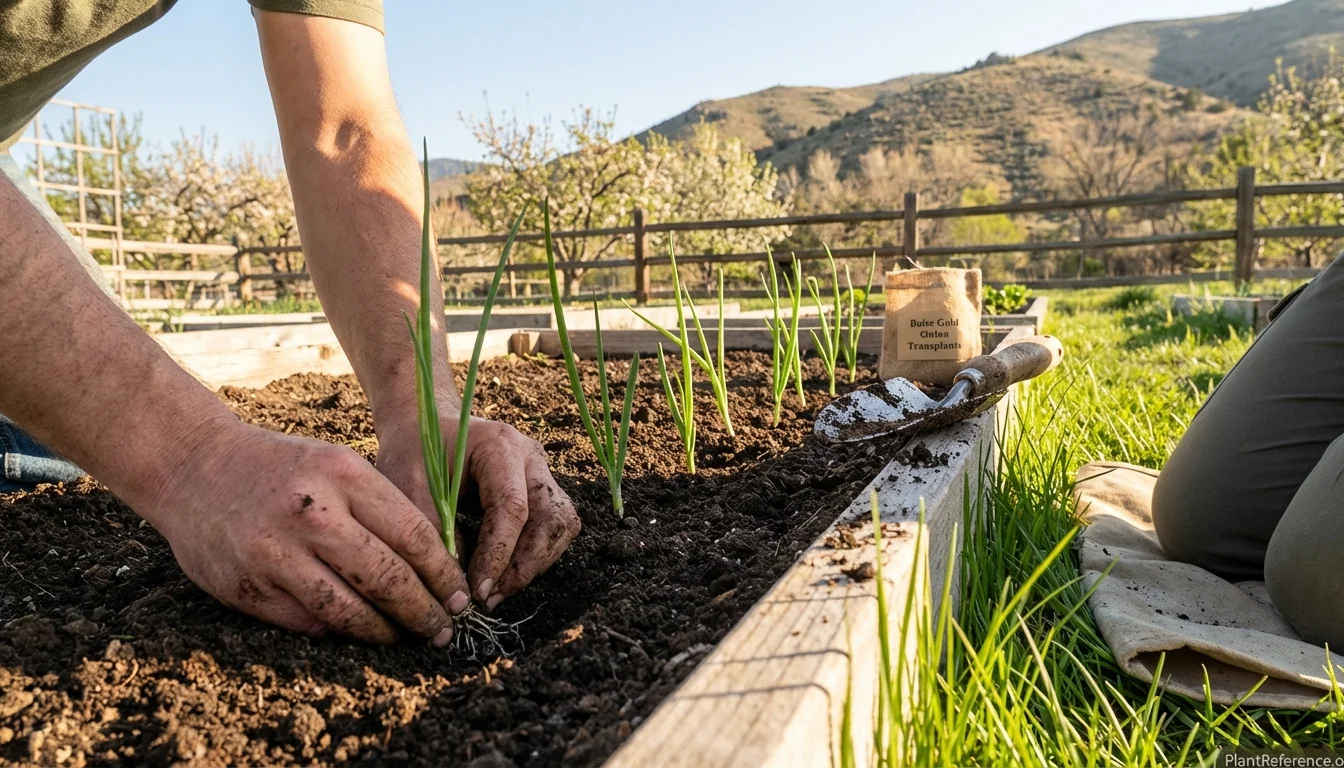
Gardener planting onion transplants in Boise garden with Idaho foothills background in early spring
Image © PlantReference.org 2025
Quick Answer
Plant onion transplants in Boise from March 15-April 10, choosing intermediate-day varieties for reliable bulbs. Harvest begins in August.
TL;DR
Plant onions in Boise from March 15-April 10 for summer harvest, choosing intermediate-day varieties like Allium cepa 'Candy' or long-day types like Allium cepa 'Walla Walla'. Zone 6a's 158-day growing season supports both spring planting (harvest August-September) and experimental fall planting with overwintering varieties. Plant garlic cloves in mid-October, 4-6 weeks before ground freezes, choosing hardneck varieties like Allium sativum 'Music' for Boise's cold winters.
Product Recommendations

Dixondale Candy Onion Transplants

($12-18)Perfect intermediate-day variety for Boise

Dixondale Farms Candy Onion Transplants, Bundle of 60 Plants

https://dixondalefarms.com/product/candy-onion-plants/

Premium onion transplants from the nation's leading onion plant producer, specifically suited to Boise's Zone 6a intermediate-day requirements. Candy variety produces large, sweet bulbs that store moderately well and rarely disappoint in mountain valley conditions. Ships at optimal planting size with healthy root systems and green tops. Each bundle contains 60 transplants sufficient for a 15-foot row with proper 4-inch spacing. Disease-free certification and variety guarantee ensure successful results for Boise gardeners.

Price: $12.99-$17.99

Music Hardneck Garlic Bulbs

($16-24)Premium variety for Zone 6a

Music Hardneck Garlic Bulbs for Planting, Certified Organic

https://www.groworganic.com/music-hardneck-garlic-bulbs.html

Music represents the gold standard for cold-climate garlic, perfectly suited to Boise's Zone 6a winters. Each bulb contains 4-6 large, easy-to-peel cloves with rich, complex flavor. Hardneck varieties require cold vernalization that Boise winters provide naturally. Produces edible scapes in late spring that should be removed to maximize bulb size. Excellent storage life of 6-9 months when properly cured. Certified organic bulbs ensure disease-free planting stock with proven genetics adapted to mountain growing conditions.

Price: $16.99-$23.99

Soil Thermometer for Planting Timing

($8-14)Critical for spring planting decisions

REOTEMP Garden Soil Thermometer with 6-Inch Stem

https://www.amazon.com/REOTEMP-Garden-Soil-Thermometer-Stem/dp/B00002N5ZF

Accurate soil temperature monitoring ensures optimal onion planting timing in Boise's variable spring weather. 6-inch probe reaches proper depth to measure soil temperature where onion roots establish. Plant when soil consistently reaches 35°F for best transplant success. Large dial face reads easily in outdoor conditions, with clear temperature markings. Stainless steel construction withstands mountain valley weather extremes and provides years of reliable service. Essential tool for timing both spring onion planting and fall garlic planting.

Price: $8.99-$13.99

Organic Compost for Soil Amendment

($18-28)Essential for Boise's clay soil

Charlie's Compost Organic Garden Compost, 1.5 Cubic Feet

https://www.homedepot.com/p/Charlies-Compost-1-5-cu-ft-Organic-Compost-10951/206584665

Premium aged compost specifically formulated for mountain valley garden conditions like Boise. Improves clay soil drainage while adding organic matter essential for onion root development. Each bag provides sufficient amendment for approximately 12 square feet of garden bed when worked in 2-3 inches deep. Balanced carbon-to-nitrogen ratio prevents burning while feeding beneficial soil microorganisms. OMRI-listed organic certification ensures compatibility with organic gardening methods. Helps moderate Boise's alkaline soil pH naturally.

Price: $18.99-$27.99

Harvest Baskets for Curing

($22-35)Perfect for Boise's dry climate curing

Gardener's Supply Woven Harvest Baskets, Set of 3

https://www.gardeners.com/buy/woven-harvest-baskets/8595785.html

Natural woven construction provides excellent air circulation for curing onions in Boise's dry mountain climate. Set of three different sizes accommodates various harvest quantities and onion sizes. Breathable design prevents moisture buildup that leads to storage rot while protecting bulbs from direct sunlight. Sturdy handles make transport from garden to curing area easy. Natural materials complement organic growing methods and store compactly when not in use. Perfect for both harvest collection and the curing process in garage or shed locations.

Price: $22.99-$34.99

Frequently Asked Questions

When exactly should I plant onions in Boise for the best results?

Plant onion transplants from March 15-April 1 in Boise for optimal results in Zone 6a. This timing allows establishment before your May 4 last frost date while giving plants maximum growing time before summer heat triggers bulbing. Transplants are more reliable than sets and offer better variety selection for Boise's intermediate-day requirements.

What's the difference between intermediate-day and long-day onions for Boise gardens?

Intermediate-day onions like Allium cepa 'Candy' begin bulbing when daylight reaches 12-14 hours, making them perfect for Boise's 44°N latitude. Long-day varieties need 14-16 hours and work at your location but have a shorter window for bulb development. Intermediate-day types offer more reliable harvests and better storage potential in Boise's climate conditions.

Can I plant onions in fall in Boise like southern gardeners do?

Advanced Boise gardeners can experiment with fall-planted overwintering varieties like Allium cepa 'Walla Walla' planted in September with heavy mulch protection. However, spring planting from March-April remains the recommended method for Zone 6a. Fall planting requires specific overwintering varieties and careful winter protection that most gardeners find challenging.

Why do my onions bolt instead of forming bulbs in Boise?

Bolting typically results from planting large onion sets (bigger than a dime), temperature stress during variable spring weather, or accidentally planting short-day varieties that won't bulb at Boise's latitude. Choose small sets or transplants, protect from late cold snaps, and verify you're planting intermediate-day varieties suited to Zone 6a conditions.

When should I harvest onions in Boise and how do I cure them properly?

Harvest begins in mid-August when 75% of tops fall over naturally—don't bend them manually. Boise's dry climate advantages curing: spread harvested onions in single layers in your garage or shed with good air circulation. The low humidity typically cures bulbs in 2-3 weeks until necks feel completely dry and papery when pinched gently.
NEW PLANT DAILY

Think you know your plants?

Test your botanical knowledge with a new plant identification challenge every day. Build your streak, learn fascinating plant facts, and become a plant identification expert!

Build your streak
One chance per day
Learn as you play

Free account required • Takes less than 30 seconds

Written By
D

Dorothy "Dot" Williams

Dot grew up on a small farm in rural Virginia and has maintained a vegetable garden for decades. After retiring from teaching elementary school, she became a Master Gardener volunteer and spends her time mentoring new gardeners at community garden plots in Richmond. She's especially knowledgeable about heirloom varieties, seed saving, and traditional growing methods passed down from her grandmother. Dot's no-nonsense advice comes from extensive trial and error—she's seen every tomato disease, pest problem, and weather disaster imaginable. Her biggest pet peeve is gardeners who overcomplicate simple tasks. "Plants want to grow," she often says. "Your job is to not get in their way."

Related Plants

Other Articles You May Enjoy