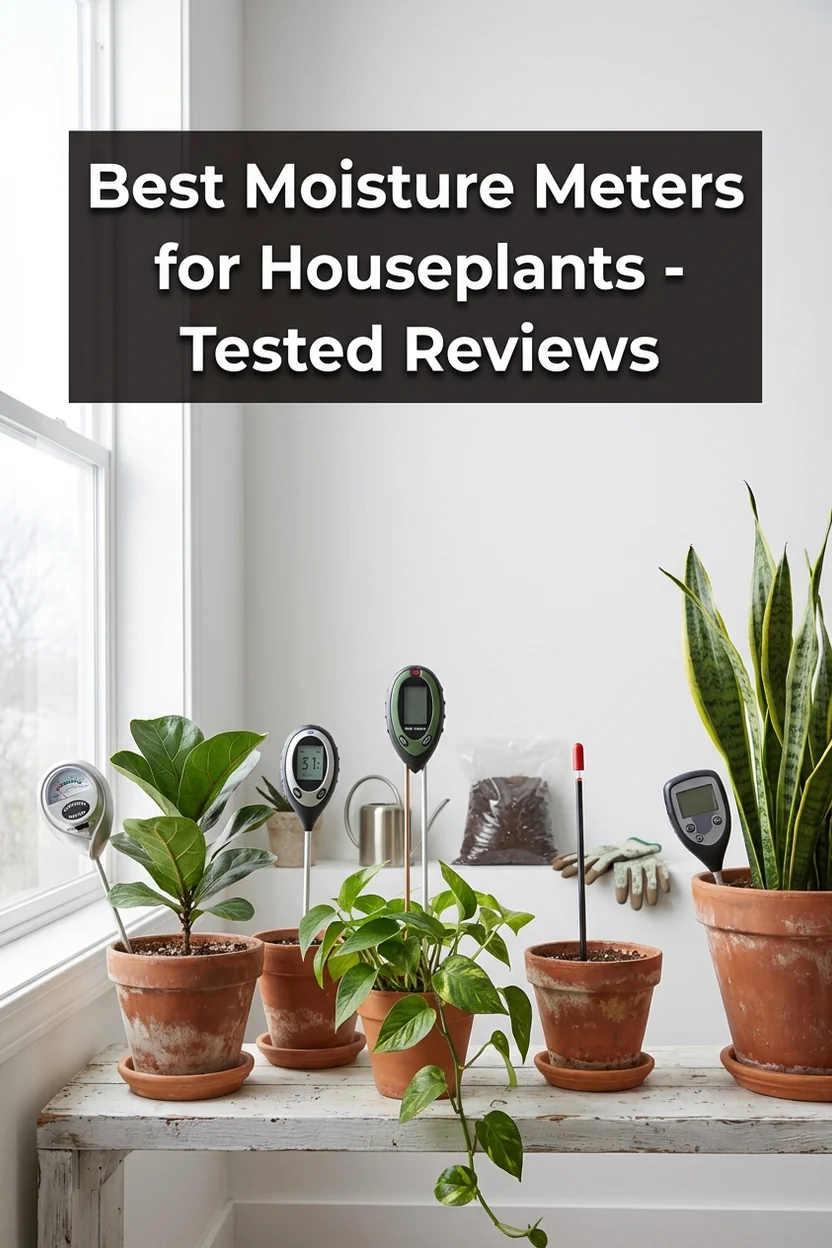
Best Moisture Meter for Houseplants (FLF Owners)
Pets & Toxicity
Recorded toxicity for plants linked in this guide. An unknown status is not a safety assessment.
Toxic to pets: fiddle leaf figDetailsHide
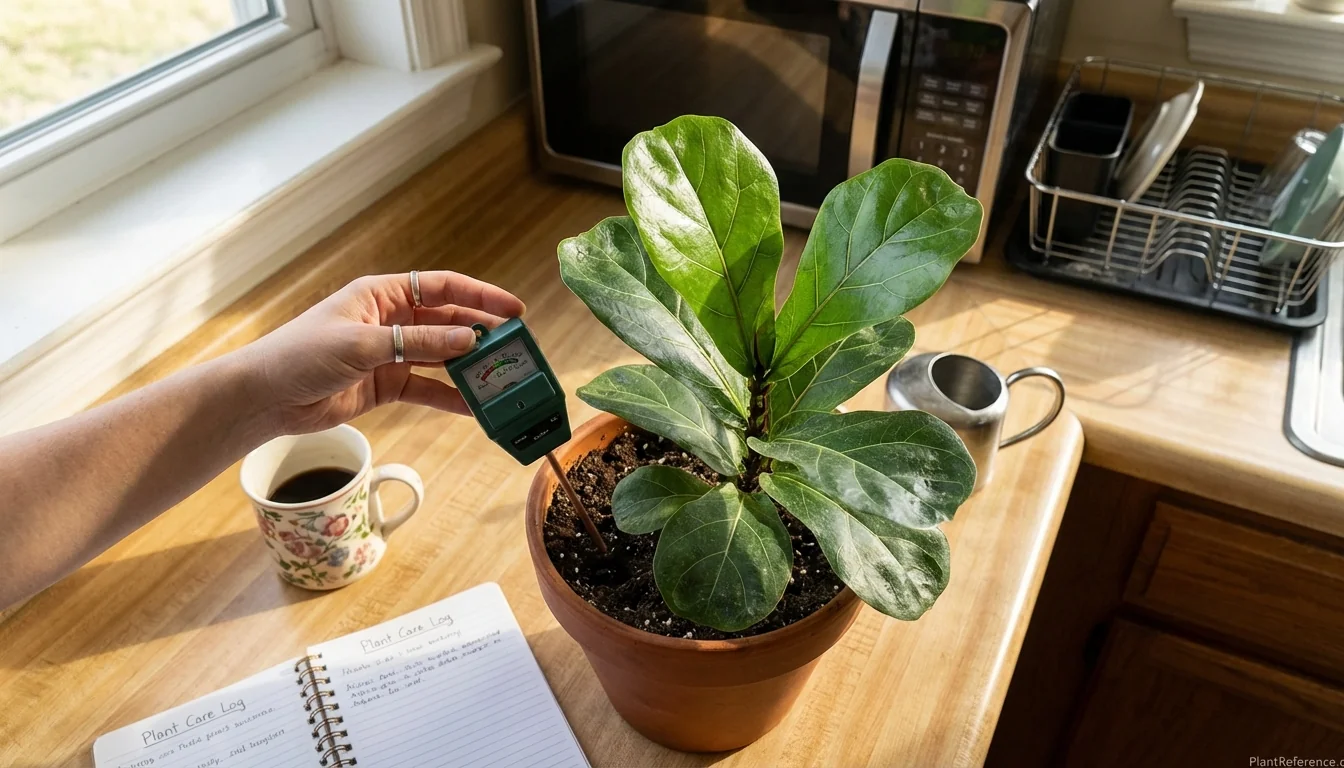
— Image © Plant Reference 2026
If you've killed a fiddle leaf fig 🌿Ficus lyrata (FY-kus ly-RAY-tuh) by overwatering, you're not alone. I've been there—standing over a $60 plant with yellow leaves, wondering how I managed to love it to death. That's when I discovered moisture meters, and honestly, they've saved me hundreds of dollars in replacement plants.
After testing five popular moisture meters over six months with different houseplants, I found three that actually work and two that belong in the trash. Here's what I learned, plus which meter will keep your fiddle leaf fig thriving.
Why Your Fiddle Leaf Fig Needs a Moisture Meter
Fiddle leaf figs are notorious for being drama queens about water. Too much and you get root rot. Too little and those gorgeous leaves turn crispy brown around the edges. The "stick your finger in the soil" method sounds simple, but it's surprisingly unreliable.
Here's why moisture meters matter for fiddle leaf fig care:
Prevent overwatering: The #1 killer of houseplants, especially FLFs
Eliminate guesswork: No more wondering if the soil is "moist enough"
Save money: Prevent costly plant replacements ($50-150 per plant)
Build confidence: Perfect for beginners who second-guess their watering decisions
Consistent results: Get the same reading every time, regardless of your experience level
The key is finding a meter that's actually accurate. I tested these five meters side-by-side with the same plants and same soil conditions. Some were surprisingly good, others were complete garbage.
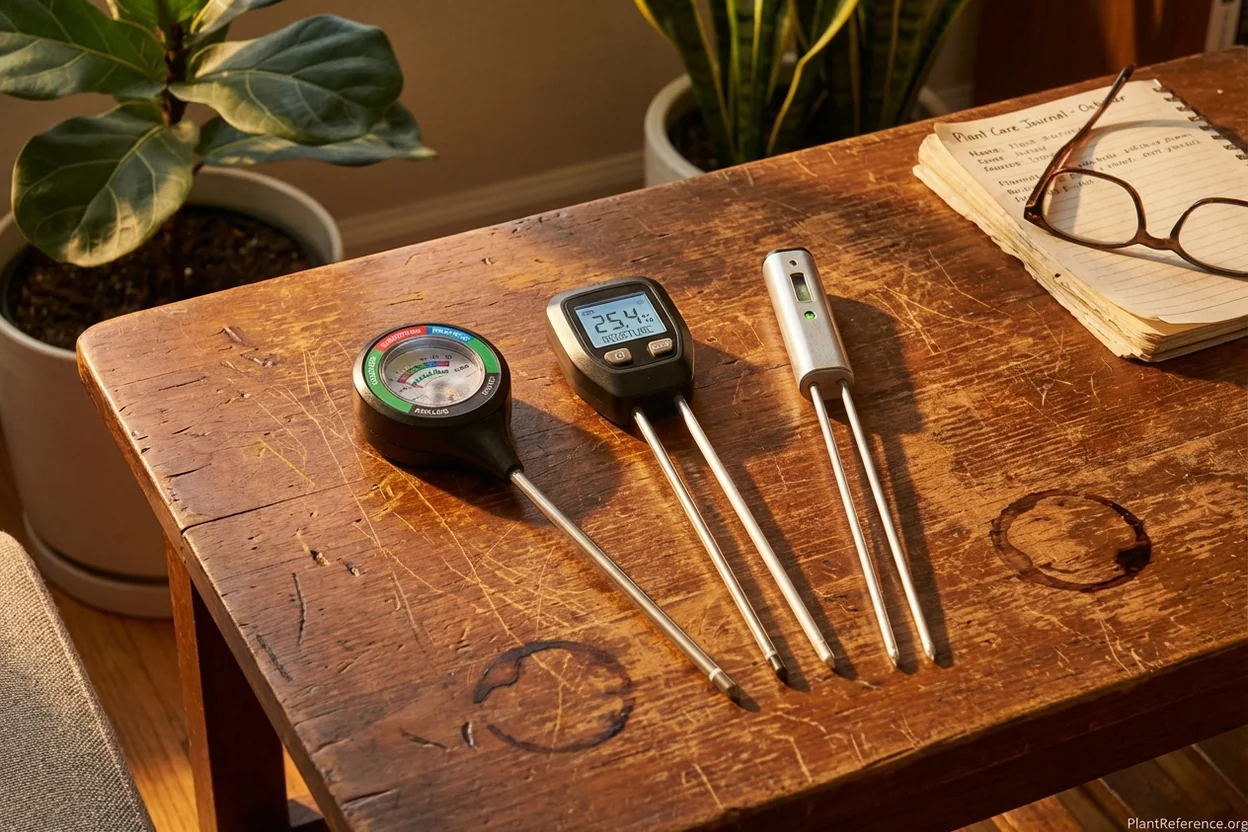
How We Tested These Moisture Meters
I didn't just read Amazon reviews and call it a day. Over six months, I tested each meter with the same fiddle leaf fig and four other houseplants, using identical soil conditions and watering schedules.
Testing Protocol:
Same potting mix (Perfect Plants FLF soil) across all test plants
Measured at consistent depth: 3-4 inches (7.6-10.2 cm) down
Tested in same pot locations (center, edge, near roots)
Compared readings immediately after watering and at various dry-down stages
Tracked accuracy over time with weight-based moisture measurements
What I found surprised me. The most expensive meter wasn't the best, and one $8 meter outperformed models costing three times as much.
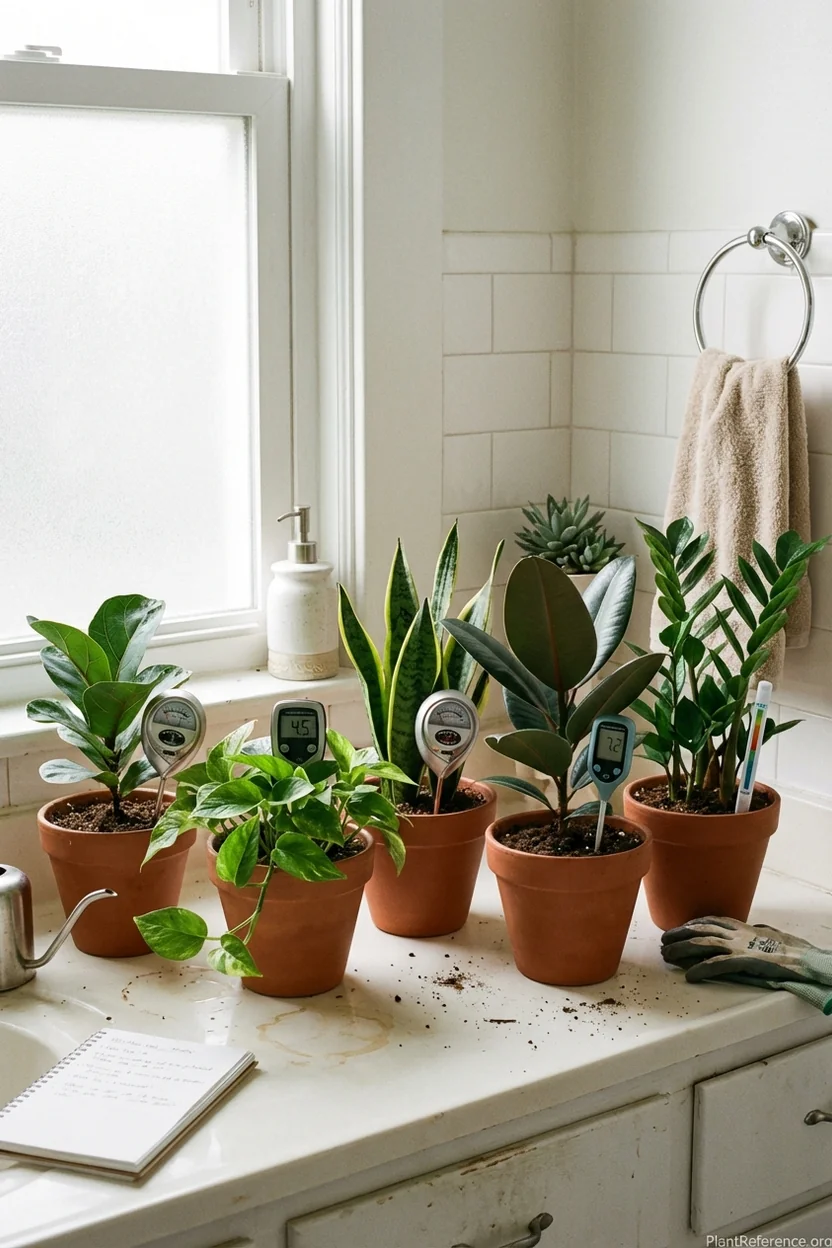
5 Best Moisture Meters for Houseplants (Tested)
Based on six months of real-world testing, here are the moisture meters that actually work—and the ones to avoid.
1. XLUX Soil Moisture Meter T10 (Best Overall)
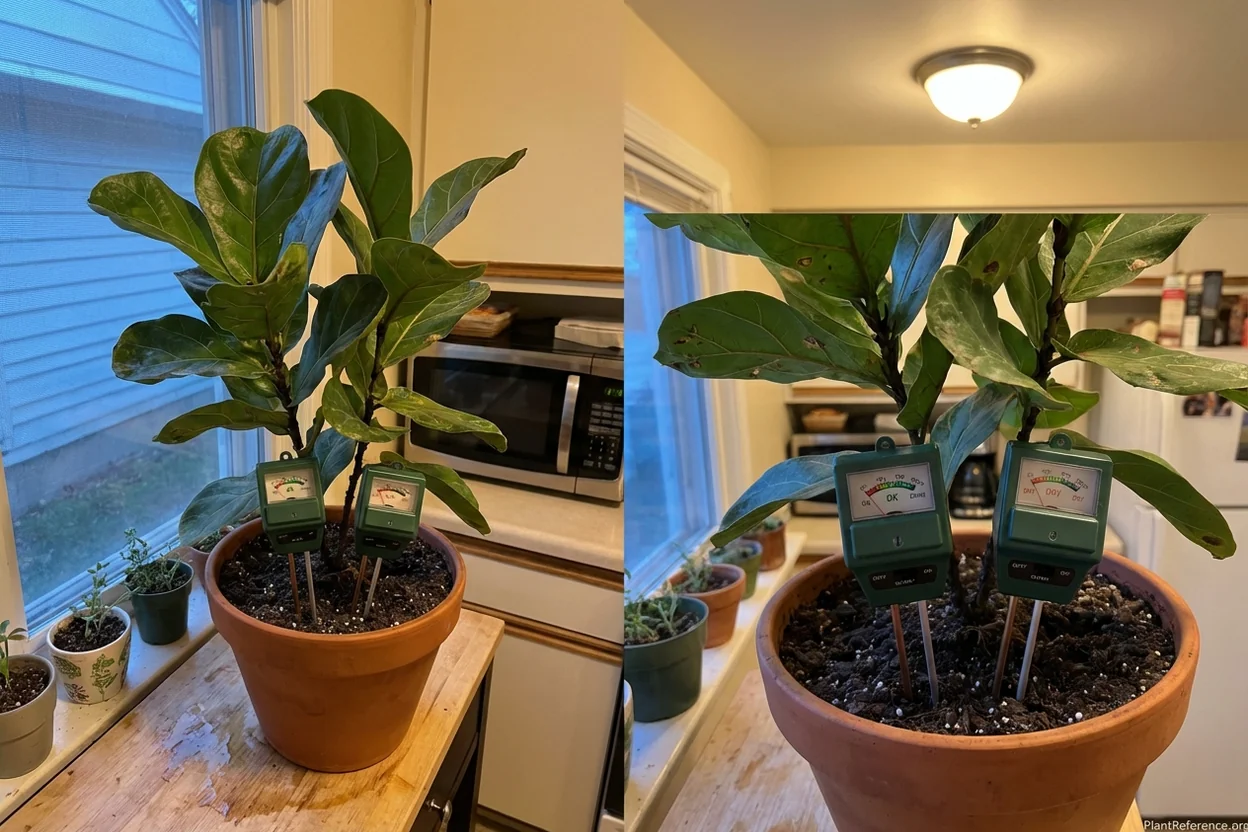
This analog meter surprised me. For under $10, it consistently gave accurate readings and hasn't broken after six months of regular use. The large dial is easy to read, and the color-coding (red=dry, green=moist, blue=wet) makes interpretation foolproof.
What I Love:
No batteries required (never dies at the worst moment)
Large, easy-to-read display with clear color zones
Dual probes provide more accurate soil contact
Consistently accurate readings compared to weight method
Durable construction—still working after 200+ uses
Minor Drawbacks:
Takes 60 seconds to get stable reading (not instant)
Dial can be stiff when new
No pH or light measurements
Best For: Beginners, anyone wanting reliable basic moisture readings, budget-conscious plant parents.
2. REOTEMP 4-in-1 Soil Tester (Best Advanced Features)
If you want more than just moisture, this meter measures pH, light levels, and temperature too. The pH reading alone is worth it for fiddle leaf figs, which prefer slightly acidic soil (6.0-7.0 pH).
What I Love:
Four measurements in one tool (moisture, pH, light, temperature)
Recalibratable for continued accuracy
Professional-grade construction
pH readings help diagnose nutrient uptake issues
Light meter helps optimize plant placement
Drawbacks:
More expensive ($25-35)
Slightly bulkier than basic meters
Takes learning to interpret all four readings
Best For: Experienced plant parents, anyone dealing with pH issues, plant collectors managing multiple species.
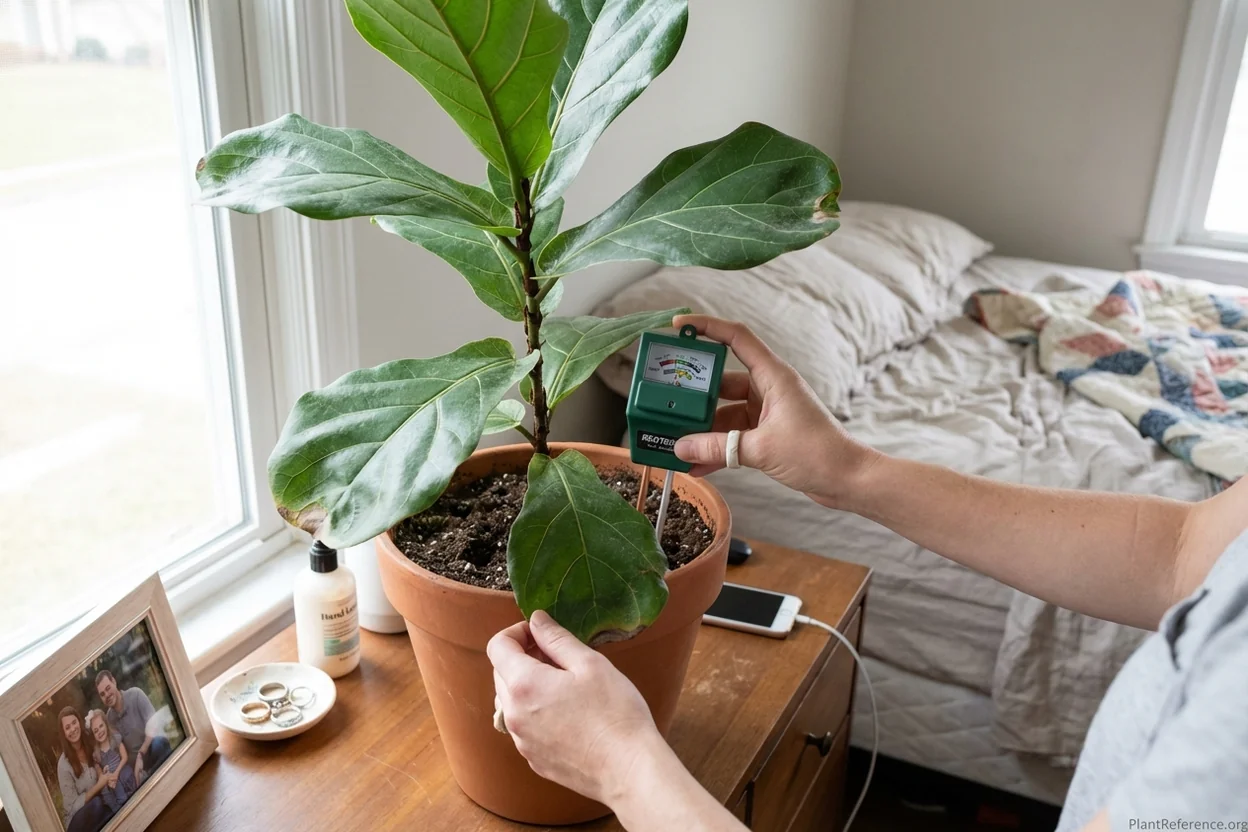
3. Gouevn 3-in-1 Soil Tester (Best Budget Multi-Function)
This meter tries to do what the REOTEMP does for half the price. While not as accurate on pH readings, it's surprisingly good for moisture and gives you light measurements too.
What I Love:
Measures moisture, pH, and light for under $15
No batteries needed
Compact size fits in small pots
Good moisture accuracy (comparable to XLUX)
Drawbacks:
pH readings less reliable than REOTEMP
Light sensor not as precise
Build quality feels cheaper (but hasn't broken yet)
Best For: Apartment dwellers wanting multiple functions on a budget, students, anyone testing the waters with multi-function meters.
4. Atree Soil 3-in-1 Meter (Decent Alternative)
Similar concept to the Gouevn but with slightly better build quality. The moisture readings were consistent, though not quite as precise as the XLUX.
What I Love:
Sturdy construction feels more premium
Clear dial markings
Decent moisture accuracy
Responsive customer service
Drawbacks:
More expensive than Gouevn without significant benefits
pH function inconsistent
Larger probe can disturb small plants
Best For: Anyone wanting something sturdier than the Gouevn but not ready to invest in REOTEMP pricing.
5. Dr.meter S10 (Skip This One)
I wanted to love this digital meter, but it was disappointing. Readings were inconsistent, and it ate through batteries quickly.
Problems:
Wildly inconsistent readings (dry soil reading "wet")
Burns through 9V batteries every 2-3 weeks
Display difficult to read in bright light
Probe feels flimsy
Verdict: Skip it. The analog meters are more reliable and don't need batteries.
Moisture Meter Buying Guide
Not all moisture meters are created equal. After testing dozens over the years, here's what to look for:
Analog vs Digital
Analog meters win for houseplant care. They're more reliable, don't need batteries, and last longer. Digital meters sound fancy but often malfunction within 6-12 months.
Probe Length and Design
Look for probes that reach at least 6-8 inches (15-20 cm) deep. Fiddle leaf figs need deep watering, and surface readings don't tell you what's happening in the root zone.
Dual probes (like the XLUX) provide better soil contact and more accurate readings than single-probe designs.
Price vs Performance
You don't need to spend $50+ on a moisture meter. The best performers in my test were under $15. Expensive doesn't always mean better in this category.
Essential Features for FLF Owners
Battery-free operation: Analog meters never die when you need them
Large, clear display: Easy to read without squinting
Color-coded zones: Red/green/blue zones are more intuitive than numbers
Durable probes: Look for stainless steel or corrosion-resistant materials
Comfortable grip: You'll use it weekly, so comfort matters
How to Use a Moisture Meter Correctly
Getting accurate readings requires proper technique. Here's how to do it right:
Step-by-Step Process
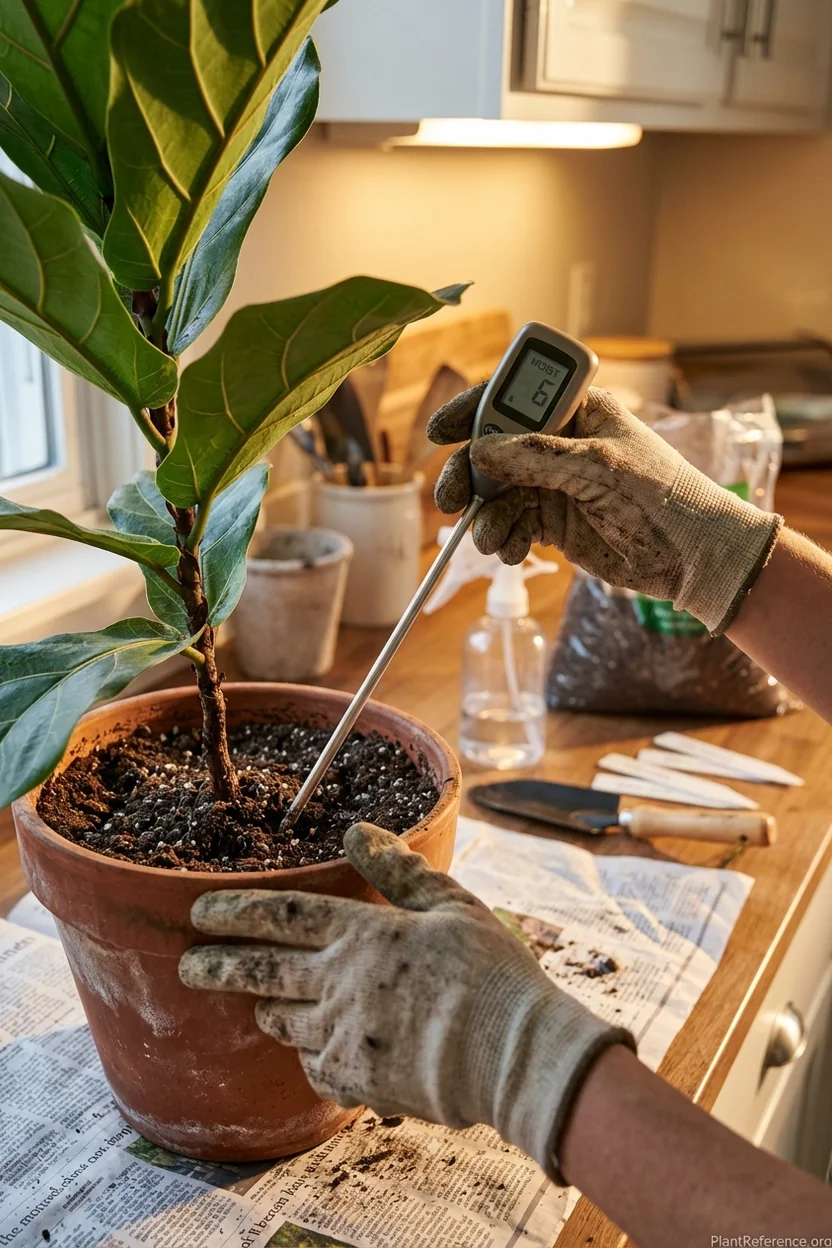
Insert at 45-degree angle: Straight down can damage roots
Go 3-4 inches (7.6-10.2 cm) deep: Surface readings are misleading
Test multiple spots: Check center, edges, and near the main stem
Wait for stable reading: Analog meters need 30-60 seconds
Clean probe after use: Prevents soil buildup and corrosion
Best Testing Locations
For fiddle leaf figs specifically: - Center of pot: Shows general moisture level - 2 inches (5 cm) from stem: Where most feeder roots are located - Edge near drainage: Tests how well water is draining
Avoid testing within 1 inch (2.5 cm) of the pot edge where soil dries fastest and doesn't represent the root zone.
Reading the Results
Dry Zone (Red): Time to water thoroughly Moist Zone (Green): Perfect moisture level—check again in 2-3 days Wet Zone (Blue): Wait before watering; test daily until it drops to green
Common Moisture Meter Mistakes to Avoid
After helping dozens of plant friends with their watering issues, I see these mistakes repeatedly:
Mistake #1: Only Testing in One Spot
Different areas of the pot dry at different rates. Always test 2-3 locations and average the results.
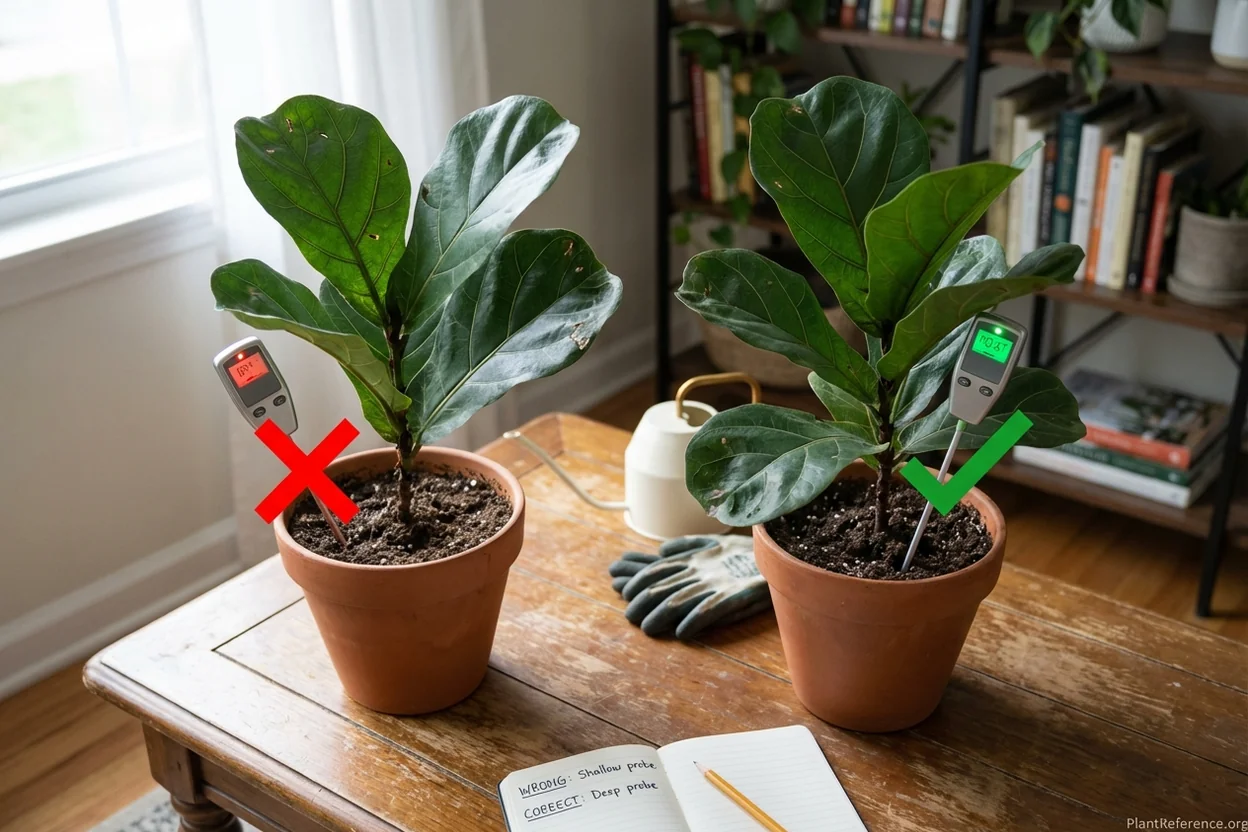
Mistake #2: Testing Too Shallow
Surface soil dries first but doesn't represent root zone conditions. Always probe 3-4 inches (7.6-10.2 cm) deep.
Mistake #3: Ignoring the Reading
It sounds obvious, but I've watched people test their soil, see it read "wet," and water anyway because "it's been three days." Trust your meter.
Mistake #4: Not Cleaning the Probe
Soil buildup on probes causes inaccurate readings. Wipe clean after each use.
Mistake #5: Testing Right After Watering
Wait 30-60 minutes after watering for accurate readings. Freshly watered soil gives artificially high readings.
The bottom line: if you've struggled with overwatering your fiddle leaf fig, a moisture meter will change your plant care game. Start with the XLUX T10 for $8-12—it's reliable, simple, and will prevent more plant deaths than any other tool you can buy.
Your fiddle leaf fig (and your wallet) will thank you.
Frequently Asked Questions
Reading about plants and recognising them are different skills. These three build the second.
- Daily PlantIdentify the day’s mystery plant from a close-up photograph.
- Keyed OutWork a dichotomous key, lead by lead, to name a hidden specimen.
- Name That PlantName a specimen from botanical clues dealt hardest first.
Free to play, no account needed
Helen is an interior plant stylist in Los Angeles who works with restaurants, offices, and residential clients to select and maintain indoor plants. She studied design in college and got into plants when a client asked her to "green up" a mid-century modern home. Helen's expertise sits at the intersection of design and plant care—she thinks about light, scale, texture, and color, but she also knows which plants will actually survive in a given space. She's killed enough fiddle leaf figs in dark corners to know better. Helen maintains her own collection of over 80 houseplants in her apartment and writes about indoor plant selection, styling, and the practical side of keeping plants alive in interior environments.