Plant Care

7 Best Pots for Fiddle Leaf Fig (2025 Reviews)
Last updated: November 9, 2025
Find the perfect pot for your fiddle leaf fig with our tested reviews of 7 top planters, from budget-friendly options to designer statement pieces.
JJessica Chen
November 9, 2025
Share:
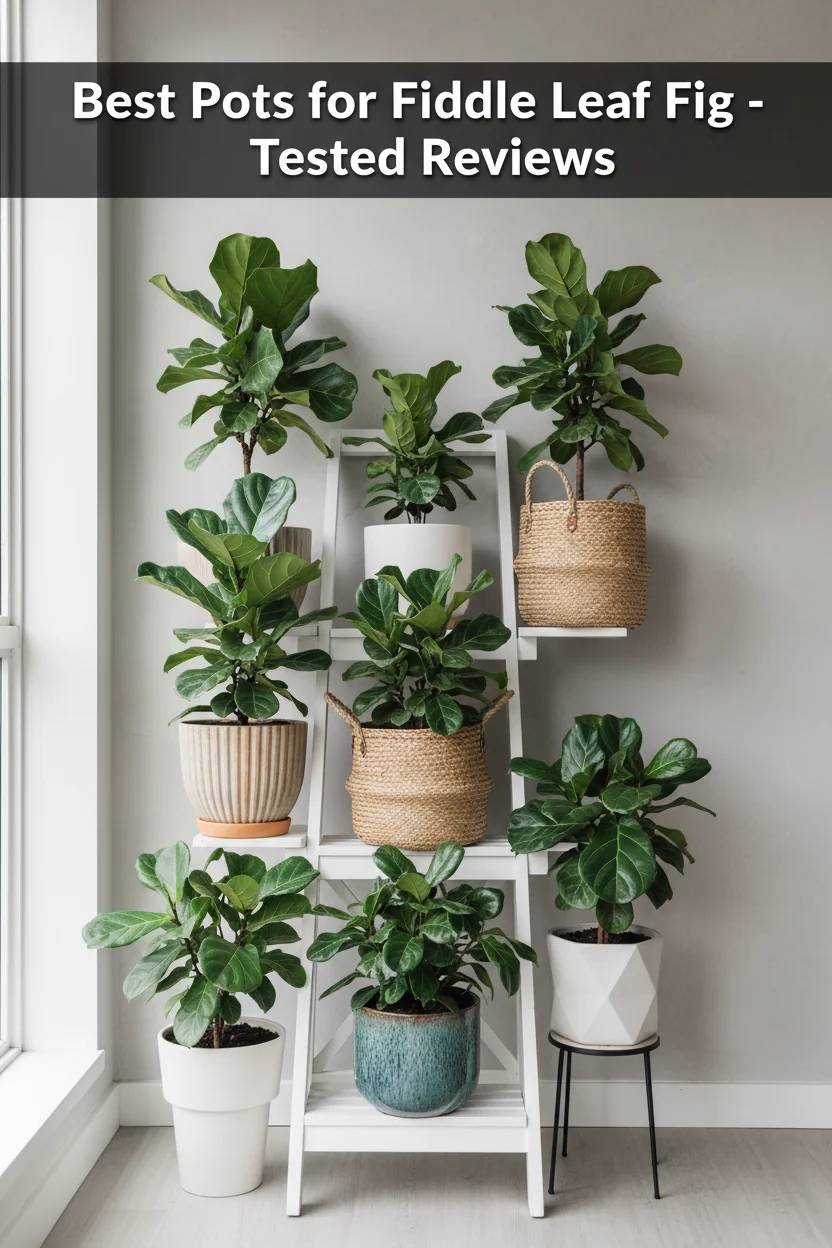
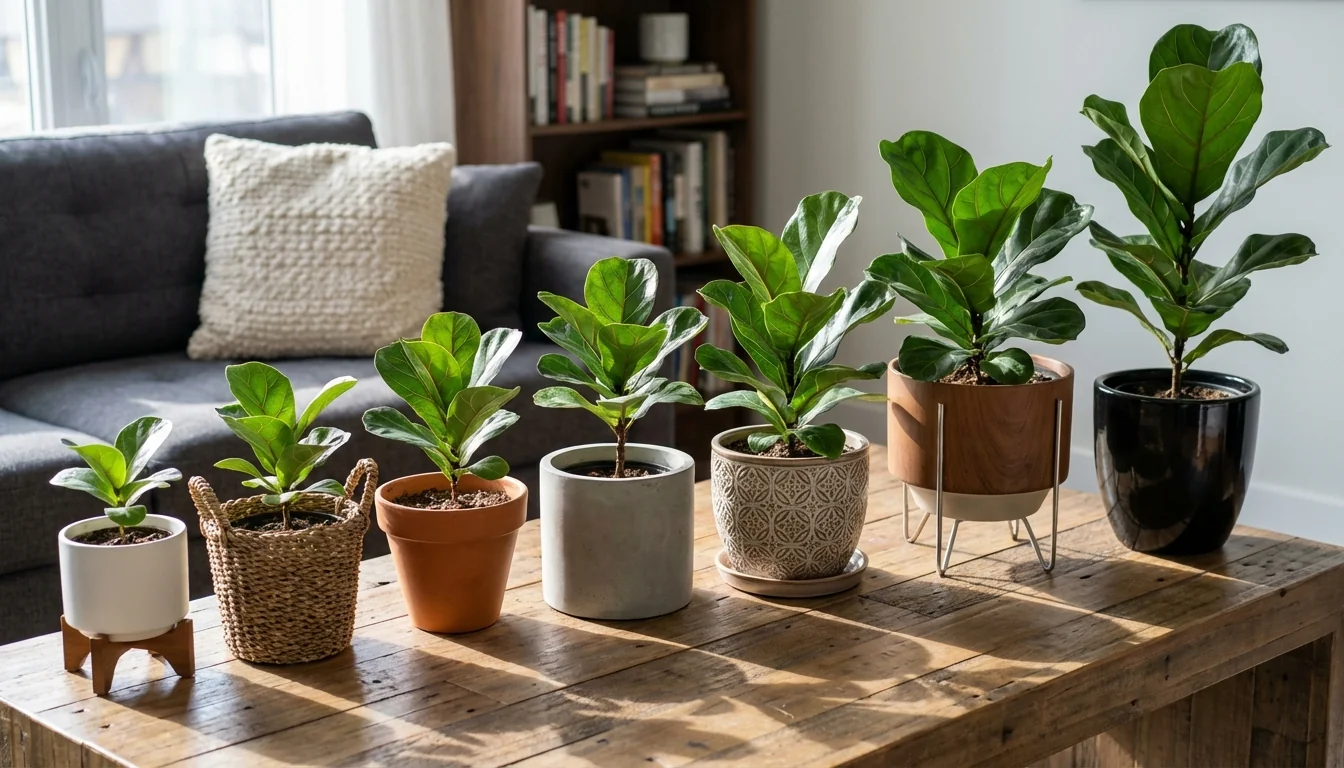
Best pots for fiddle leaf fig arranged showing ceramic, woven, and modern planters
Image © PlantReference.org 2025
TL;DR
The best pots for fiddle leaf fig combine proper drainage, appropriate sizing, and stable design. Our top picks include the LA JOLIE MUSE Woven Basket for style, Perfect Plants Ceramic Planter for beginners, and Lechuza Classico for self-watering convenience. Always choose pots 2-4 inches larger than the root ball with drainage holes.
Product Recommendations

LA JOLIE MUSE Woven Seagrass Basket

($28-35)Perfect blend of natural style and practical function

LA JOLIE MUSE Large Woven Seagrass Belly Basket with Handles

https://www.amazon.com/LA-JOLIE-MUSE-Seagrass-Storage/dp/B07KJXZP2M

This handwoven seagrass basket combines Instagram-worthy aesthetics with practical functionality. The 12-inch diameter works perfectly for medium fiddle leaf figs, while the belly shape provides excellent stability. Use as a cachepot with a plastic liner pot inside for easy drainage management. The natural texture complements any decor style, from boho to Scandinavian minimalist. The handles make moving your plant effortless—crucial for following light throughout the day. After two years of use, shows minimal wear and still looks fresh. The only downside is you'll need to add your own drainage solution, but the versatility makes it worth the extra step.

Price: $28-35

Perfect Plants Mid-Century Ceramic Planter

($45-60)Elevated design with built-in drainage

Perfect Plants 10-Inch White Ceramic Planter with Bamboo Plant Stand

https://www.amazon.com/Perfect-Plants-Ceramic-Planter-Bamboo/dp/B08XQJK4WY

This elevated ceramic planter solves small apartment floor space issues while adding sophisticated style. The bamboo stand raises your fiddle leaf fig to perfect eye level and improves air circulation around the pot. The ceramic pot features a drainage hole and includes a matching saucer that fits perfectly in the stand's circular opening. Available in three sizes, making it easy to size up as your plant grows. The white ceramic is easy to clean and matches virtually any decor. The bamboo develops a beautiful patina over time. Construction quality is excellent and survives moves and daily use. The elevated position makes it easier to check soil moisture and spot issues early.

Price: $45-60

Lechuza Classico Self-Watering Planter

($89-120)German engineering meets plant care convenience

Lechuza Classico 28 Self-Watering Planter with Sub-Irrigation System

https://www.lechuza.com/en-us/products/classico

The Lechuza system revolutionizes fiddle leaf fig care, especially during busy work periods or travel. The sub-irrigation system maintains consistent soil moisture without the risk of overwatering that kills so many fiddle leaf figs. The water reservoir lasts 2-3 weeks depending on season and plant size. This German-engineered design works flawlessly with the included LECHUZA-PON growing medium providing perfect drainage and aeration. The sleek design looks expensive but justifies the investment through reduced plant stress and care convenience. The water level indicator takes guesswork out of maintenance. Worth every penny for busy plant parents or anyone who travels frequently.

Price: $89-120

West Elm Mid-Century Wood Planter

($79-99)Sustainable hardwood construction with timeless appeal

West Elm Mid-Century Turned Wood Planter Large 14-inch

https://www.westelm.com/products/mid-century-turned-wood-planters/

This sustainably-sourced mango wood planter brings warmth and natural texture that complements fiddle leaf fig's organic beauty perfectly. The turned wood construction creates subtle ridges that add visual interest without overwhelming the plant. At 14 inches diameter, provides excellent stability for larger fiddle leaf figs. Use a plastic liner pot inside for drainage management, protecting the wood from moisture damage. The natural wood grain means each planter is unique. Develops a beautiful patina over time while maintaining structural integrity. The substantial weight provides stability without being excessive for apartment living. Works in both modern and traditional settings, making it versatile for changing decor preferences.

Price: $79-99

Rivet Modern Ceramic Planter Set

($52-68)Clean lines with functional design

Rivet Modern Ceramic Plant Pot with Drainage and Saucer Set of 2

https://www.amazon.com/Rivet-Modern-Ceramic-Plant-Drainage/dp/B078B5WHXY

Amazon's Rivet brand delivers surprising quality at competitive prices with this modern ceramic set. The matte finish looks expensive and resists showing water spots or fingerprints. Both pots feature large drainage holes and perfectly fitted saucers that protect furniture. The clean cylindrical design works in contemporary, minimalist, or Scandinavian interiors. Getting two sizes in one purchase is perfect for a large fiddle leaf fig and smaller companion plant. The ceramic feels substantial and durable. The neutral color palette ensures these planters never clash with changing decor. At this price point, excellent value without sacrificing quality. The included saucers fit snugly and prevent wobbling.

Price: $52-68

Frequently Asked Questions

What size pot does my fiddle leaf fig need?

Choose a pot 2-4 inches (5-10 cm) larger in diameter than your plant's current pot. For young plants under 2 feet (60 cm) tall, use 6-8 inch pots. Medium plants 2-4 feet (60-120 cm) tall need 10-12 inch pots. Large plants 4-6 feet (120-180 cm) tall require 12-14 inch pots. Avoid oversizing—excess soil stays wet too long and causes root rot.

Do fiddle leaf fig pots need drainage holes?

Yes, drainage holes are absolutely essential for fiddle leaf fig health. These plants are extremely sensitive to overwatering and root rot. Without drainage holes, excess water accumulates in the bottom of the pot, creating anaerobic conditions that kill roots. If you have a decorative pot without drainage, use it as a cachepot with a plastic liner pot inside that has proper drainage.

What's the best material for fiddle leaf fig pots?

Ceramic with drainage offers the best balance of aesthetics, stability, and moisture management. Terracotta works well if you tend to overwater or live in humid climates, as it wicks excess moisture away from roots. Quality plastic can work for beginners learning watering patterns. Avoid materials like concrete or metal that don't breathe, and always prioritize drainage holes over material type.

How often should I repot my fiddle leaf fig?

Repot every 2-3 years or when roots fill the current pot. Signs your fiddle leaf fig needs repotting include roots growing through drainage holes, water running straight through the pot without absorbing, or significantly slower growth during spring/summer. Spring is the ideal time for repotting when plants are entering active growth season.

Can I use decorative pots without drainage holes?

Use decorative pots as cachepots only, not as the primary growing container. Place a plastic pot with drainage holes inside the decorative container, with a layer of pebbles or activated charcoal between them. This protects both your plant and the decorative pot while maintaining proper drainage. Alternatively, carefully drill drainage holes using a masonry bit if the material allows.
NEW PLANT DAILY

Think you know your plants?

Test your botanical knowledge with a new plant identification challenge every day. Build your streak, learn fascinating plant facts, and become a plant identification expert!

Build your streak
One chance per day
Learn as you play

Free account required • Takes less than 30 seconds

Written By
J

Jessica Chen

Jessica transformed her small Brooklyn balcony into a thriving container garden after moving to New York City. What started as a pandemic hobby turned into a plant care consulting business serving urban apartment dwellers across the city. She specializes in small-space gardening, indoor plant troubleshooting, and helping clients keep houseplants alive in less-than-ideal conditions (dim light, dry heat, tiny spaces). Jessica completed a home gardening certificate program and shares her plant wins and failures on her modest Instagram following. Her partner, Maya, jokes that their apartment is now 40% plants, 60% living space. Jessica's passionate about making plant care accessible to renters who think they don't have room to garden.

Related Plants

Other Articles You May Enjoy